

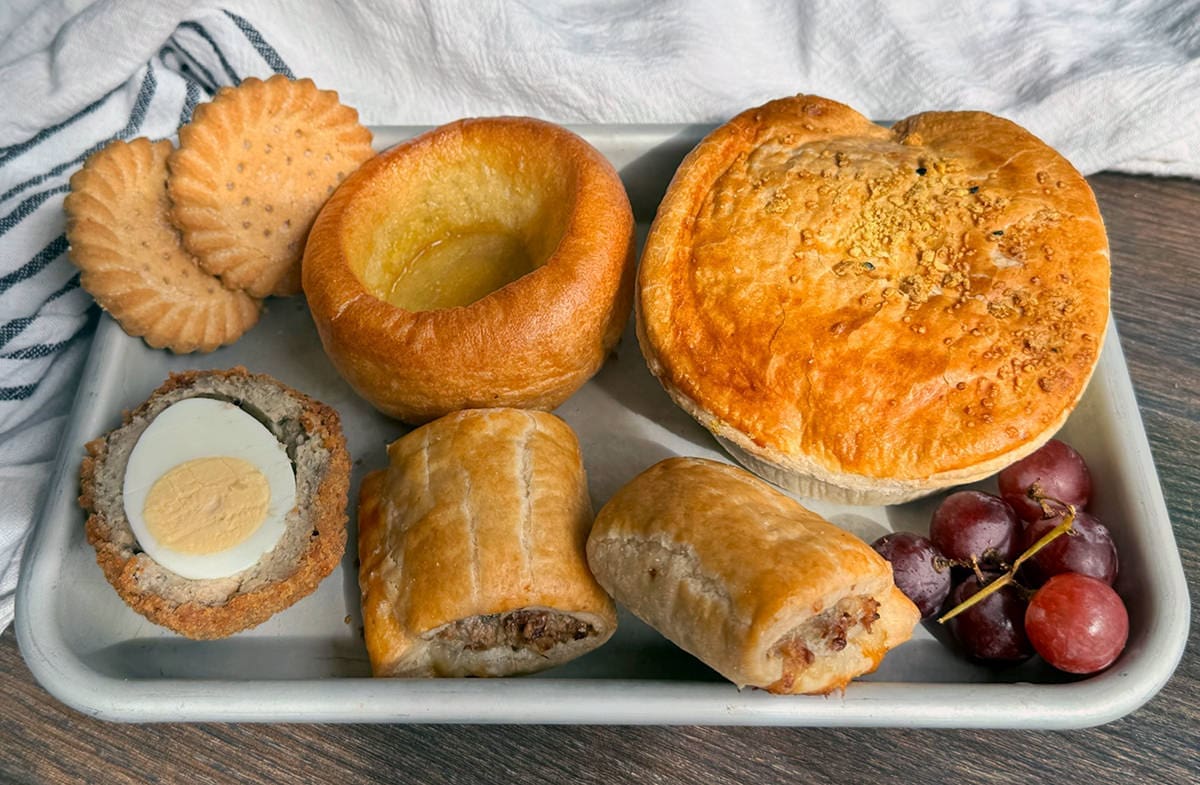
Ask someone to describe British food and you’ll probably hear fish and chips, meat pies and Sunday roasts. Spend a little time eating around the UK, though, and you quickly realize there’s a lot more to it.
England, Scotland, Wales and Northern Ireland all have foods that are very much their own. Cornish pasties belong to Cornwall, Cullen skink comes from Scotland, Welsh rarebit is Welsh, and an Ulster fry is distinctly Northern Irish. Then there are the foods you’ll run into just about everywhere: Sunday roasts, fish and chips, sausages, pies, tea and, of course, pub food.
And that’s really what I want to explore in this guide. There are old regional recipes that have been around for generations, but there’s also the food people are eating in Britain today. That means pubs and bakeries, curry houses and modern restaurants, seafood straight from the coast, local cheese, regional beer and plenty of dishes shaped by the people who have made Britain home.
If you’re trying to get a handle on British food, start here. I’ll cover the classics, the dishes that are more specific to each nation, and some of the regional foods worth looking for whether you’re traveling around the UK or making them at home.
Eating My Way Through Britain
- I’m currently spending an extended period in England and using the time to get a much better firsthand understanding of British food. I’m visiting pubs, markets, farm shops, bakeries and restaurants, trying regional foods where I can and paying much more attention to how the food changes from one place to the next.
- England is where most of my firsthand reporting is happening right now, so the English side of this guide is supported by a much deeper Ultimate Guide to English Food. I’ll continue expanding the Scottish, Welsh and Northern Irish sections as I spend more time in those parts of the UK.
British Food at a Glance
- Known For: Roasts, pies, sausages, seafood, cheese, baking, puddings and pub food
- Classic Sunday Meal: Sunday roast
- Classic Takeaway: Fish and chips
- Pub Favorites: Steak and ale pie, sausages and mash, Scotch eggs and regional pies
- Famous Baking: Scones, Scottish shortbread, Welsh cakes, soda bread and regional buns
- Classic Desserts: Sticky toffee pudding, trifle, fruit crumble and bread and butter pudding
- Drinks to Know: Tea, ale, cider, gin, whisky and increasingly British wine
- Best Way to Explore It: Follow the regional food rather than trying to find one dish that represents all of Britain
What Is British Food?
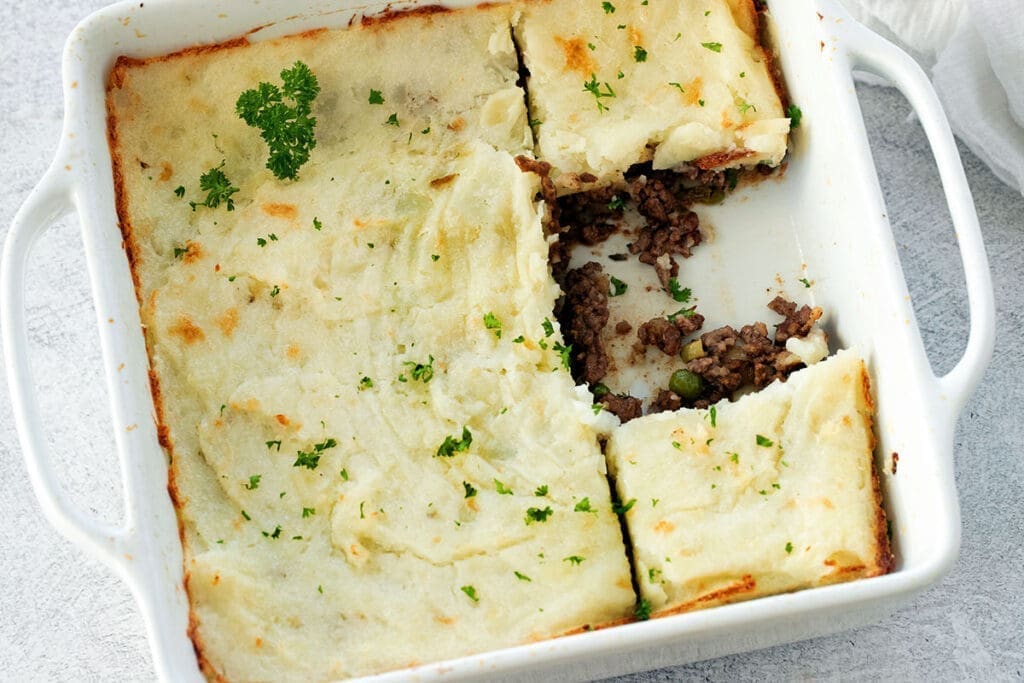
British food is really a mix of the food traditions of England, Scotland, Wales and Northern Ireland, with plenty of overlap between them.
One quick geography note because the names can get confusing: Great Britain is the island made up of England, Scotland and Wales. The United Kingdom includes those three countries plus Northern Ireland. You’ll often hear “British food” used more broadly when talking about food across the UK, so I’m including Northern Ireland in this guide while keeping its food traditions clearly identified as Northern Irish.
Where you are makes a big difference in what you eat. Along the coast, you’ll find seafood and long-standing fishing traditions. Head into farming country and beef, lamb, pork, dairy and cheese become much more important. Potatoes, oats, barley, cabbage, leeks and root vegetables show up again and again, along with smoked fish, cured meats, pickles and preserves.
But the food can change pretty quickly as you travel. What you eat in Scotland isn’t necessarily what you’ll find in Wales, and Cornwall has its own specialties that are very different from Yorkshire or Northern Ireland.
That’s why I’ve organized this guide by country first, then worked my way into the dishes, ingredients and food traditions that connect them.
| Nation | Foods & Ingredients to Know |
|---|---|
| England | Sunday roasts, pies, Yorkshire pudding, sausages, regional cheeses, puddings, afternoon tea, cider and extensive county specialties |
| Scotland | Haggis, oats, beef, lamb, game, salmon, smoked fish, soups, shortbread and whisky |
| Wales | Welsh lamb, leeks, Caerphilly cheese, cawl, Welsh rarebit, laverbread, seafood and Welsh cakes |
| Northern Ireland | Ulster fry, soda farls, potato bread, champ, beef, lamb, seafood and dairy |
Is British Food the Same as English Food?
Not quite. English food is part of British food, but the two terms don’t mean exactly the same thing.
England has its own dishes and regional food traditions, just as Scotland, Wales and Northern Ireland do. So while you’ll sometimes see everything from the UK grouped together as “British food,” it’s worth knowing where individual dishes actually come from.
For example:
- Yorkshire pudding is English.
- Cornish pasty is English and specifically Cornish.
- Cullen skink is Scottish.
- Welsh rarebit is Welsh.
- Ulster fry is Northern Irish.
Of course, food doesn’t stay neatly inside borders. Plenty of dishes are now eaten throughout the UK, and you’ll find fish and chips, pies, sausages and Sunday roasts well beyond the places where they first became popular.
But when I’m traveling, I still like knowing where a dish comes from. A Cornish pasty is one thing in a supermarket anywhere in Britain. Eating one from a bakery while you’re actually in Cornwall is a completely different experience.
Exploring England?
England has so much regional food of its own that I’ve given it a separate guide. My Ultimate Guide to English Food goes much deeper into the dishes, ingredients, cheeses, seafood, baking, drinks and regional specialties you’ll find around the country.
10 Foods to Try on Your First Trip to Britain
If you’re visiting Britain for the first time, I wouldn’t try to work through a giant checklist. Start with a handful of familiar classics, then make room for something specific to whichever part of the country you’re actually visiting.
This is the short list I’d use as a starting point:
| Food | Where to Look For It | Best Way to Try It |
|---|---|---|
| Sunday Roast | Throughout Britain | A good pub on Sunday |
| Fish and Chips | Throughout Britain, especially coastal towns | Independent fish and chip shop |
| Regional Full Breakfast | England, Scotland, Wales or Northern Ireland | Independent café, pub or B&B |
| Pub Pie | Throughout Britain | Look for a house-made or regional version |
| Local Cheese | Farm shop, cheesemonger, market or pub | Ask what’s made nearby |
| Fresh Seafood | Coastal Britain | Order what was landed locally or is in season |
| Regional Baking | Varies by nation and town | Independent bakery or tearoom |
| Traditional Pudding | Pub, restaurant or tearoom | Choose something made in-house or tied to the area |
| Regional Drink | Depends on location | Local ale, cider, whisky, gin or wine |
| One Local Specialty | Wherever you’re staying | Ask what the town, county or region is known for |
The last row is probably the most important. A Cornish pasty in Cornwall, Cullen skink in northeast Scotland, Welsh cakes in Wales or an Ulster fry in Northern Ireland tells you more about where you are than ordering the same nationally famous dish in every city.
Traditional British Meals and Eating Customs
Some of the best-known British foods aren’t really standalone dishes at all. They’re part of a meal or tradition, whether that’s a big cooked breakfast, Sunday lunch, afternoon tea or dinner at the pub.
The Full Breakfast
A full cooked breakfast usually starts with eggs, bacon and sausages, then adds some combination of baked beans, tomatoes, mushrooms, toast and black pudding.
What lands on the plate changes depending on where you are:
| Breakfast | What You Might Find |
|---|---|
| Full English | Back bacon, pork sausages, eggs, beans, tomatoes, mushrooms and often black pudding |
| Full Scottish | May add tattie scones, Lorne sausage, black pudding or haggis |
| Full Welsh | May include laverbread alongside the usual cooked-breakfast ingredients |
| Ulster Fry | Especially known for soda farls and potato bread |
Despite the name, most people aren’t sitting down to a full breakfast every morning. You’re much more likely to order one at a café, pub, hotel or B&B, or have one on a weekend when breakfast can easily turn into lunch.
If you’re traveling around the UK, this is one meal where I’d skip the generic version and see what gets added locally.

Sunday Roast
Sunday roast is one of those meals you’ll come across throughout Britain. Beef, lamb, pork and chicken are all common, usually surrounded by roast potatoes, vegetables and plenty of brown gravy.
The meat also comes with some classic pairings:
| Roast | Traditional Accompaniments |
|---|---|
| Beef | Yorkshire pudding and horseradish sauce |
| Lamb | Mint sauce |
| Pork | Apple sauce and crackling |
| Chicken | Stuffing and often bread sauce |
This is still very much a meal people cook at home, but pubs take Sunday lunch seriously too. If you’re visiting, book a table at a good pub and come hungry. A proper roast can take care of most of your afternoon.
Afternoon Tea
Afternoon tea is more of an occasion than something most people sit down to every afternoon. The traditional spread includes tea, finger sandwiches, scones with jam and clotted cream, cakes and pastries, usually served over several courses or on a tiered stand.
And despite the way the terms are sometimes used today, afternoon tea and high tea weren’t originally the same thing. Afternoon tea was the lighter mid-afternoon meal, while high tea was a more substantial meal eaten later in the day.
If you’re booking one at a hotel or tearoom, I’d worry less about the terminology and more about what’s actually being served.
Pub Food
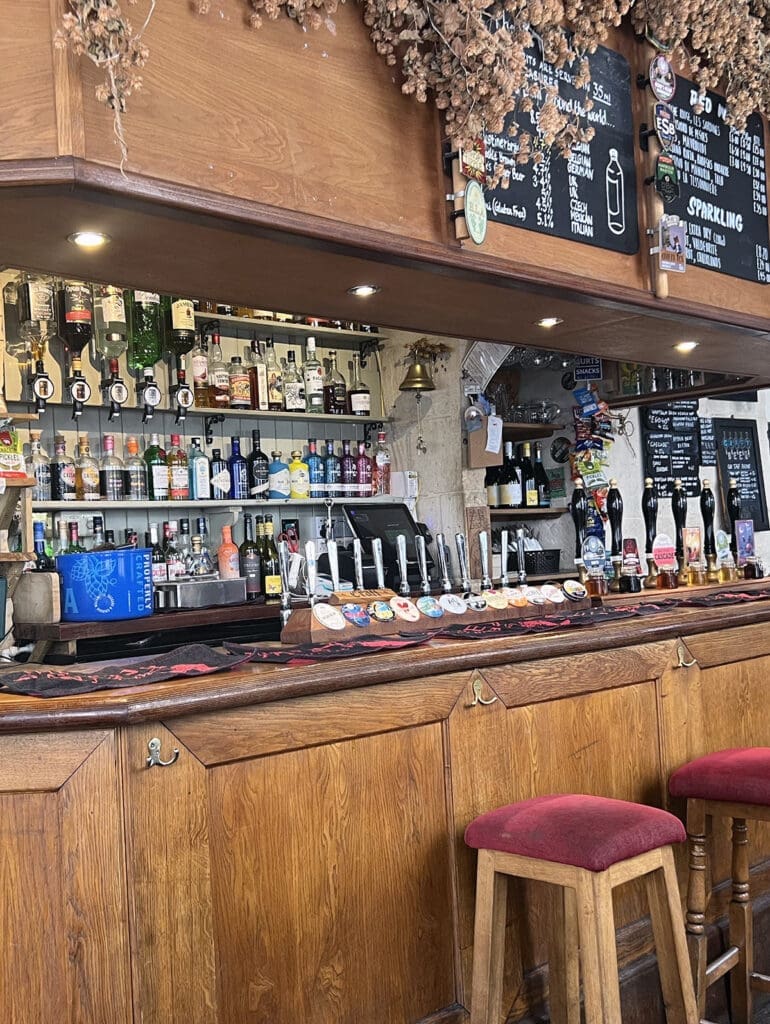
You could learn quite a bit about British food just by eating your way through a few good pubs.
Steak and ale pie, fish and chips, sausages and mash, Scotch eggs, Ploughman’s lunches, fish pie and Sunday roasts are all pub staples, although what’s on the menu can vary considerably from one place to the next.
What I look for is a pub that keeps things fairly focused. Locally made sausages, cheese from somewhere nearby, a pie made in-house, beer from a local brewery or seafood from the coast are all good signs.
I’d take that over a four-page menu trying to serve everything.
Continue Reading: British Pub Food Guide
Famous British Foods to Know
If you’re eating your way around Britain, these are some of the dishes you’ll run into again and again. Some are eaten throughout the UK, while others are much more closely tied to one country or region.
I’ve noted where each dish is most strongly associated because that’s often where I’d look for it first. It doesn’t mean you can’t find a great version somewhere else.
Fish and Chips
Most associated with: Britain broadly, with especially strong traditions in England and Scotland
Fish and chips is probably Britain’s most recognizable takeaway. White fish is battered and fried, then served with thick-cut chips, salt and malt vinegar.
Cod and haddock are the fish you’ll see most often, while the sides can change depending on where you are. Mushy peas are common in England, and curry sauce and gravy have strong regional followings too.
If I’m near the coast, I’d look for an independent fish and chip shop or somewhere serving locally landed fish rather than automatically ordering it at the first pub I see.
Yorkshire Pudding
Most associated with: Yorkshire, England
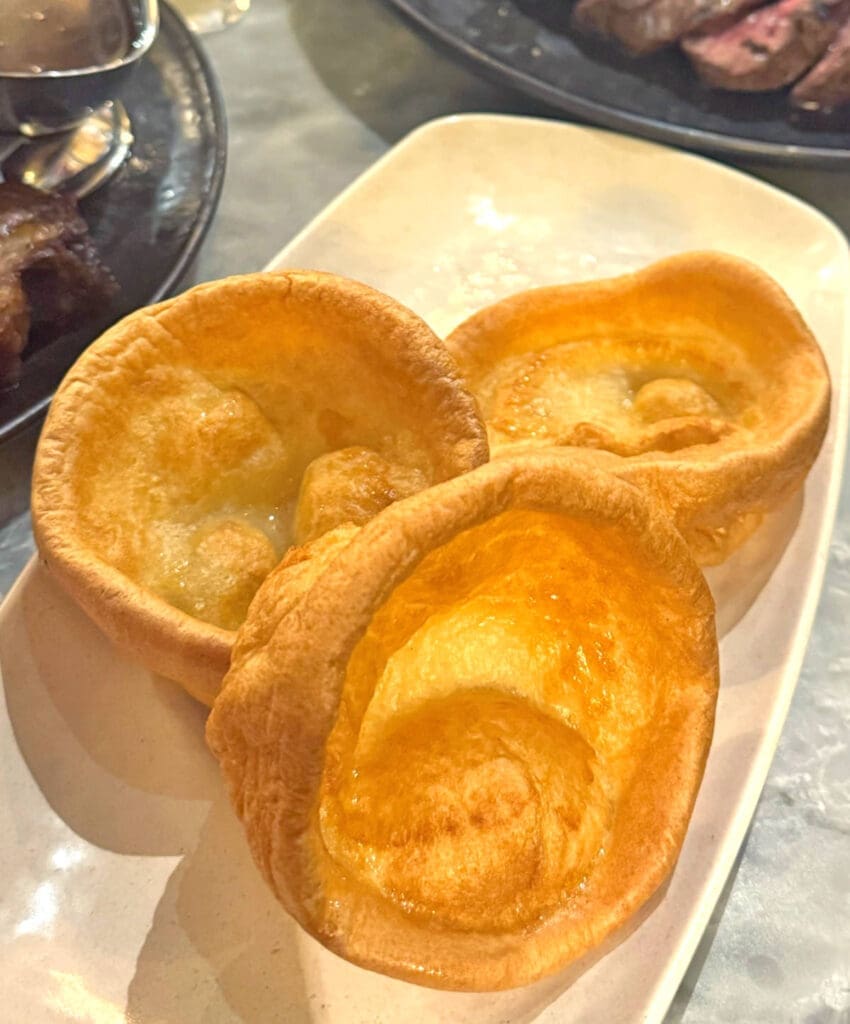
Despite the name, Yorkshire pudding isn’t dessert. It’s a savory batter made from flour, eggs and milk that’s cooked in hot fat until puffed and crisp around the edges.
It’s traditionally paired with roast beef and gravy, although you’ll now see Yorkshire puddings served with just about every type of Sunday roast.
Continue Reading: Ultimate Guide to English Food

Shepherd’s Pie and Cottage Pie
Most associated with: Britain and Ireland
These two dishes look almost identical, but there’s an easy way to tell them apart:
| Dish | Traditional Meat |
|---|---|
| Shepherd’s Pie | Lamb |
| Cottage Pie | Beef |
Both combine minced meat, vegetables and gravy beneath mashed potatoes. Despite the word “pie,” neither traditionally has a pastry crust.
Want to make one at home? Try my traditional Shepherd’s Pie recipe.

Steak and Ale Pie
Most associated with: England and British pub food more broadly
Steak and ale pie feels completely at home on a pub menu. Beef is slowly cooked in an ale-based gravy and paired with pastry, then usually served with mashed potatoes or chips, vegetables and more gravy.
The ale matters too. Bitter, brown ale and stout can each change the flavor of the filling, and I always like seeing a pub use beer from a nearby brewery.
Make it at home with my Steak and Ale Pie recipe.

Beef Wellington
Most associated with: England and British special-occasion cooking
Beef Wellington sits at the other end of the spectrum from steak and ale pie. Beef fillet is covered with mushroom duxelles, wrapped in pastry and baked until the pastry is crisp and the beef is cooked to your liking.
This isn’t something I’d expect to find on every pub menu. I think of it much more as special-occasion food, and it’s one of the British dishes I’d especially consider for Christmas or a dinner where you want the main course to be the centerpiece.
Want to make it at home? Try my Individual Beef Wellington recipe.

Cornish Pasty
Most associated with: Cornwall, England
A traditional Cornish pasty combines beef, potato, swede and onion inside a folded pastry crust with its distinctive crimped edge.
You can buy pasties all over Britain, but this is one I’d save room for in Cornwall. Find a good local bakery or pasty shop and have one where it actually comes from.
The Cornish Pasty name also has protected geographical status, with specific requirements for products sold under the protected name.

Sausage Rolls
Most associated with: England and Britain more broadly
Sausage rolls combine seasoned sausage meat with flaky pastry and are sold everywhere from supermarkets and bakeries to butcher shops and takeaway counters. Longer rolls work as a quick lunch, while smaller versions are popular for parties, picnics and holiday gatherings.
Make them at home with my British Sausage Rolls recipe, which uses ground pork seasoned with sage, thyme and nutmeg inside store-bought puff pastry.
Or try this puff pastry sausage rolls with caramelized apples.
Continue Reading: From pub pies and pork pies to Cornish pasties, Scotch pies and sausage rolls, there’s a lot more to explore in my British Pies and Pasties Guide.
Bangers and Mash
Most associated with: England and Britain more broadly
Bangers and mash is about as straightforward as comfort food gets: sausages, mashed potatoes and onion gravy.
The sausage is what makes it interesting. Cumberland, Lincolnshire and locally made butcher’s sausages can make two plates of bangers and mash taste completely different. I’d pay more attention to what sausage the pub is serving than how fancy the plate looks.

Toad in the Hole
Most associated with: England
Toad in the Hole is much less strange than the name suggests. Sausages are baked directly in Yorkshire pudding batter until the batter rises around them and gets crisp at the edges.
It’s usually served with onion gravy and vegetables. And no, there are no toads involved.
Cullen Skink
Most associated with: Scotland
Cullen skink is a thick Scottish soup traditionally made with smoked haddock, potatoes and onions. It’s rich, smoky and exactly the kind of dish I’d look for on a cold day in Scotland.
The name comes from Cullen, a town on the Moray coast, which is why this is one of those dishes that’s especially worth trying in the part of the country it’s connected to.
Welsh Rarebit
Most associated with: Wales
Welsh rarebit takes cheese on toast and makes it much more interesting. The cheese is usually mixed into a savory sauce with ingredients such as ale, mustard or Worcestershire sauce before being spooned over toasted bread.
It’s simple pub or café food, but a good version is much richer and more flavorful than the name might suggest.
Cawl
Most associated with: Wales
Cawl is one of Wales’s best-known traditional dishes, usually built around meat, potatoes, leeks and other vegetables cooked slowly into a hearty soup or stew.
The exact ingredients can change, which is part of what makes it feel like true home cooking rather than a recipe with one rigid formula.
Ulster Fry
Most associated with: Northern Ireland
An Ulster fry is the Northern Irish version of a full cooked breakfast, with bacon, sausages and eggs joined by soda farls and potato bread.
Those breads are what make it noticeably different from the Full English or Full Scottish, and they’re the reason I’d make breakfast a priority on a first trip to Northern Ireland.

Scotch Egg
Most associated with: Britain broadly, despite the name
A Scotch egg is a cooked egg wrapped in sausage meat, coated in breadcrumbs and fried or baked. You’ll find cold versions sold as picnic and snack food as well as pub versions served warm with a softer center.
Its origins aren’t as straightforward as the name might suggest, and today it’s better thought of as a familiar British snack and pub food rather than something exclusively Scottish.
Ploughman’s Lunch
Most associated with: England and British pub food
A Ploughman’s lunch is built around cheese, bread and pickle or chutney, often with apple, salad, ham, pork pie or pickled onions added to the plate.
This is one where the ingredients matter much more to me than the recipe. Give me a good local cheese, fresh bread and a proper pickle or chutney and you’ve already got most of what makes it work.
Bubble and Squeak
Most associated with: England
Bubble and squeak is traditionally a way of turning leftover potatoes and cooked vegetables into another meal. They’re fried together until browned and crisp, then often served with eggs, sausages or leftover roast meat.
There’s no exact ingredient list, which is really the point. It’s leftover cooking.
Fish Pie
Most associated with: Britain broadly
Fish pie combines fish in a creamy sauce beneath mashed potatoes rather than pastry. White fish, smoked haddock, salmon and prawns can all appear, sometimes with peas, leeks, parsley or hard-cooked eggs.
Like Shepherd’s Pie and Cottage Pie, it’s another example of a British dish called a pie that doesn’t use a pastry crust.
Want to Dig Deeper Into English Food?
Many of Britain’s best-known dishes are English, but this guide only touches on them here. My Ultimate Guide to English Food goes much deeper into England’s regional dishes, cheeses, seafood, baking, drinks and food traditions.
The Regional Cuisines of Britain
Once you start traveling around Britain, the differences between the food in England, Scotland and Wales become pretty obvious. Northern Ireland adds another distinct food tradition to the wider UK food story.
Rather than repeat every regional dish here, this is a quick look at what makes the food of each country different and what I’d look for when visiting.
English Food
England’s food changes considerably depending on where you are. Cornwall is known for pasties and seafood, Somerset for Cheddar and cider, Yorkshire for Yorkshire pudding and Wensleydale, and parts of the Midlands for pork pies, Stilton and other regional specialties.
Roasts, savory pies, sausages, cheese, puddings and pub food are all part of the traditional side of English cooking. But that’s not the whole picture. Curry houses, Caribbean food, Middle Eastern restaurants, European bakeries and plenty of other influences are just as much a part of how England eats today.
Since I’m currently spending most of my time in England, this is also the country I’m exploring in the most detail.
Continue Reading: Ultimate Guide to English Food

Scottish Food
Scotland is where I’d look for Cullen skink, Scotch broth, smoked fish, salmon, oatcakes, tattie scones and shortbread. Beef, lamb, game, oats, barley and seafood also show up throughout traditional Scottish cooking.
If you’re the adventurous type when it comes to food, I’d put haggis on the list too. I’d try it somewhere that takes the dish seriously rather than somewhere serving it only as a tourist novelty.
Then there’s whisky. Distilleries are such a big part of Scotland’s food and drink culture that I’d treat a good distillery visit much like visiting a winery in another part of Europe: it’s another way to understand the place through what it produces.
Scottish foods to look for: Haggis with neeps and tatties, Cullen skink, Scotch broth, Forfar bridies, Scotch pies, tattie scones, oatcakes, cranachan and shortbread.
Welsh Food
Wales has its own mix of lamb, leeks, potatoes, cheese, seafood and traditional baking. Cawl is one of the dishes I’d look for first, along with Welsh rarebit, Welsh cakes and bara brith.
Coastal ingredients add another side to Welsh food. Cockles and laverbread are particularly associated with South Wales, while Welsh lamb and cheeses such as Caerphilly reflect the country’s farming traditions.
Welsh foods to look for: Cawl, Welsh rarebit, Welsh cakes, Glamorgan sausages, bara brith, laverbread, Welsh lamb and Caerphilly cheese.
Northern Irish Food
If I were starting with Northern Irish food, breakfast would be high on my list. An Ulster fry brings together bacon, eggs and sausages with soda farls and potato bread, which immediately makes it different from the cooked breakfasts you’ll find elsewhere in the UK.
Bread and potatoes show up in plenty of other ways too. Champ combines mashed potatoes with scallions, while bakeries are a good place to look for soda bread and other local specialties.
Northern Irish foods to look for: Ulster fry, soda farls, potato bread, champ, vegetable roll, Yellowman and Fifteens.
British Cheese
Cheddar may be the name everyone knows, but it’s only the beginning when it comes to British cheese.
You’ll find everything from crumbly farmhouse cheeses and rich blues to soft and washed-rind styles. This is also one food I’d make a point of trying locally. Farm shops, cheesemongers, markets and good pubs often tell you exactly where a cheese was made, making it easy to try something from the area you’re visiting.
| Cheese | Where It’s From |
|---|---|
| Cheddar | Somerset and the West Country |
| Stilton | Derbyshire, Leicestershire and Nottinghamshire |
| Red Leicester | Leicestershire |
| Wensleydale | Yorkshire |
| Double Gloucester | Gloucestershire |
| Cheshire | Cheshire |
| Caerphilly | Wales |
| Caboc | Scotland |
You don’t need to hunt down every cheese on the list. If I’m somewhere with a good cheesemonger or farm shop, I’d simply ask what’s made nearby and start there.
British Ingredients and Condiments to Know
If you’re cooking British recipes in the U.S., a few ingredients are worth knowing before you start. Some don’t have an exact American equivalent, while others may be familiar but taste or behave a little differently.
| Ingredient | What to Know |
|---|---|
| Double Cream | Much richer than standard American heavy cream and used in both sweet and savory dishes. |
| Clotted Cream | Very thick, rich cream especially associated with Cornwall and Devon and traditionally served with scones. |
| Suet | A traditional cooking fat used in dishes such as steamed puddings and dumplings. |
| English Mustard | Much hotter and sharper than typical American yellow mustard. |
| Malt Vinegar | The classic vinegar to shake over fish and chips. |
| Worcestershire Sauce | A savory fermented sauce used to add depth to gravies, pies, marinades and cheese dishes. |
| Brown Sauce | A tangy, slightly fruity condiment commonly served with cooked breakfasts, bacon sandwiches and sausages. |
| Marmite | A salty, intensely savory yeast extract that’s usually spread very thinly on buttered toast. |
| Golden Syrup | A thick amber syrup used in British baking and desserts such as treacle tart. |
You don’t need all of these in the pantry to start cooking British food, but recognizing the names makes British recipes and grocery shopping a lot easier.
British Drinks
Drinks are just as much a part of the food story, from tea and cask ale to West Country cider, Scotch whisky and English sparkling wine. When I’m traveling, I usually start with whatever is made nearby.
Tea
Tea is still the drink most closely associated with Britain, and black tea with milk is probably what you’ll encounter most often.
You’ll also hear people talk about builder’s tea. It’s not a particular type of tea, but a strong, straightforward mug usually served with milk and often sugar.
Ale and Beer
If you’re spending time in pubs, get to know the hand pumps. Cask-conditioned ales finish conditioning in the cask and you’ll commonly come across bitters, pale ales, golden ales, milds, porters and stouts.
If there are several on offer, I’d ask what’s brewed locally rather than automatically ordering something I already know.
Continue Reading: British Pub Food Guide

Cider and Perry
Cider is especially important in apple-growing areas of England and Wales, with Somerset and Herefordshire among the places best known for it. You’ll find everything from dry, still farmhouse cider to sweeter and sparkling styles.
Perry follows the same general idea but is made from pears, with its own long tradition in pear-growing areas.
Scotch Whisky
Whisky is one of the drinks I’d make time for in Scotland, especially if you’re anywhere near a distillery. Single malts get plenty of attention, but Scotch also includes grain and blended whiskies.
Places such as Islay, Speyside and the Highlands are famous for whisky production, although region alone won’t tell you exactly what a whisky will taste like.
Gin
Gin has a long history in Britain, and today you’ll find small distilleries producing their own versions all over the UK.
One useful thing to know when you’re reading labels: London Dry Gin describes a style and method of production. It doesn’t mean the gin was necessarily made in London.
English and Welsh Wine
Wine may not be the first drink you associate with Britain, but vineyards in England and Wales are increasingly worth paying attention to.
Southern England is particularly well known for traditional-method sparkling wine, while producers are also making still white, rosé and red wines. If I’m already traveling near a vineyard, a tour or tasting is an easy addition to the trip.
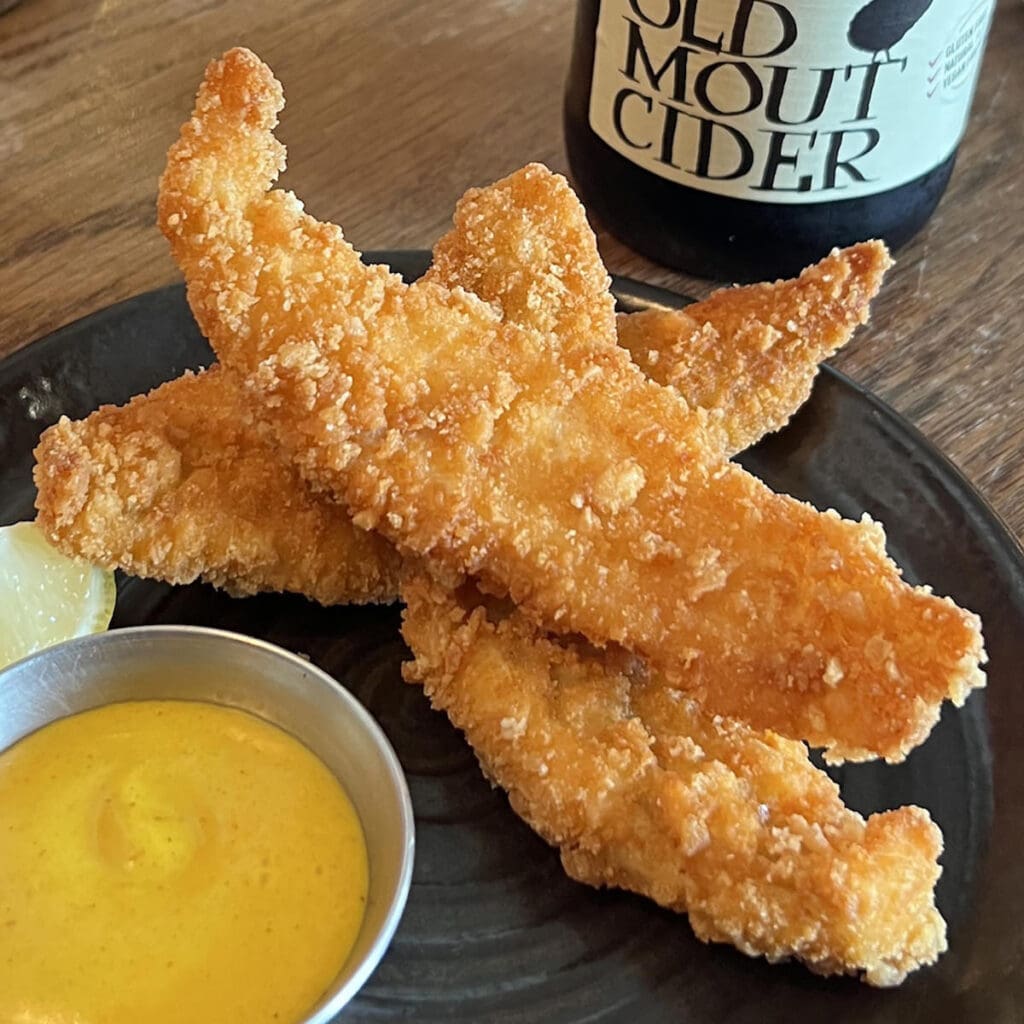
Modern British Food
If you only eat roasts, pies and fish and chips, you’re getting one side of British food. It’s an important side, but it’s definitely not the whole story.
The food people eat around Britain today reflects the communities that live here. South Asian food is probably the most obvious example. Curry houses have been part of British food culture for generations, and cities such as Birmingham, Bradford, Leicester, Glasgow and London have particularly strong South Asian food scenes.
The same is true of Caribbean, African, Middle Eastern, Chinese, Italian, Polish, Turkish and many other food traditions. Walk around almost any larger British city and that mix becomes pretty obvious.
At the same time, pubs and restaurants have put more attention back on ingredients produced closer to home: British seafood, seasonal vegetables, farmhouse cheese, heritage meats, game and regional dishes that might once have felt old-fashioned.
I don’t think you need to choose between the two when you’re exploring British food. Have the Sunday roast and the steak and ale pie, but go out for a curry too. Try the old pub, the neighborhood bakery, the food market and the modern restaurant.
They’re all part of how Britain eats now.

Where to Experience British Food
You can learn a lot about British food without ever sitting down in a formal restaurant. Pubs, markets, farm shops, bakeries and coastal towns are often where I find the foods that tell me the most about an area.
Pubs
A good pub is an easy place to start. Pies, sausages, Sunday roasts, local cheese and cask ale can all show up on the same menu, and you don’t need a special occasion to try any of them.
I tend to look for shorter menus that mention local farms, butchers, fisheries, cheesemakers or breweries. That’s usually more interesting to me than a huge menu trying to cover everything.
Continue Reading: British Pub Food Guide
Markets and Farm Shops
Markets and farm shops are especially useful when you want to see what an area produces without tracking down every farm, bakery or cheesemaker individually.
Depending on where you are, you might find local cheese, butcher-made sausages, bread, seafood, cider, preserves, seasonal produce and regional baked goods all in one stop. If something keeps appearing from stall to stall or shelf to shelf, that’s usually a good clue that it’s worth trying.
Bakeries and Tearooms
Independent bakeries are where I’d look for regional breads, buns, pies and pastries, while tearooms are the obvious stop for scones, cream tea and afternoon tea.
If a bakery has one thing it’s known for, that’s usually what I’m ordering.
Along the Coast
Don’t limit the British coast to fish and chips. Depending on where you are and what’s in season, you may find crab, oysters, mussels, scallops, langoustines, cockles, smoked fish and locally landed white fish.
I’d ask what’s local or what came in that day rather than ordering the same seafood everywhere.
Using Bath as a Base for Exploring British Food
Bath has become my starting point for exploring British food. I’m right on the edge of Somerset, with Wiltshire, Bristol, Gloucestershire, the Cotswolds and the wider West Country all within easy reach.
Bath has plenty of food history of its own. There’s the Sally Lunn bun, Bath bun, Bath Oliver and Bath Soft Cheese, while heading outside the city gets me closer to Somerset cider, Cheddar, farm shops, dairies and countryside pubs.
That’s what makes Bath such a useful base for me. I can explore the city’s own food, then head out into the surrounding countryside and start connecting those dishes and ingredients to the places producing them.

Cook British Food at Home
You don’t need to tackle the entire British cookbook at once. Start with something you already want to eat.
Shepherd’s Pie or Steak and Ale Pie are good places to start if you’re after British comfort food, while a Sunday roast gives you more of the traditional Sunday lunch experience. If I want something more ambitious, Beef Wellington is firmly in special-occasion territory and one I’d save for Christmas, a dinner party or a weekend when I actually have time to enjoy making it.
Yorkshire pudding teaches you one of the classics, and Sticky Toffee Pudding is hard to argue with if you’d rather begin with dessert.
From there, you can start branching out. Try Welsh rarebit or Welsh cakes, make Scottish shortbread, explore British pies and puddings, or work your way through the English recipes I’m collecting while living here.
Start With England: Traditional English Recipes
Explore British Food by Topic
This guide is the starting point. If you want to go deeper into a particular country, meal or food tradition, these guides pick up where this one leaves off.
- Ultimate Guide to English Food
- Traditional English Recipes
- British Pub Food Guide
- British Pies and Pasties Guide
Keep Exploring British Food
The more I eat around Britain, the less interested I am in finding one dish that supposedly represents the whole country.
Have the Sunday roast. Get fish and chips. Order the pie and save room for pudding. But then see what else is around.
Ask what cheese is made nearby. Try the beer from the local brewery. See what’s coming in from the coast, what the bakery is known for or which sausages the butcher makes himself.
That’s the part I’m finding most interesting. British food isn’t just a collection of famous dishes. Once you start connecting those foods to the people and places behind them, the whole thing gets a lot more interesting.
Experience British Food Where It’s Made
Here on Foodie & Wine, I’m digging into the dishes, ingredients and recipes themselves. Over on Cleared for Departure, I’m covering the travel side: where to try them, what to order and the food experiences worth adding to a trip.
- What to Eat in Britain: A First-Time Visitor’s Food Guide
- What to Eat in England: A First-Time Visitor’s Food Guide
About This Guide: This guide combines my firsthand experiences living and eating in England with research into the wider food traditions of Britain. As I spend more time traveling through Scotland, Wales and Northern Ireland, I’ll continue expanding those sections with firsthand notes, photographs and regional food discoveries.