

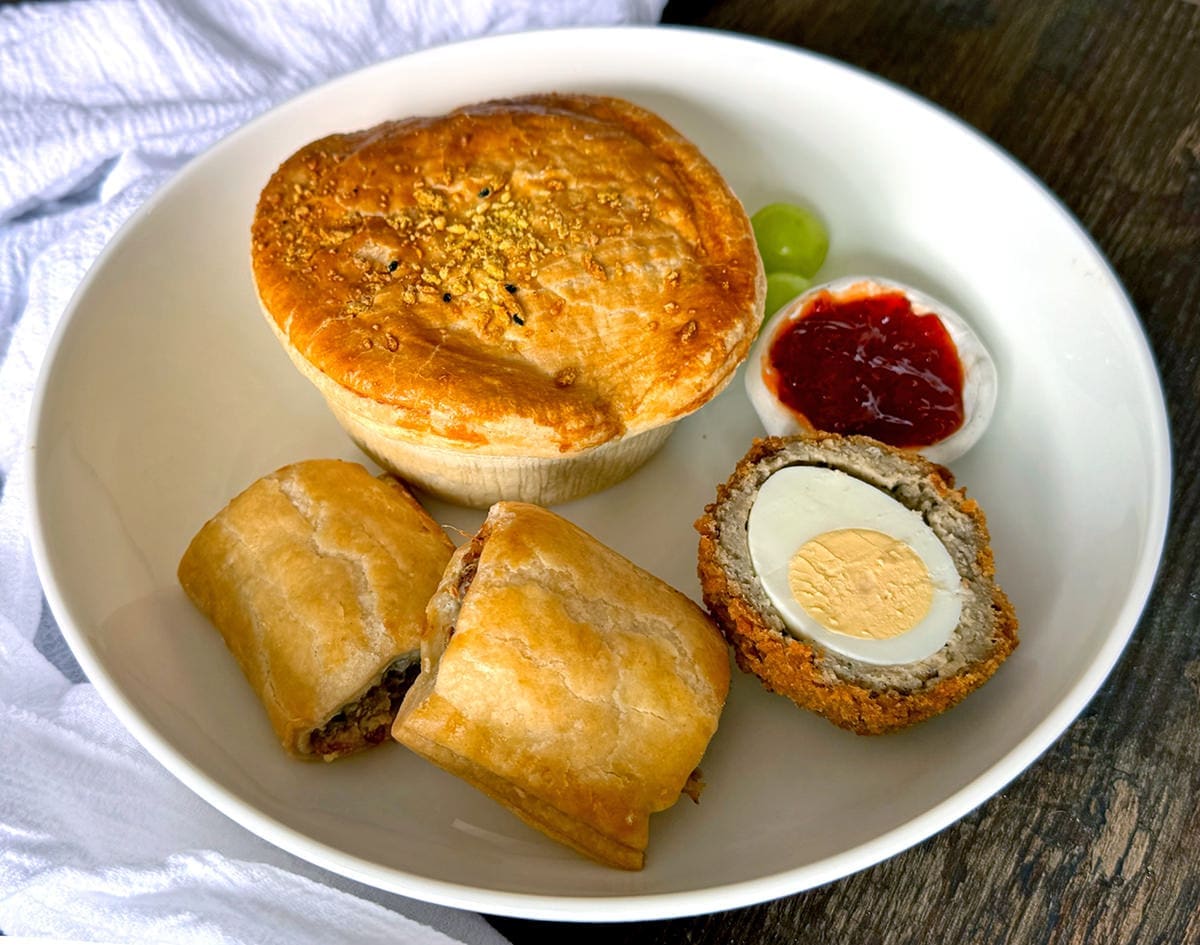
If you want to cook traditional English food at home, this is where I’d start.
From My Kitchen In England
- I’m currently spending an extended period in England, and this collection has become my working list of dishes to make, test and bring back into my own kitchen. Some, like Shepherd’s Pie and roast beef, I’ve cooked for years. Others I’m getting to know better through the pubs, bakeries, markets and meals I encounter around the country.
Rather than trying to cover every English dish ever made, I’m focusing on the recipes that are worth actually cooking at home: Sunday roasts, savory pies, sausages and mash, Yorkshire pudding, roast potatoes, sauces, baking and plenty of traditional puddings.
Looking for the Bigger Picture?
This page is about what to cook. For England’s regional foods, cheeses, seafood, drinks, food traditions and the story behind the dishes, start with my Ultimate Guide to English Food. For England’s place within the wider food traditions of Scotland, Wales and Northern Ireland, see my Ultimate British Food Guide.
Traditional English Recipes to Start With
If you’re new to English cooking, pick a dish that sounds good to you and build the meal around it from there.
| Recipe | What You’re Making | Good First Choice If You Want… |
|---|---|---|
| Shepherd’s Pie | Lamb and vegetables under creamy mashed potatoes | Comfort food |
| Steak and Ale Pie | Slow-cooked beef and ale gravy with pastry | A pub-style dinner |
| Bangers and Mash | Sausages, mashed potatoes and onion gravy | An easy weeknight meal |
| Roast Beef | Roasted beef with classic Sunday-lunch sides | A traditional roast |
| Yorkshire Pudding | Crisp, puffed savory batter | A classic English side |
| Toad in the Hole | Sausages baked in Yorkshire pudding batter | A family dinner |
| English Roast Potatoes | Crisp potatoes with fluffy centers | The perfect roast side |
| Scones | Classic English baking for cream tea | Something to bake |
| Apple Crumble | Warm fruit beneath a buttery crumble topping | An easy dessert |
| Sticky Toffee Pudding | Date sponge with warm toffee sauce | A proper pudding |

Sunday Roast Recipes
A Sunday roast brings a lot of the recipes on this page together: roast meat, crisp potatoes, Yorkshire pudding, vegetables, brown gravy and the sauce traditionally served with the meat. I’ve broken out the main components below so you can use them individually or put them together for the full meal.
Make It: Roast Beef | Prime Rib Gravy | Garlic Mashed Potatoes
Roast Beef
Roast beef is the obvious place to start if you want a classic English Sunday lunch. Serve it with roast potatoes, vegetables, Yorkshire pudding, gravy and horseradish sauce.
The beef itself doesn’t need a complicated ingredient list. Getting the internal temperature right, resting the meat properly and making good gravy matter much more.
Make With It: Horseradish Sauce | Beef Au Jus | Garlic Mashed Potatoes

Roast Lamb
Roast lamb works beautifully with simple seasonings such as garlic and rosemary, with mint sauce served alongside.
If you’re planning the entire meal, my guide to the best wines with lamb covers the reds and other wines I’d pair with it.
Make It: Smoked Leg of Lamb | Creamy Mint Sauce for Lamb
Roast Pork and Crackling
A good roast pork dinner should give you tender meat and properly crisp crackling. Add roast potatoes, vegetables, gravy and apple sauce and you’ve got another classic Sunday option.
Roast Chicken
Roast chicken is one of the easier Sunday roasts to put together at home. Serve it with roast potatoes, vegetables, stuffing and gravy, with bread sauce if you want the more traditional version.
I also have a Smoked Whole Chicken if you want to take the meal in a different direction.
Make With It: Chicken Gravy | Roasted Baby Carrots
Yorkshire Pudding and Roast Potatoes
These are two of the recipes that can make or break a roast dinner, and both depend much more on technique than complicated ingredients.

Yorkshire Pudding
Yorkshire pudding is made from a simple batter of flour, eggs and milk, but the pan and fat need to be properly hot before the batter goes in. That’s what helps create the dramatic rise and crisp edges.
It’s traditionally served with roast beef, although you’ll see it alongside plenty of other roasts now too.
Foodie and Wine Test Kitchen Tip
- I’ve been making Yorkshire puddings for years, and one of the biggest differences I’ve found comes down to the heat of the pan and fat. Have the batter ready before you pull the pan from the oven, pour quickly and get it straight back into the heat.
English Roast Potatoes
For me, roast potatoes should have a deeply crisp exterior and a fluffy center. Parboiling, roughing up the edges and roasting them in properly heated fat are what get you there.
English Pies, Pasties and Savory Pastries
Pies and pastry are one of the easiest ways to recreate the kind of food you’ll find in English pubs, bakeries and pie shops at home. For more on what you’ll find on the menu, see my British Pub Food Guide.
Steak and Ale Pie

My Steak and Ale Pie is one of the recipes I’d make first if you’re after a pub-style English dinner. Beef cooks slowly in an ale-based gravy until tender, then gets paired with pastry. This was also one of the first recipes I posted on Foodie & Wine.
Serve it with mashed potatoes or chips, peas or another simple vegetable and extra gravy.
Cornish Pasty
A traditional Cornish pasty combines beef, potato, swede and onion inside folded pastry. Unlike a pub pie served with potatoes and gravy, a pasty is a complete handheld meal.
Pork Pie
Traditional pork pies use a sturdy hot-water crust and are generally served cold. Add English mustard, chutney or pickles, or use one as part of a Ploughman’s lunch.

Sausage Rolls
My homemade sausage rolls are one of the easiest English bakery foods to make at home. Seasoned pork is wrapped in flaky pastry and baked until crisp and deeply golden. Make them approximately 1½ inches wide for parties, picnics and holiday gatherings.
My sausage rolls with apples are another favorite!
Steak and Kidney Pie
Steak and kidney pie combines beef and kidney in a rich gravy beneath pastry and remains one of the traditional English pub dishes worth knowing. It’s not a recipe I’m planning to develop for Foodie & Wine, but it belongs here because you’ll still encounter it when exploring classic English cooking.
Continue Reading: British Pies and Pasties Guide
Classic English Comfort Food
Not everything needs pastry or an entire Sunday afternoon. These are the English dinners I’d turn to when I want something hearty without building a full roast.
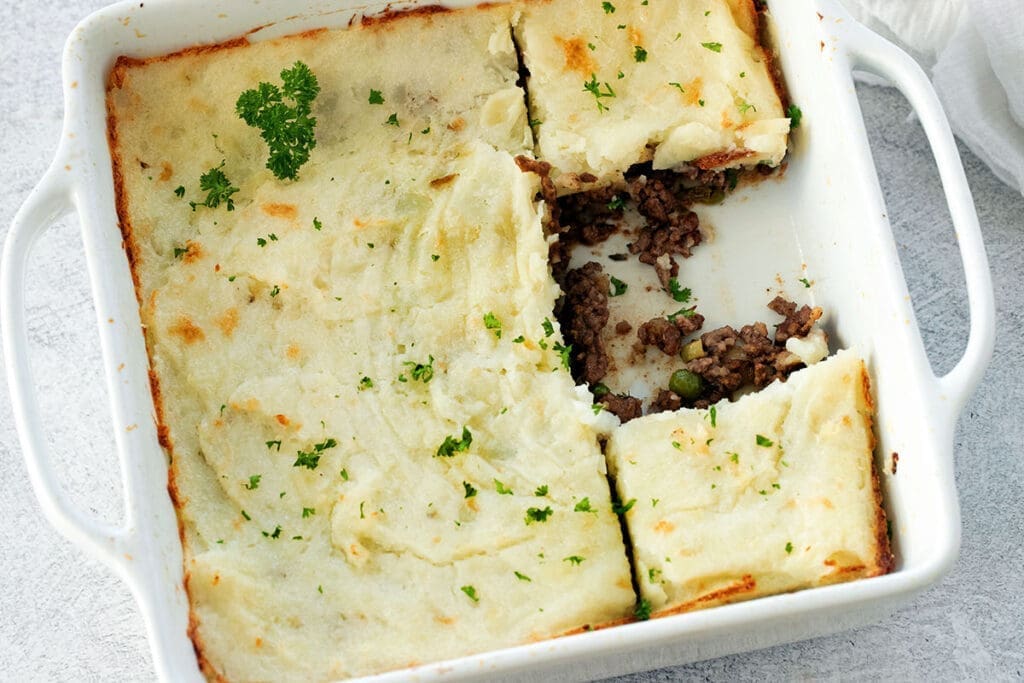
Shepherd’s Pie
Shepherd’s Pie is made with lamb, while Cottage Pie uses beef. Both combine meat and vegetables in gravy beneath mashed potatoes.
My traditional Shepherd’s Pie uses savory lamb and vegetables under creamy mashed potatoes. It’s also one of the earliest recipes I published on Foodie & Wine. If you prefer beef or turkey, I’ve included those as variations in the recipe, although the beef version is traditionally considered Cottage Pie.
Bangers and Mash
Bangers and mash is exactly what it sounds like: good pork sausages, mashed potatoes and plenty of onion gravy.
Cumberland and Lincolnshire sausages give the dish their own regional character, but a good-quality butcher’s pork sausage works perfectly well at home.

Toad in the Hole
Toad in the Hole takes pork sausages and bakes them directly in Yorkshire pudding batter until the batter rises and crisps around the edges.
Add onion gravy and vegetables and you’ve got a very good cold-weather dinner. And despite the name, there are no toads involved.
English Fish and Seafood Recipes
Fish and Chips
Fish and chips is usually something you pick up from a chippy rather than make yourself, but it’s a fun one to tackle at home.
Cod and haddock are the usual choices, dipped in batter and fried until crisp, then piled alongside thick-cut chips. From there, serve it the way you like it. Malt vinegar is the classic, while mushy peas, tartar sauce, curry sauce and pickled onions are all common additions.
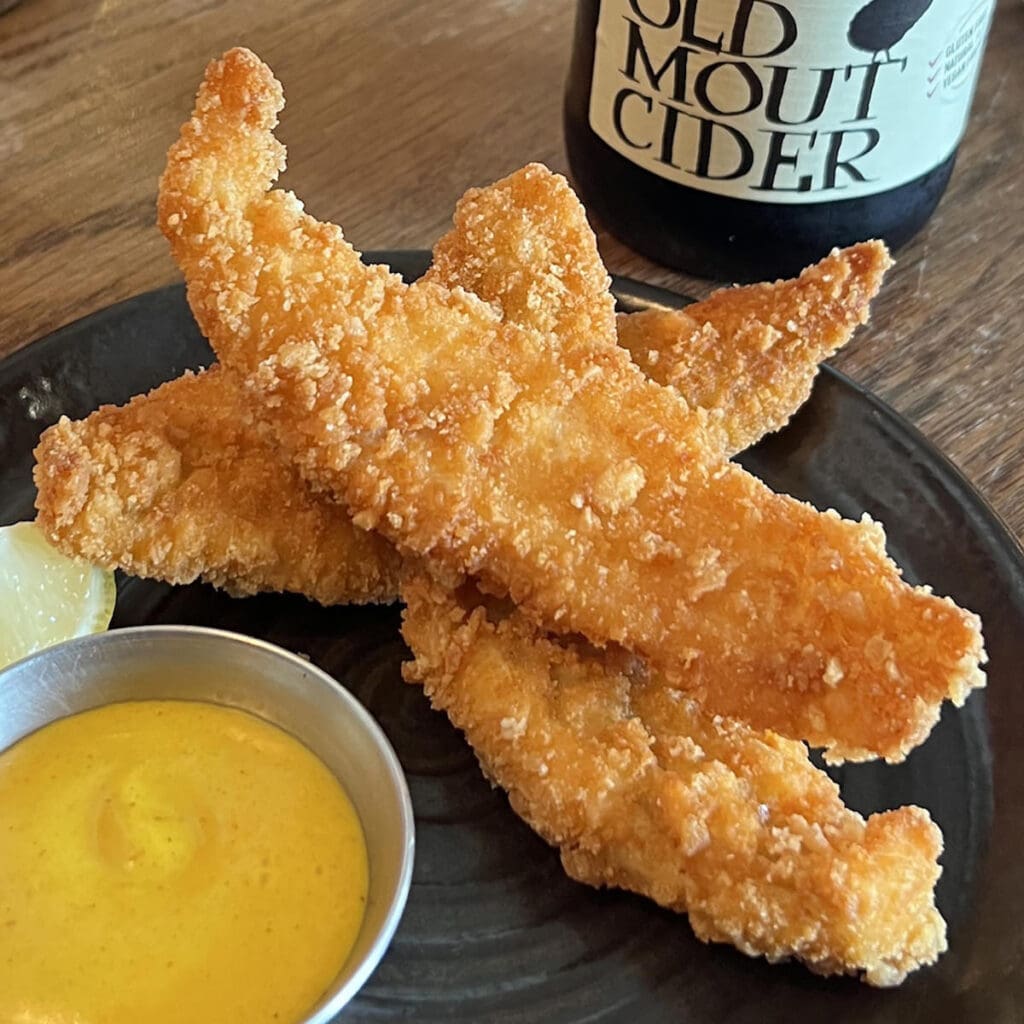
Plaice Goujons
Plaice goujons are an easy way to bring the kind of fish I’ve been seeing in British pubs and fish shops into my own kitchen.
Strips of plaice are breaded or battered and fried until crisp, then served with chips, tartar sauce, curry mayonnaise or lemon. I like them as an alternative to traditional fish and chips when I don’t want to fry whole fillets.
Ploughman’s Lunch
A Ploughman’s lunch barely needs a recipe, which is exactly why it’s useful to include here. The quality of the ingredients does most of the work.
Start with good English cheese, bread and pickle or chutney, then add whatever makes sense from the usual accompaniments.
- Mature Cheddar or another English cheese
- Crusty bread
- Branston Pickle or chutney
- Pickled onions
- Apple
- Butter
- Salad
- Ham or pork pie, if you want it
I wouldn’t get too hung up on recreating one exact version. Good cheese, bread and pickle are the foundation; after that, I’d build the plate around what’s available.
English Potato and Vegetable Recipes
Roasts, pub meals and family dinners rely heavily on potatoes, peas, cabbage and root vegetables. These are the sides I’d build into the collection first.
Bubble and Squeak
Bubble and squeak is traditionally made by frying leftover potatoes with cabbage or other cooked vegetables until browned and crisp. There’s no reason to make it overly precise. It’s a leftover recipe, so use what you have.
Cauliflower Cheese
Cauliflower cheese is one of the sides I’d add when a roast needs something more substantial than another vegetable. It’s simply cauliflower baked in a rich cheese sauce, but alongside roast beef or chicken it earns its place on the plate.
Mushy Peas
Mushy peas are traditionally made with marrowfat peas and are especially useful if you’re making fish and chips at home.

English Sauces and Condiments to Make
Don’t overlook the sauce. Roast beef without horseradish, lamb without mint sauce or bangers and mash without onion gravy isn’t quite the same meal.
| Sauce | Serve It With |
|---|---|
| Horseradish Sauce | Roast beef |
| Mint Sauce | Roast lamb |
| Apple Sauce | Roast pork |
| Bread Sauce | Roast chicken and turkey |
| Onion Gravy | Bangers and mash or Toad in the Hole |
| Beef Gravy | Roast beef and Yorkshire pudding |
If you’re starting with roast beef, make my Horseradish Sauce. I also have Beef Au Jus when you want something thinner and more meat-forward than traditional gravy.
Traditional English Baking
This part of the collection will keep growing because English baking changes quite a bit depending on where you are. For now, these are the recipes I’d start with.
Scones
Plain and fruit scones are the obvious place to begin. Serve them warm with clotted cream and strawberry jam for a traditional cream tea.
Cheese and savory scones use the same basic idea but take it in a completely different direction.
Bath Buns
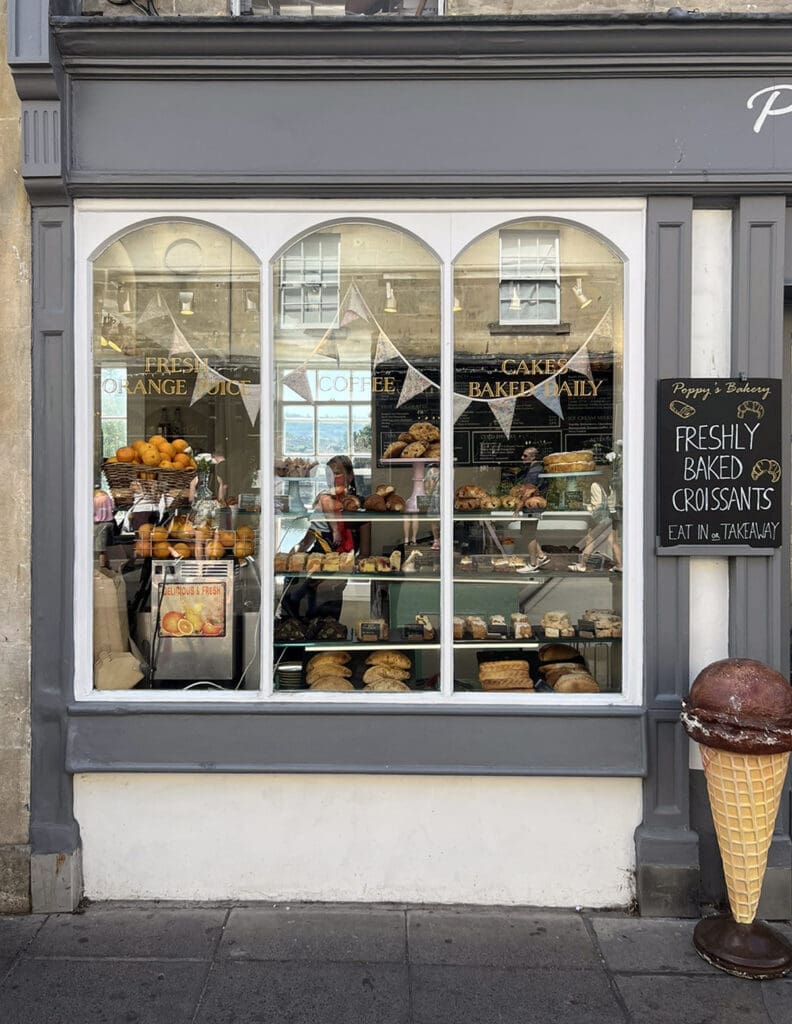
Bath Buns are one of the local recipes I’m particularly interested in while I’m based in Bath. They’re sweet enriched yeast buns traditionally finished with sugar.
I want to spend more time eating and testing them here before developing my own version.
Sally Lunn Bun
The Sally Lunn Bun is another Bath specialty, but it’s quite different from a Bath Bun. It’s larger and lighter, closer to an enriched bread, and can work with either sweet or savory toppings.
Traditional English Desserts and Puddings
English desserts are where fruit, sponge, custard, cream and pastry really take over. If you’re only making one, I’d start with Sticky Toffee Pudding or a simple fruit crumble.
Sticky Toffee Pudding
Sticky Toffee Pudding combines moist date sponge with warm toffee sauce and is usually served with custard, cream or vanilla ice cream.
Apple Crumble
Apple crumble is exactly the kind of dessert I want in this collection: uncomplicated, fruit-forward and even better with custard or cream alongside it. Apples are the obvious place to begin, but the same basic idea works with rhubarb, blackberries, plums and other seasonal fruit.
Bread and Butter Pudding
Bread and Butter Pudding turns bread, butter, dried fruit and custard into a warm baked dessert. Brioche and croissants sometimes show up in modern versions, but the basic recipe doesn’t need much dressing up.
Eton Mess
Eton Mess combines strawberries, whipped cream and broken meringue. There’s no need to make it look perfect. The messy part is built into the name.
Trifle
Traditional trifle layers sponge, fruit, custard and whipped cream, with jelly and sherry appearing in many versions. This is one of those desserts where family tradition usually decides what belongs in the bowl.
Treacle Tart
Treacle tart uses pastry with a sweet filling based around golden syrup and breadcrumbs, usually with citrus to keep the sweetness in check.
Bakewell Pudding and Bakewell Tart
These two Derbyshire desserts are often confused, but they’re different recipes. Bakewell Pudding is the older local specialty, while Bakewell Tart is the later shortcrust-and-frangipane version most people recognize.
More English Puddings to Make
Once you’ve worked through Sticky Toffee Pudding, crumble and some of the more familiar desserts, there’s a much longer list of traditional puddings to check out.
| Pudding | What You’re Making |
|---|---|
| Spotted Dick | Steamed suet pudding with dried fruit, usually served with custard |
| Jam Roly-Poly | Rolled suet pudding filled with jam |
| Summer Pudding | Bread filled and stained with summer berries and their juices |
| Rice Pudding | Rice slowly cooked with milk, sugar and often nutmeg |
| Lemon Posset | Simple set cream dessert flavored with lemon |
| Fruit Fool | Fruit folded through cream or custard |
| Queen of Puddings | Breadcrumb-and-custard base topped with jam and meringue |
Full English Breakfast Recipes
A Full English looks simple until you try cooking all of it at once. The challenge isn’t any one component; it’s getting the bacon, sausages, eggs, mushrooms, tomatoes, beans and toast onto the plate while everything is still hot.
The exact plate varies, but back bacon, pork sausages and eggs form the core of most versions, with beans, tomatoes, mushrooms, toast or fried bread and black pudding filling things out.
- Back bacon
- Pork sausages
- Eggs
- Baked beans
- Grilled tomatoes
- Sautéed mushrooms
- Toast or fried bread
- Black pudding
A Few Ingredients Worth Having
You don’t need to build an entirely British pantry before you start. A few ingredients will simply make some of these recipes easier to recreate.
- English mustard
- Worcestershire sauce
- Branston Pickle or another savory pickle or chutney
- Golden syrup
- Suet for traditional puddings
- Marrowfat peas
- Good mature Cheddar
- Double cream or the closest substitute available
- Quality pork sausages
- Potatoes suited to roasting and mashing
If you’re cooking in the U.S., don’t be surprised if some ingredients behave differently. British cream, bacon, sausages, flour and even cuts of meat don’t always line up perfectly with their American equivalents.
For more on British ingredients and pantry terms, see the Ultimate Guide to English Food.

What to Drink With English Recipes
English pub food doesn’t always call for wine. Living in Bath, with Somerset cider country right on my doorstep, cider has become one of my go-to choices with pub food, especially sausages, pork and savory pies. Ale works just as well with plenty of these dishes, while a Sunday roast gives me more reason to open a bottle of wine.
| Recipe | Try It With |
|---|---|
| Roast Beef | Cabernet Sauvignon, Syrah or English ale |
| Roast Lamb | Syrah or Rioja |
| Roast Pork | Dry cider or Pinot Noir |
| Fish and Chips | English sparkling wine or pale ale |
| Steak and Ale Pie | English bitter, brown ale or porter |
| Bangers and Mash | English bitter or dry cider |
| Ploughman’s Lunch | Real ale or dry cider |
| Sticky Toffee Pudding | Tawny Port |
More Pairing Help: Wine Pairing Guides
Cook Your Way Through England
I’m building this collection one recipe at a time. Some are dishes I’ve cooked for years, while others are foods I’m getting to know better while living and eating in England.
As I develop and test more of them, I’ll add the recipes here rather than filling the page with links to dishes I haven’t made yet. The goal is for this to become a useful collection of English recipes I actually cook, test and would make again.
Keep Exploring English Food
- Ultimate Guide to English Food — the main authority guide to England’s cuisine, regions, ingredients and food traditions
- British Pub Food Guide — what to order and what you’ll find on traditional pub menus
- British Pies and Pasties Guide — pies, pasties, sausage rolls and regional savory pastries
- Ultimate British Food Guide — see how English food fits into the wider food traditions of Britain
- What to Eat in England — the Cleared for Departure travel guide to what to eat, where to look for it and how English food fits into a trip
- What to Eat in Britain — the Cleared for Departure guide to foods and regional specialties across England, Scotland and Wales