

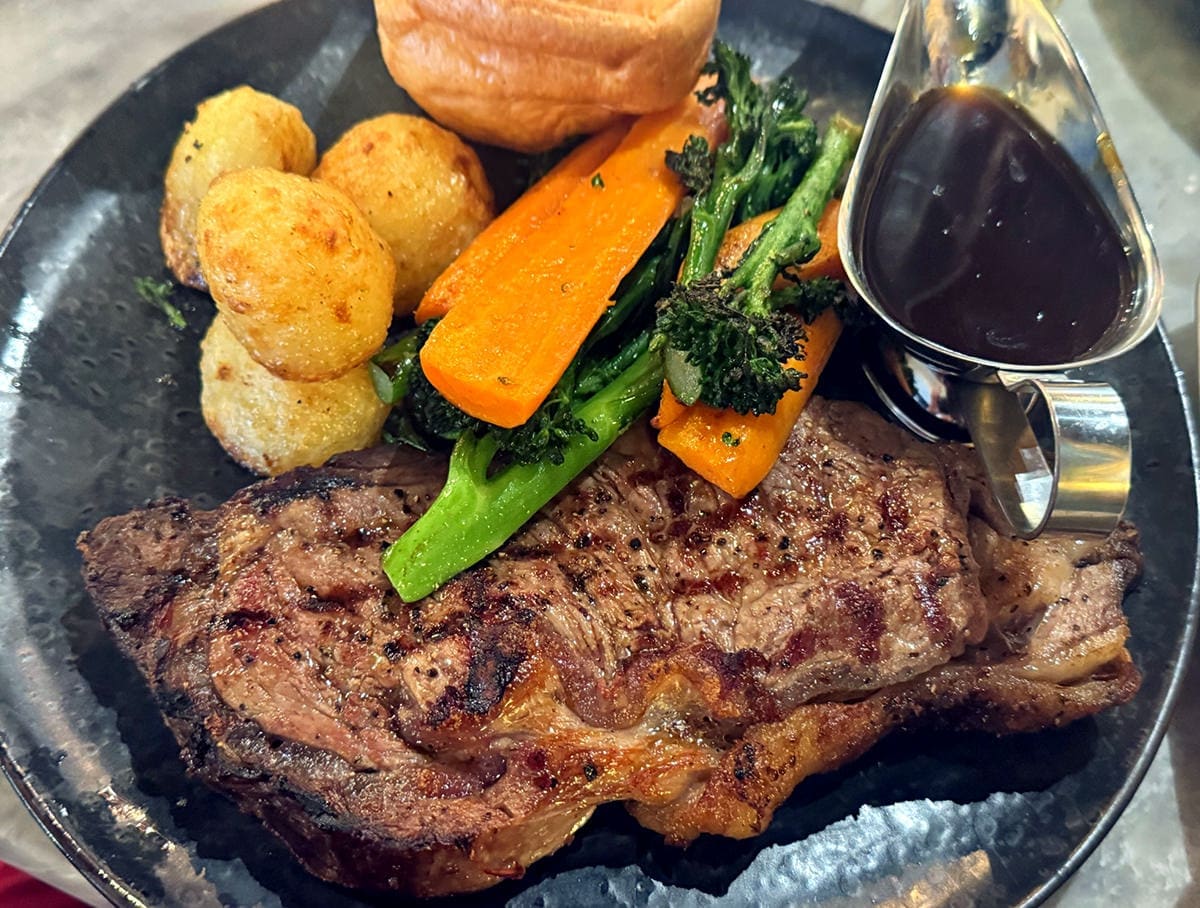
English food is much more than fish and chips and a full English breakfast. What you eat changes from one part of the country to the next, with coastal seafood in Cornwall, Cheddar and cider in the West Country, Yorkshire puddings and hearty northern dishes, and everything from regional cheeses to traditional pies, breads and puddings in between.
Many of these dishes have been made for generations, but English food is not stuck in the past. Pubs, restaurants and home cooks still rely heavily on seasonal produce, locally raised meats, fresh seafood and regional ingredients, while influences from around the world have become part of everyday eating in England.
In this guide, I’ll cover the traditional English foods worth knowing, including pub favorites, Sunday roast, regional specialties, afternoon tea, cheeses, pies, desserts and drinks. I’ll also show you where these foods come from, how they’re traditionally served and what to look for when you’re eating your way around England.
From My Time in England
- I’m currently spending an extended period in England, using the time to experience the food here firsthand. I’m visiting pubs, markets, farm shops, bakeries and restaurants, trying regional specialties and learning more about the ingredients and traditions behind them. I’ll continue updating this guide as I discover more along the way.
- Unless otherwise noted, the photos throughout this guide were also taken by me during my travels around England.
Quick Guide to English Food
- Known For: Roasts, pies, seafood, artisan cheeses, puddings, baking, pub food
- Classic Sunday Meal: Sunday Roast
- Classic Takeaway: Fish & Chips
- Classic Breakfast: Full English Breakfast
- Classic Dessert: Sticky Toffee Pudding
- Most Famous Cheese: Cheddar
- Traditional Beverage: Tea
- Food Regions to Explore: Yorkshire, Cornwall, Devon, Somerset, Norfolk, Lancashire, Cumbria, Kent, Cotswolds
Travel tip – Some of the best English food is regional. Skip the chains when you can and look for independent pubs, bakeries, markets and farm shops serving or selling food made nearby.
What Is English Food?
English food is built around good ingredients and straightforward cooking. Butter, cream, local cheeses, seasonal vegetables, roasted meats, fresh seafood, savory pies and freshly baked breads have been part of everyday cooking here for generations.
Where you are in England makes a big difference in what you’ll find. Coastal areas are known for fresh fish and shellfish, while farming regions have long produced beef, lamb, pork, dairy products, grains and vegetables. Over time, towns and counties developed their own specialties based largely on the ingredients available nearby.
That’s why I think English food is better understood as a collection of regional traditions rather than one style of cooking. Food in Cornwall can look very different from what you’ll find in Yorkshire, Somerset or Northumberland. One area might be known for seafood, while another is famous for its cheese, pies, sausages, puddings or cider.
English Food vs British Food
Although the terms are often used interchangeably outside the United Kingdom, they are not the same.
British food includes the cuisines of England, Scotland, Wales, and, in many contexts, Northern Ireland. English food represents only one part of Britain’s broader culinary identity.
Continue Reading: Ultimate British Food Guide
Foods Every Visitor Should Try in England
If you only have a few days in England, I’d focus on a mix of well-known classics and regional specialties. Fish and chips and a full English breakfast are worth trying, but some of the most interesting foods are the ones connected to the part of the country you’re visiting.
Use this as a quick starting point. I’ll cover many of these dishes in more detail later in the guide.
| Food | Where to Look For It | Best Way to Try It |
|---|---|---|
| Sunday Roast | Throughout England | At a good pub on Sunday |
| Fish and Chips | Throughout England, especially coastal towns | From an independent fish and chip shop |
| Full English Breakfast | Throughout England | Independent café, pub or B&B |
| Cornish Pasty | Cornwall | Fresh from a local bakery or pasty shop |
| Yorkshire Pudding | Yorkshire and throughout England | With a Sunday roast |
| Lancashire Hotpot | Lancashire | Traditional pub or regional restaurant |
| Cumberland Sausage | Cumbria | From a local butcher or pub |
| Regional English Cheese | Varies by region | Farm shop, cheesemonger or Ploughman’s lunch |
| Afternoon Tea or Cream Tea | Throughout England, especially the West Country | Independent tearoom or hotel |
| Traditional English Pudding | Throughout England | Try what’s made locally, from sticky toffee pudding to Bakewell pudding |
How English Food Has Changed
English food has changed considerably over the centuries, but many of its most familiar dishes grew out of simple needs: making the most of local ingredients, feeding a family affordably, or creating food that could travel well. That’s part of the reason pies, sausages, breads, roasted meats and hearty puddings became such an important part of traditional English cooking.
Trade brought ingredients like tea, sugar and spices into everyday life, while industrialization helped popularize inexpensive foods such as fish and chips, meat pies and sausage rolls. Regional dishes also began traveling beyond the towns and counties where they originated.
More recently, immigration has had an enormous influence on what people eat in England. South Asian, Caribbean, Middle Eastern, African, European and other food traditions are now part of everyday life here. Traditional pubs, Sunday roasts and afternoon tea haven’t disappeared, but they now exist alongside curry houses, international restaurants and a much broader modern English food culture.

England’s Culinary Regions
I find it helpful to think of English food as six broad culinary regions. These aren’t official food regions, but they make it easier to see how local agriculture, coastline and food traditions shaped what people eat in different parts of the country.
England’s 6 Culinary Regions at a Glance
| Culinary Region | Key Areas | Known For |
|---|---|---|
| West Country | Cornwall, Devon, Somerset, Dorset | Cornish pasties, Cheddar, cider, cream teas, seafood |
| Southeast England | Kent, Sussex, Hampshire, Surrey | Apples, oysters, seafood, English wine, hops, local cheeses |
| East Anglia | Norfolk, Suffolk, Cambridgeshire | Cromer crab, pork, seafood, asparagus, agricultural produce |
| The Midlands | Leicestershire, Derbyshire, Staffordshire, Lincolnshire and surrounding counties | Pork pies, Stilton, Bakewell pudding, oatcakes, sausages |
| Northwest England | Lancashire, Cumbria, Cheshire and surrounding areas | Cumberland sausage, Lancashire hotpot, regional cheeses, traditional puddings |
| Northeast England & Yorkshire | Yorkshire, Northumberland, Durham and surrounding areas | Yorkshire pudding, Wensleydale, parkin, smoked fish, rhubarb |
West Country
The West Country is one of the areas I’m getting to know particularly well from my base in Bath. Dairy farming, apple orchards and a long coastline all play a big role in the food here, making it especially good territory for farm shops, cider producers, seafood and traditional baking.
Southeast England
The southeast combines productive farmland with orchards, vineyards and coastline. It’s one of the best parts of England to explore seasonal fruit, seafood and the country’s growing wine industry.
East Anglia
East Anglia is heavily shaped by farming and the North Sea. Fresh produce, pork and seafood are especially important here, with market towns and coastal communities offering very different sides of the region’s food culture.
The Midlands
The Midlands are particularly strong for pies, cheese, sausages and other foods connected to farming and historic market towns. This is also where you’ll find several of England’s best-known protected regional foods.
Northwest England
The northwest is especially good for hearty pub food, regional cheeses, sausages and traditional baking. Lancashire, Cumbria and Cheshire each have strong local food identities, so it’s worth looking beyond the nationally famous dishes.
Northeast England & Yorkshire
Yorkshire has one of England’s strongest regional food identities, while farther north the cuisine becomes increasingly connected to the North Sea. Traditional baking, local meat and dairy sit alongside smoked fish and fresh seafood throughout this part of the country.
County-by-County Food Map of England
The six regions above give you the big picture. This county-by-county guide gets more specific, highlighting the foods, ingredients and local specialties worth looking for as you travel around England.
A Note About County Borders
English food traditions don’t always follow today’s county boundaries. Historic names such as Yorkshire, Lancashire and Cumberland still show up in food even when modern administrative borders have changed, so I follow the food tradition rather than the map when the two don’t line up neatly.

Somerset
Somerset is one of the areas I’m getting to know particularly well, and food here is closely tied to dairy farming and apple orchards. Cheddar takes its name from the Somerset village of Cheddar, while cider remains one of the county’s most important local drinks. Farm shops are also a great place to find local cheeses, meat, dairy products, preserves and produce.
Foods and Drinks to Try in Somerset
- Farmhouse Cheddar
- Somerset cider
- Perry
- Local pork and sausages
- Farmhouse butter and cream
- Apples and apple preserves
- Local cheeses
Bath makes a great base for exploring more of the area’s food, particularly if you want easy access to farm shops, pubs, bakeries, cheesemakers and cider country.

Cornwall
Cornwall has one of the strongest regional food identities in England. The Cornish pasty is the obvious place to start, but the county’s fishing communities and dairy farms make seafood, clotted cream and cheese just as important to the local food scene.
Foods to Try in Cornwall
- Cornish pasty
- Cornish clotted cream
- Cornish sardines
- Fresh crab
- Lobster
- Mussels and oysters
- Cornish Yarg
- Saffron buns
- Hevva cake
- Local cider, beer and wine
If you’re ordering a cream tea in Cornwall, jam traditionally goes on the scone before the clotted cream. Cross into Devon and you’ll find people doing it the other way around.
Devon
Devon shares plenty of food traditions with neighboring Cornwall, particularly seafood, cider and rich dairy products. It’s also the other half of England’s great cream tea debate, with clotted cream traditionally going onto the scone before the jam.
Foods to Try in Devon
- Devon cream tea
- Clotted cream
- Fresh crab
- Scallops and mussels
- Local lamb and beef
- Cider
- Apple desserts
- Farmhouse cheeses
Yorkshire
Yorkshire is one of those places where the list of regional foods gets long very quickly. Yorkshire pudding may be the best known, but Wensleydale, parkin, forced rhubarb, curd tart and traditional baking are all part of the region’s food identity.
Foods to Try in Yorkshire
- Yorkshire pudding
- Yorkshire Wensleydale
- Forced Yorkshire rhubarb
- Parkin
- Yorkshire curd tart
- Fat rascals
- Roast beef
- Local lamb
- Traditional ales
Lancashire
Lancashire is known for the kind of hearty food you’d expect from northern England. Lancashire hotpot is the classic, but the county also has its own cheeses, pies and baked goods.
Foods to Try in Lancashire
- Lancashire hotpot
- Lancashire cheese
- Butter pie
- Chorley cake
- Black peas
- Local pies
You’ll also see Eccles cakes associated with Lancashire. Eccles is now part of Greater Manchester, but historically it was part of Lancashire, which is a good example of why England’s food traditions don’t always line up neatly with today’s county boundaries.
Cumbria
Cumbria and the Lake District are home to several foods you’ll see again and again on local menus and in food shops. Cumberland sausage is probably the best known, but Herdwick lamb, Grasmere gingerbread and sticky toffee pudding make this a particularly good area for traditional English food.
Foods to Try in Cumbria
- Cumberland sausage
- Herdwick lamb
- Grasmere gingerbread
- Kendal Mint Cake
- Sticky toffee pudding
- Local cheeses
- Lake District ales
Leicestershire
Leicestershire is one of the best places to look for traditional English pies and cheese. Melton Mowbray is famous for its pork pies, while Blue Stilton and Red Leicester give the county just as much reason to stop at a cheesemonger.
Foods to Try in Leicestershire
- Melton Mowbray Pork Pie
- Blue Stilton
- Red Leicester
- Local ales
- Farmhouse pork products
Derbyshire
Derbyshire is probably best known food-wise for Bakewell. The original Bakewell pudding and the later Bakewell tart are two different desserts, and you’ll find both throughout the area. The county is also one of the places where Stilton can be produced.
Foods to Try in Derbyshire
- Bakewell pudding
- Bakewell tart
- Blue Stilton
- Peak District lamb
- Oatcakes
- Local ales
Norfolk
Norfolk combines some of England’s most productive farmland with a long North Sea coastline. Cromer crab is the standout specialty, but seafood, asparagus, samphire and locally raised turkey are all worth looking for.
Foods to Try in Norfolk
- Cromer crab
- Samphire
- Norfolk turkey
- Fresh mussels
- Local asparagus
- North Sea fish
Lincolnshire
Lincolnshire is farming country, and its best-known foods reflect that. Lincolnshire sausage is famous for its noticeable sage flavor, while Lincolnshire Poacher has become one of the county’s best-known farmhouse cheeses.
Foods to Try in Lincolnshire
- Lincolnshire sausage
- Lincolnshire Poacher cheese
- Lincolnshire plum bread
- Local asparagus
- Farm-grown vegetables
Kent
Kent has long been known as the Garden of England, and the name makes sense once you see how much fruit, produce, hops and wine come from the area. Add oysters and other seafood along the coast and you have one of southern England’s most varied food regions.
Foods and Drinks to Try in Kent
- English apples
- Kent cherries
- Whitstable oysters
- Soft fruit
- English sparkling wine
- Local ale
- Farm-grown produce
Dorset
Dorset has a good mix of dairy farming, seafood, apples and traditional baking. Dorset Blue Vinny is one of the county’s best-known cheeses, while Dorset apple cake is a simple local dessert worth looking for in bakeries and cafés.
Foods to Try in Dorset
- Dorset Blue Vinny
- Dorset apple cake
- Fresh crab and shellfish
- Local cider
- Farmhouse meats
Northumberland
Northumberland’s food is closely tied to the North Sea. Smoked fish is especially important here, and Craster kippers are one of the region’s best-known foods. Fresh seafood, lamb and local cheeses are also worth seeking out.
Foods to Try in Northumberland
- Craster kippers
- Smoked haddock
- Fresh North Sea fish
- Local lamb
- Northumberland cheeses
- Regional ales
Gloucestershire
Gloucestershire’s food traditions are closely connected to the Cotswolds, orchards and dairy farming. Single Gloucester and Double Gloucester are the obvious cheeses to know, while cider, perry, lamb and farmhouse meat are common finds at local farm shops.
Foods to Try in Gloucestershire
- Single Gloucester
- Double Gloucester
- Local cider and perry
- Cotswold lamb
- Farmhouse meats
- Seasonal orchard fruit
Herefordshire
Herefordshire is one of England’s best cider regions. Apples and pears grow throughout the county, so cider and perry are everywhere, while Hereford beef is another local specialty you’ll see on pub and restaurant menus.
Foods and Drinks to Try in Herefordshire
- Traditional cider
- Perry
- Hereford beef
- Apples and pears
- Local farmhouse cheese
- Fruit preserves
Worcestershire
Worcestershire gave its name to one of England’s most famous sauces, but there’s more to the county than the bottle most of us already know. The Vale of Evesham is especially good for asparagus, orchard fruit and seasonal vegetables.
Foods to Try in Worcestershire
- Worcestershire sauce
- Vale of Evesham asparagus
- Apples and orchard fruit
- Local cider
- Farm-grown vegetables
Suffolk
Suffolk combines farmland with a long North Sea coastline, so pork, grain, seafood and beer all play a part in the local food scene. Newmarket sausages are probably the best-known specialty, but coastal seafood and regional beer are also worth trying.
Foods and Drinks to Try in Suffolk
- Newmarket sausages
- Local pork
- Regional beer
- Suffolk seafood
- Artisan bread
- Local cheeses
Hampshire
Hampshire has farmland, coastline and the New Forest all within the same county, which gives it a surprisingly varied food scene. Watercress is one of the ingredients most closely associated with the area, while seafood, local trout, pork and English wine are also worth looking for.
Foods to Try in Hampshire
- Hampshire watercress
- New Forest pork
- Fresh seafood
- Local trout
- English sparkling wine
- New Forest mushrooms
Essex
Essex has a long coastline and plenty of farmland, so seafood and seasonal produce both show up throughout the county. Oysters from the Colchester area are one of the foods I’d especially look for if you’re visiting.
Foods to Try in Essex
- Colchester oysters
- Fresh seafood
- Local asparagus
- Farm-grown fruit and vegetables
- English wine
Wiltshire
Wiltshire sits between the West Country and southern England, and its food reflects both. The county has a long association with ham and bacon, while local farms produce beef, lamb, cheese, grains and seasonal vegetables.
Foods to Try in Wiltshire
- Traditional ham and bacon
- Local beef and lamb
- Farmhouse cheese
- Seasonal produce
- Local ales
The Best English Food Destinations for First-Time Visitors
You could spend years eating your way around England, but a few places give you an especially good introduction to the country’s regional food. If it’s your first trip, these are the destinations I’d put near the top of the list.
Bath and the West Country
Bath is an easy base for exploring the wider West Country food scene, with quick access to Somerset, Wiltshire, Gloucestershire and the Cotswolds. It’s a particularly good choice if you want to combine historic pubs and bakeries with farm shops, cider country and day trips into rural food-producing areas.

Cornwall
Cornwall is one of the easiest places in England to build an entire trip around food. Coastal towns, fishing harbors, bakeries and small producers make it especially good for travelers who want to combine seafood, regional baking and local food traditions with time along the coast.
It’s also a destination where the setting matters. Eating something made locally while you’re near the harbor, beach or town it comes from makes the experience feel much more connected to the place.
Yorkshire
Yorkshire is a strong choice if you want a broad introduction to northern English food in one region. Historic cities, market towns, tearooms, pubs and rural producers give you plenty of ways to experience both traditional dishes and the region’s baking, dairy and farming traditions.
It’s also large enough that you can combine city food stops with countryside visits without feeling like you’re repeating the same type of experience.
Lake District and Cumbria
Cumbria works especially well for travelers who want food to be part of a slower countryside trip. Village pubs, farm shops, small producers and scenic driving routes make it easy to combine local food with time in the Lake District.
This is the kind of destination where I’d leave room in the itinerary for unplanned stops. A butcher, bakery, farm shop or pub you come across along the way can end up being more memorable than something you planned in advance.
Kent and Sussex
Kent and Sussex are especially interesting if you want to combine food with vineyards, coastal towns and countryside. The area is easy to explore by car and gives you access to farm shops, producers, wineries and seafood without needing to spend the entire trip in one city.
I’d especially consider this region for a food-focused weekend that mixes restaurant meals with vineyard visits, market stops and time along the coast.
London
London is the best choice if you want the widest possible range of English food in one place. You can move from historic pubs and traditional cafés to food markets, bakeries, modern British restaurants and neighborhood spots representing the communities that shape how England eats today.
It won’t replace traveling through the regions themselves, but for a first visit it’s an efficient way to sample both traditional and modern English food before deciding which parts of the country you want to explore in more depth.
Traditional English Meals
English food isn’t just a collection of individual dishes. Some of the best-known food traditions here are built around the meal itself, whether that’s a full English breakfast, Sunday lunch at a pub or afternoon tea.
These are the traditional meals I’d start with if you want to get a better feel for how English food is actually served and eaten.
The Full English Breakfast
A full English breakfast is one of those meals almost everyone associates with England, but it’s definitely not an everyday breakfast for most people. You’re much more likely to find one on a weekend, at a hotel or B&B, or on the menu at a traditional café.
There’s no single version you have to follow, but a traditional full English usually includes several of the following:
Classic Full English Breakfast Components
- Back bacon
- Pork sausages
- Fried or scrambled eggs
- Baked beans
- Grilled tomatoes
- Sautéed mushrooms
- Toast or fried bread
- Black pudding
You may also come across hash browns, bubble and squeak or regional sausages depending on where you’re eating. Black pudding is traditional, but it’s not included with every breakfast.
Foodie & Wine Tip
For a good full English, I’d look for an independent café, pub or B&B using quality bacon and locally made sausages. The individual ingredients make a big difference with a breakfast this simple.

Sunday Roast
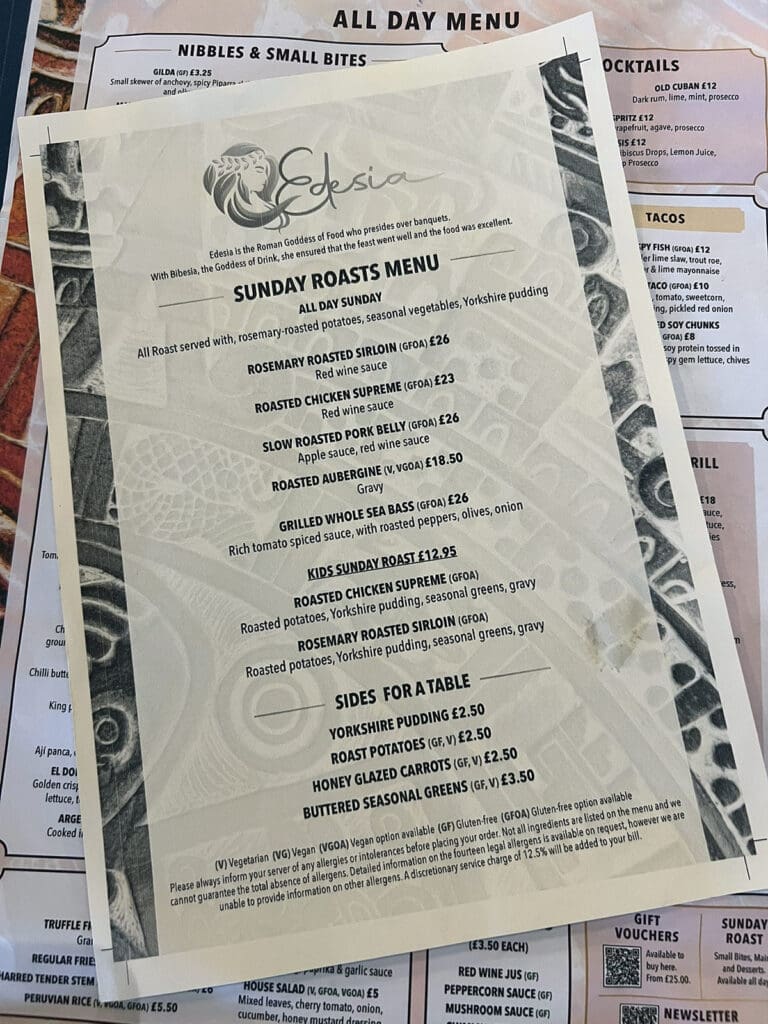
If there’s one English meal I’d tell a first-time visitor not to miss, it’s a Sunday roast. You’ll find them in pubs throughout the country, usually served from late morning through the afternoon on Sundays.
The meat changes from place to place, but the basic idea is the same: roasted meat with crispy roast potatoes, vegetables, gravy and traditional accompaniments. Yorkshire puddings are also common, and many pubs now serve them with every type of roast.
What You’ll Usually Find on a Sunday Roast
- Roast Beef, chicken, pork or lamb
- Roast potatoes
- Yorkshire puddings
- Seasonal vegetables
- Gravy
- Stuffing or other accompaniments depending on the meat
Classic Accompaniments
| Roast | Traditional Accompaniments |
|---|---|
| Beef | Yorkshire pudding and horseradish sauce |
| Pork | Apple sauce and crackling |
| Lamb | Mint sauce |
| Chicken | Stuffing and bread sauce |
Foodie & Wine Tip
Yorkshire puddings are traditionally associated with roast beef, but don’t be surprised if they arrive with chicken, pork or lamb. Many pubs now include them with every Sunday roast, and I’m certainly not going to complain about getting an extra Yorkshire pudding.
Afternoon Tea
Afternoon tea is one of the English food traditions that’s especially worth experiencing at least once. It’s more of an occasion than an everyday meal, and you’ll find everything from elaborate hotel versions to much more relaxed afternoon teas in local tearooms.
A traditional afternoon tea usually combines savory finger sandwiches with scones, clotted cream, jam and a selection of small cakes or pastries, all served with a pot of tea.
What to Expect at Afternoon Tea
- Freshly brewed tea
- Finger sandwiches
- Scones
- Clotted cream
- Jam
- Small cakes
- Pastries
When everything arrives on a tiered stand, sandwiches are generally eaten first, followed by the scones and then the sweets.
Cream first or jam first? In Cornwall, jam traditionally goes on the scone before the clotted cream. In Devon, it’s the opposite, with the cream going on first.
High Tea vs Afternoon Tea
One thing that can be confusing for visitors is the term “high tea.” It’s often used today to describe an elaborate afternoon tea, but historically the two were different meals.
| Afternoon Tea | High Tea |
|---|---|
| Served in the afternoon | Traditionally served later in the day |
| A lighter meal | A more substantial meal |
| Sandwiches, scones and sweets | Could include meat, pies, bread and other filling foods |
| Associated with leisure and social occasions | Historically associated more with an evening family meal |
For travelers today, the distinction is pretty simple. If you’re booking tea at a hotel, tearoom or restaurant in England, what you’re almost always looking for is afternoon tea, regardless of how the term “high tea” may be used elsewhere.
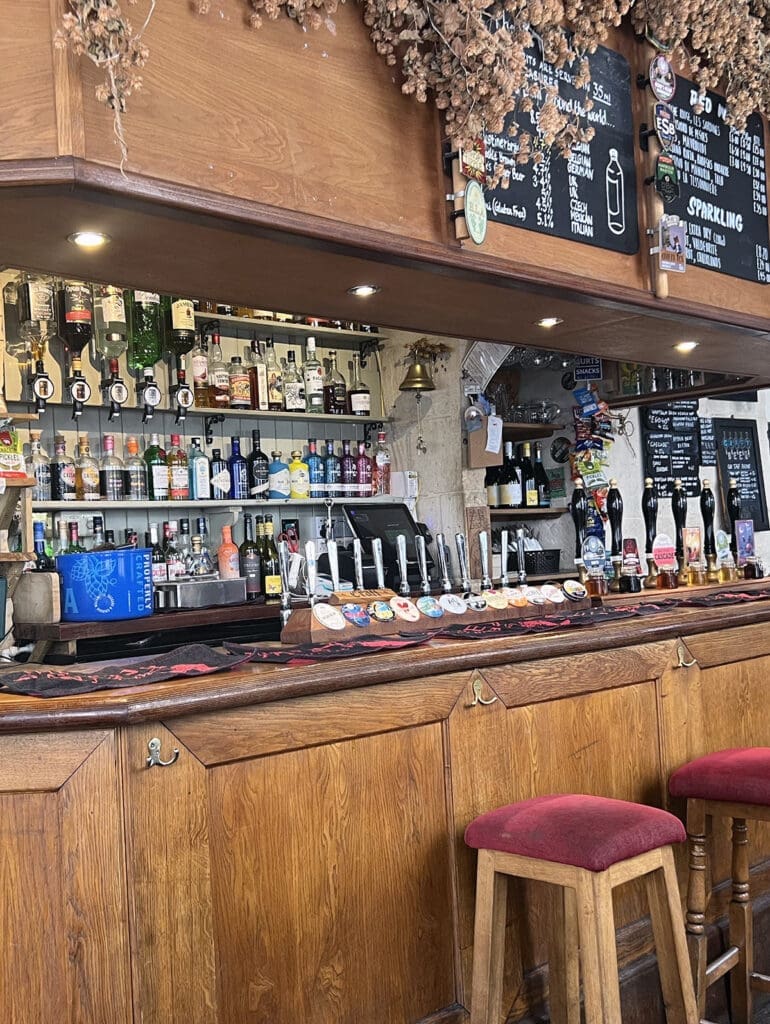
The English Pub
Pubs are one of the easiest places to experience traditional English food. Some are mainly about beer and atmosphere, while others put just as much focus on the food, with menus built around local ingredients, pies, sausages, Sunday roasts and seasonal dishes.
I’ve found that the best pubs usually feel local rather than polished for tourists. A good one might have a short menu, a few regional beers or ciders, and dishes that make sense for where you are.
What to Look For in a Good English Pub
- Local or regional beer and cider
- Seasonal dishes
- House-made pies
- Sunday roasts
- Locally made sausages
- Regional cheeses
- A menu that isn’t trying to be everything at once
You’ll also come across plenty of gastropubs, which are essentially pubs that put more emphasis on restaurant-style cooking while keeping the relaxed feel of a traditional pub. These can be especially good if you want local ingredients and more refined versions of classic dishes without going to a formal restaurant.
Classic English Pub Food
Pub menus vary quite a bit, but a handful of dishes show up again and again. These are some of the classics I’d look for if you want a good introduction to English pub food.
| Dish | What to Expect |
|---|---|
| Fish and chips | Battered white fish with thick-cut chips, usually served with malt vinegar and often mushy peas. |
| Steak and ale pie | Slow-cooked beef in ale gravy with pastry, usually served with potatoes and vegetables. |
| Bangers and mash | Pork sausages with mashed potatoes, onion gravy and often peas. |
| Ploughman’s lunch | Cheese, bread, pickle or chutney, apple and salad, sometimes with ham or pork pie. |
| Scotch egg | An egg wrapped in sausage meat, coated in breadcrumbs and fried or baked. |
| Ham, egg and chips | A simple plate of ham, fried eggs and chips. |
| Fish pie | Fish in a creamy sauce topped with mashed potato. |
| Sunday roast | Roast meat with potatoes, vegetables, gravy and often Yorkshire pudding. |
Continue Reading: British Pub Food Guide

Dining in an English Pub
If it’s your first time eating in an English pub, the biggest thing to know is that ordering isn’t always handled the same way. In some pubs you’ll be seated and served at the table, while in others you find a table first and then order food and drinks at the bar. QR code ordering is also increasingly common.
- Check whether you need to order at the bar or wait for table service.
- Make a reservation for Sunday lunch if the pub is popular.
- Don’t assume every pub serves food all day.
- Look for a chalkboard or specials menu, especially in smaller pubs.
- Expect busy pubs to fill up quickly on weekends.
England’s Most Famous Traditional Dishes
Now for a closer look at the dishes behind the quick list above. Some are eaten throughout England, while others started as regional specialties and are still closely connected to the places where they came from.
Fish and Chips
Fish and chips is probably England’s most recognizable meal. White fish is coated in batter and fried until crisp, then served with thick-cut chips and plenty of salt and malt vinegar.
Cod and haddock are the two fish you’ll see most often, although the choices vary by region and fish shop. Mushy peas, tartar sauce and curry sauce are common sides, and you’ll occasionally see pickled onions or pickled eggs at more traditional shops.
What to Order With Fish and Chips
- Malt vinegar
- Sea salt
- Mushy peas
- Tartar sauce
- Curry sauce
If I’m near the coast, fish and chips is almost always on my list. Cornwall, Whitby and the Norfolk coast are especially good places to look for traditional fish and chip shops.
Yorkshire Pudding
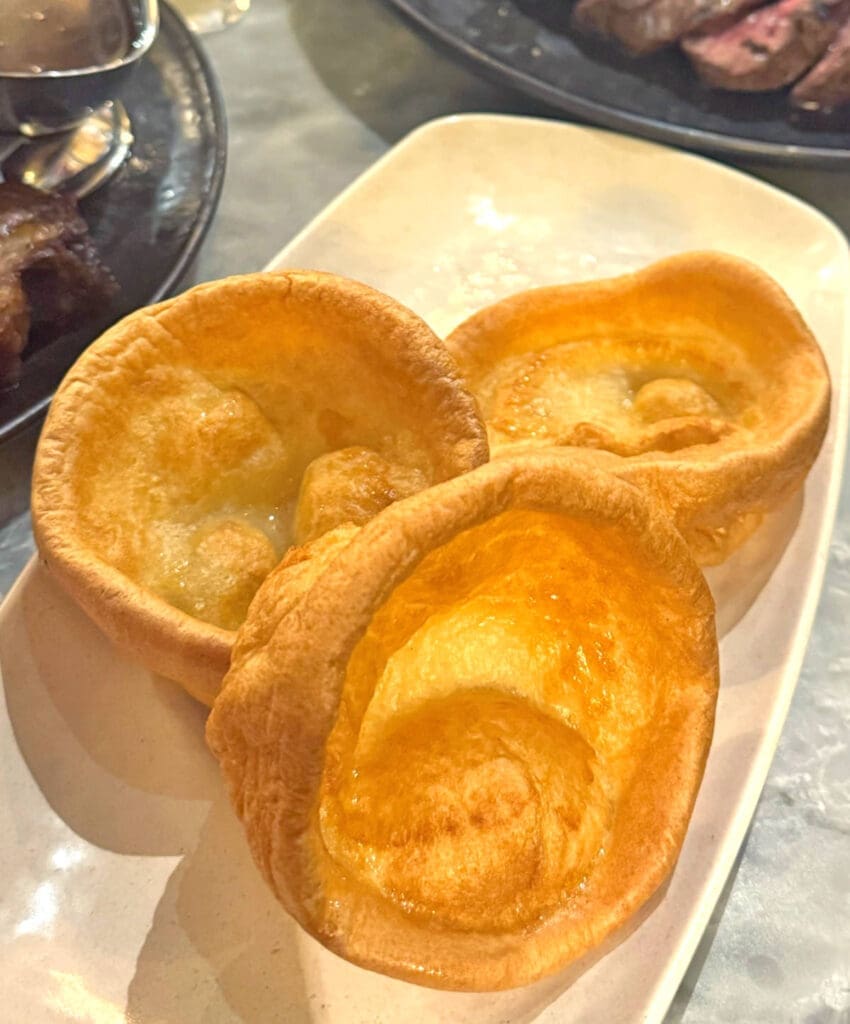
Despite the name, Yorkshire pudding isn’t a dessert. It’s a savory batter made from flour, eggs and milk that’s cooked in hot fat until puffed and crisp around the edges.
It’s traditionally associated with roast beef and gravy, although you’ll now see Yorkshire puddings served with just about every type of Sunday roast in pubs across England.
Roast Beef
Roast beef remains one of the classic centerpieces of an English Sunday roast. The beef is usually served with crispy roast potatoes, vegetables, gravy and Yorkshire pudding, with horseradish sauce alongside.
It’s a simple meal on paper, which means the quality of the beef, properly cooked potatoes and a good gravy make all the difference.

Beef Wellington
Beef Wellington is one of England’s more elaborate beef dishes. Beef tenderloin is covered with mushroom duxelles, wrapped in puff pastry and baked until the pastry is golden and the beef is still tender inside.
It’s much more of a special-occasion dish than everyday pub food, but it’s one of the English classics worth knowing. If you want to make it at home, try my Individual Beef Wellington recipe.

Shepherd’s Pie and Cottage Pie
These two dishes look almost identical, but there’s an easy way to tell them apart: Shepherd’s Pie is traditionally made with lamb, while Cottage Pie is made with beef.
| Dish | Traditional Meat |
|---|---|
| Shepherd’s Pie | Lamb |
| Cottage Pie | Beef |
Both combine minced meat with vegetables and gravy before being topped with mashed potatoes and baked. Despite the word “pie,” neither traditionally has a pastry crust.
Want to make one at home? Try my traditional Shepherd’s Pie recipe, made with savory lamb and vegetables under a layer of creamy mashed potatoes. This is one of the earliest recipes I shared on Foodie & Wine.

Lancashire Hotpot
Lancashire hotpot is exactly the kind of simple, hearty dish I’d look for when eating around northern England. Lamb or mutton is slowly cooked with onions and stock beneath overlapping slices of potato that brown as the dish cooks.
It’s closely associated with Lancashire and remains one of northern England’s best-known comfort foods.
Cornish Pasty
A traditional Cornish pasty combines beef, potato, swede and onion inside a folded pastry crust with its distinctive crimped edge. It’s one of the foods most closely associated with Cornwall and is still easy to find in bakeries and pasty shops throughout the county.
The Cornish pasty also has protected geographical status, so there are specific requirements for products sold using the protected name.
If pies and savory pastry are what you’re after, see my British Pies and Pasties Guide for a broader look at the regional styles worth knowing.
Steak and Ale Pie
Steak and ale pie is one of my favorite examples of traditional English pub food. Beef is slowly cooked in a rich gravy made with ale, then paired with pastry and usually served with mashed potatoes or chips, vegetables and plenty of gravy.
The ale used in the filling varies, and pubs often use a locally brewed bitter, brown ale or stout.
Make it at home with my Steak and Ale Pie recipe.

Steak and Kidney Pudding
Steak and kidney pudding is easy to confuse with steak and kidney pie, but they’re quite different. The pudding combines beef and kidney inside suet pastry and is traditionally steamed rather than baked.
It’s not as common as some of the other dishes on this list, but you’ll still find it in traditional pubs and restaurants.
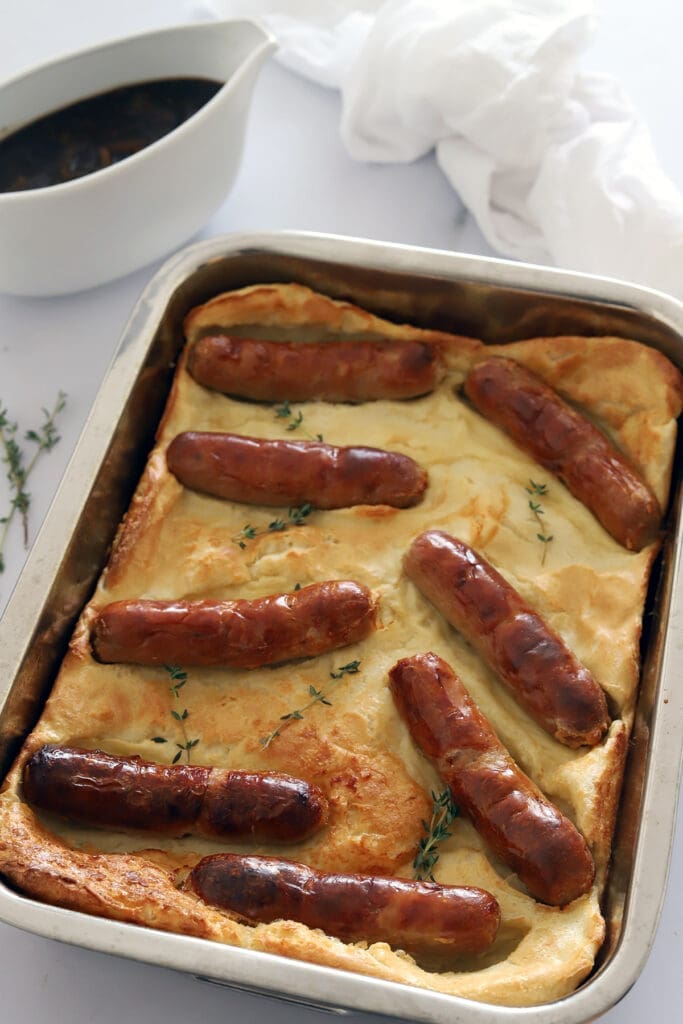
Toad in the Hole
Toad in the Hole is much less strange than the name suggests. Pork sausages are baked directly in Yorkshire pudding batter until the batter rises around them and becomes crisp at the edges.
It’s usually served with onion gravy and vegetables. And no, there are no toads involved.
Bangers and Mash
Bangers and mash is about as straightforward as English comfort food gets: pork sausages, creamy mashed potatoes and onion gravy, usually with peas or another vegetable alongside.
The sausages are what make the dish. Cumberland sausages are known for their peppery seasoning and traditional coiled shape, while Lincolnshire sausages have a noticeable sage flavor. You’ll also find plenty of locally made pork sausages that don’t fall into either style.
English Sausages to Look For
- Cumberland sausage
- Lincolnshire sausage
- Traditional pork sausage
- Locally made butcher’s sausages
Pork Pie
English pork pies are traditionally made with seasoned pork inside a sturdy hot-water crust pastry and are generally served cold rather than hot.
The best-known version is the Melton Mowbray Pork Pie from Leicestershire. Try one with English mustard, pickles or chutney, a good local cheese and a pint of ale.
Bubble and Squeak
Bubble and squeak is one of England’s classic ways of turning leftovers into another meal. Potatoes are mixed with cabbage or other leftover vegetables and fried until browned and crisp.
You’ll often see it served with a fried egg, sausages or leftover roast meat. The exact ingredients vary depending on what was left from the previous meal, which is really the point.
Ploughman’s Lunch
A Ploughman’s Lunch doesn’t require much cooking, but good ingredients make all the difference. At its simplest, it’s a plate of cheese, bread, pickle or chutney and something fresh such as apple or salad.
Many pubs add ham, pork pie, pickled onions or other accompaniments. It’s also one of the easiest ways to try a local English cheese while you’re traveling.
What You Might Find on a Ploughman’s
- Cheddar or another regional cheese
- Fresh bread
- Pickled onions
- Chutney or pickled cucumbers
- Apple
- Butter
- Salad
- Ham or pork pie

English Pies, Pasties and Savory Pastries
Pastry shows up everywhere in traditional English food, from pub pies and bakery sausage rolls to Cornish pasties and cold pork pies. The names can be confusing if you didn’t grow up eating them, so this section is really about understanding the differences.
| Type | What It Is | Examples |
|---|---|---|
| Pie | A savory filling topped with pastry or enclosed in a pastry case. | Steak and ale pie, chicken and leek pie |
| Pasty | Filling enclosed inside a folded piece of pastry, usually designed to be eaten by hand. | Cornish pasty |
| Suet pudding | A savory filling enclosed in suet pastry and traditionally steamed rather than baked. | Steak and kidney pudding |
| Raised pie | A sturdy pie made with hot-water crust pastry that holds its shape when baked. | Pork pie, game pie |
| Sausage roll | Seasoned sausage meat wrapped in pastry and baked until crisp and golden. | Traditional sausage roll |
You’ll find these in different places depending on the type. Pub menus are a good place to look for hot meat pies, while bakeries and butcher shops often have sausage rolls, pork pies, pasties and regional specialties ready to take away.
If sausage rolls are the one you want to make at home, try my British Sausage Rolls. I use ground pork seasoned with sage, thyme and nutmeg, then wrap it in store-bought puff pastry to keep the recipe practical for American kitchens.
Some of the most interesting versions aren’t nationally famous at all. If a local bakery, butcher or pub is known for a particular pie or pastry, that’s usually the one I’d try first.
Continue Reading: From steak and ale pie and pork pies to Cornish pasties, sausage rolls and regional specialties, my British Pies and Pasties Guide goes much deeper into the different styles you’ll find around Britain.

English Seafood and Coastal Food
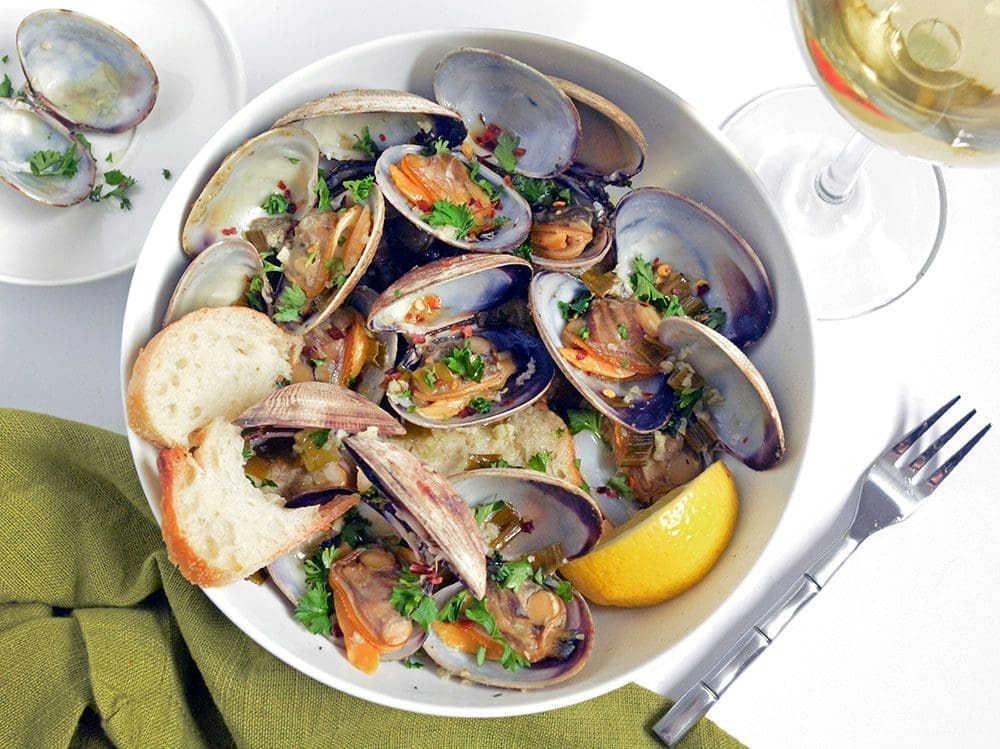
England’s coastline plays a big part in what you’ll find on local menus, especially once you get away from the larger cities. Crab, oysters, mussels, scallops, lobster, sardines, smoked fish and locally landed white fish all show up in different parts of the country.
If I’m eating near the coast, I usually look for what’s local rather than ordering the same fish everywhere. That’s often the easiest way to get a better sense of the area’s food.
Regional Seafood Specialties
| Place | What to Look For |
|---|---|
| Cromer, Norfolk | Cromer crab |
| Whitstable, Kent | Oysters |
| Cornwall | Sardines, crab, lobster, mussels and other shellfish |
| Devon | Crab, scallops, mussels and locally landed fish |
| Dorset | Crab, shellfish and coastal fish |
| Northumberland | Kippers and traditionally smoked fish |
| South and Southeast Coasts | Dover sole and other locally landed fish |

Smoked Fish and Kippers
Smoking has long been used to preserve fish, and it’s still part of the food culture in several coastal areas. Kippers are split, salted and smoked herring, while smoked haddock and mackerel show up in breakfasts, fish pies and simple suppers.
Independent smokehouses are worth looking for if you’re traveling along the coast, especially in places with a strong fishing tradition.
English Shellfish
Oysters, crab, mussels, scallops and lobster are especially tied to place and season. When I’m near the coast, I like to ask what’s local or what’s been landed recently rather than ordering from a generic seafood menu.
Fishmongers, harbor stalls, seafood restaurants and local festivals are often the best places to see what people in the area are actually eating.
Fish and Chips by the Sea
I’ve already covered fish and chips earlier in this guide, but it’s worth mentioning again here because the coast really is one of the best places to eat it. The fish can vary depending on what’s available locally, and the sides change too, from mushy peas and curry sauce to pickled onions.
English Cheese
England has an impressive cheese tradition, and there’s a lot more to it than Cheddar. You’ll find everything from crumbly farmhouse cheeses to blue cheeses, washed-rind styles and newer artisan varieties.
Cheese is also one of the easiest regional foods to explore while you’re here. Farm shops, markets, cheesemongers and pubs often carry cheeses made nearby, which makes it easy to try something tied to the area you’re visiting.
Cheddar
Cheddar is England’s best-known cheese, and it takes its name from the village of Cheddar in Somerset. Traditional versions range from relatively mild to deeply savory and crumbly depending on how long they’re aged.
You’ll see Cheddar everywhere, but Somerset is still the obvious place to explore it more closely, especially at farm shops and local cheesemakers.
Good Ways to Use Cheddar
- Ploughman’s lunch
- Cheese toasties
- Macaroni cheese
- Soups
- Cheese boards
- Savory pies and bakes
Stilton
Stilton is one of England’s best-known blue cheeses. It’s rich and creamy with blue veining and a flavor that gets stronger as the cheese matures.
Protected Stilton can only be produced in Derbyshire, Leicestershire and Nottinghamshire. It’s especially popular around Christmas, but you’ll also see it served with pears, walnuts, figs, bread and Port throughout the year.
Other English Cheeses to Know
| Cheese | What It’s Like |
|---|---|
| Red Leicester | Firm, nutty and slightly sweet |
| Wensleydale | Crumbly, mild and slightly tangy |
| Double Gloucester | Rich, buttery and firm |
| Cheshire | Crumbly with a fresh, slightly tangy flavor |
| Lincolnshire Poacher | Firm, savory and full-flavored |
| Cornish Yarg | Wrapped in nettle leaves with a creamy center |
English Dairy
Dairy shows up everywhere in English cooking, from cream teas and puddings to sauces, soups and baking. If you’re coming from the U.S., a few products are also noticeably different from what you’re used to buying at home.
Clotted Cream
Clotted cream is thick, rich and most closely associated with Cornwall and Devon. It’s the cream you get with scones and jam during a cream tea, and once you’ve had a good version, it’s hard to confuse it with anything else.
Double Cream
Double cream is richer than American heavy cream and shows up constantly in desserts, sauces, soups and baking. If you’re cooking from an English recipe, it’s worth knowing that the texture and fat content are not quite the same as standard U.S. heavy cream.
Butter
Good butter is another ingredient that shows up again and again in English cooking. Farm shops and local markets are especially good places to look for farmhouse and regional butter.
Traditional English Bread and Baking
England has plenty of bread and baking traditions that don’t always get as much attention as pies or puddings. Bakeries, farm shops and tearooms are some of the best places to come across regional breads and buns that you may not see outside the area.
English Breads to Look For
- Bloomer
- Cottage loaf
- Cob
- Granary bread
- Farmhouse white
- Wholemeal bread
- Barms and baps
Fresh bread is often served with soups, cheese, pub lunches and Ploughman’s lunches, and it’s one of those simple foods where a good local bakery can make a big difference.
Scones
Scones are one of the foods most closely associated with afternoon tea. Plain scones are the classic choice with clotted cream and jam, but fruit and cheese versions are also common.
If you’re visiting a tearoom, this is one of the easiest traditional English bakes to try without committing to a full afternoon tea.
Bath Buns
Bath Buns are one of the regional foods I’m especially interested in while I’m here. They’re lightly sweetened yeast buns traditionally enriched with butter and topped with sugar, and they remain closely tied to Bath’s food history.
You’ll see them mentioned alongside the better-known Sally Lunn bun, but they’re two different Bath specialties.
Sally Lunn Bun
The Sally Lunn bun is another Bath specialty, and it’s very different from a standard bread roll. It’s larger, lighter and slightly richer, and you’ll see it served both sweet and savory.
Depending on where you order it, that might mean preserves and butter or toppings such as smoked salmon, cheese or roasted meat.
Traditional English Cakes
English cakes tend to be more straightforward than highly decorated, and many are built around sponge, jam, dried fruit or marzipan.
Victoria Sponge
Victoria sponge is one of the classics. Two light sponge cakes are sandwiched together with jam and usually cream or buttercream, then finished with a simple dusting of sugar.
Battenberg Cake
Battenberg is easy to recognize by its pink and yellow checkerboard center. The cake is held together with jam and wrapped in marzipan, making it one of the more distinctive traditional English cakes.
Traditional English Desserts and Puddings
English desserts lean heavily on fruit, custard, cream, sponge and warm puddings. A lot of them are simple, comforting and much better than the name might make you expect.
Sticky Toffee Pudding
Sticky toffee pudding is one of the English desserts I’d tell just about anyone to try. It’s a soft date sponge served warm with toffee sauce, usually with custard, cream or ice cream alongside.
Bread and Butter Pudding
Bread and butter pudding is a good example of turning simple ingredients into something much better than the sum of its parts. Bread is layered with butter, dried fruit and custard, then baked until soft in the center and golden on top.
You’ll also see richer modern versions made with brioche or croissants.
Apple Crumble
Apple crumble is one of the simplest English desserts and one of the easiest to understand if you’re new to the cuisine. Apples are baked under a buttery crumb topping and usually served warm with custard, cream or ice cream. It’s similar to this peach crisp, but with apples.
The same idea works with rhubarb, blackberries, gooseberries and other seasonal fruit.
Eton Mess
Eton Mess is a mix of strawberries, whipped cream and crushed meringue. It looks messy because it’s supposed to, and that’s part of the appeal.
It’s especially good in summer when English strawberries are in season.
Trifle
Traditional trifle layers sponge cake, fruit, custard and whipped cream, with jelly and sherry often included depending on the recipe.
This is one of those dishes where every family seems to have its own version, so don’t expect every trifle you try to look exactly the same.
Bakewell Pudding vs Bakewell Tart
These two Derbyshire desserts are often treated as the same thing, but they’re not.
| Bakewell Pudding | Bakewell Tart |
|---|---|
| Traditionally made with puff pastry | Usually made with shortcrust pastry |
| Has an egg and almond-style filling | Uses a more familiar frangipane-style filling |
| The older Bakewell specialty | A later variation |
If you’re actually in Bakewell, I’d try both rather than worrying too much about which one is “better.”
More Traditional English Puddings and Desserts to Know
One thing that can be confusing if you’re new to English food is the word “pudding.” It can mean dessert in general, but it’s also used in the names of specific steamed, baked and set desserts.
Beyond sticky toffee pudding, crumble and trifle, these are a few traditional English desserts worth knowing.
| Dessert | What It Is |
|---|---|
| Treacle tart | A pastry tart filled with golden syrup, breadcrumbs and citrus. |
| Spotted dick | A steamed suet pudding with dried fruit, usually served warm with custard. |
| Jam roly-poly | A rolled pudding spread with jam and traditionally served hot with custard. |
| Summer pudding | Bread filled with summer berries and their juices, molded and served chilled. |
| Rice pudding | Rice slowly cooked with milk and sugar, often with nutmeg. |
| Lemon posset | A smooth, set dessert made with cream, sugar and lemon. |
| Syllabub | A traditional cream-based dessert flavored with citrus and usually wine or another alcoholic drink. |
| Fruit fool | Fruit folded through cream or custard, with gooseberry being one of the classic versions. |
| Queen of Puddings | A baked breadcrumb and custard base topped with jam and meringue. |
You’ll notice custard showing up again and again. Warm pouring custard is a common partner for crumbles, steamed puddings, bread and butter pudding and sponge desserts, and it’s one of those things that starts to feel very English once you’ve eaten enough puddings here.

English Sweets and Confectionery
Traditional sweet shops are still easy to come across in many English towns, especially in seaside resorts and older market towns. Some of the classics will be familiar, while others are very specifically British.
- Fudge
- Kendal Mint Cake
- Toffee
- Treacle toffee
- Wine Gums
- Liquorice Allsorts
- Rock
I wouldn’t treat these as essential English foods in the same way as a Sunday roast or Cornish pasty, but they’re fun to look for when you come across a traditional sweet shop.
Where to Find Traditional English Baking
If you want to try regional breads, buns, cakes and pastries, I’d look beyond supermarkets whenever possible. Independent bakeries, tearooms, markets and farm shops are much more likely to have something tied to the area you’re visiting.
That’s especially true in places with strong regional baking traditions, including Somerset, Yorkshire, Devon, Cornwall and the Cotswolds.
Continue Reading: Want to start making some of these dishes at home? See my Traditional English Recipes collection.
English Ingredients and Seasonal Produce
Once you get past the famous dishes, a lot of English cooking comes down to good ingredients. Dairy, meat, seafood, grains, fruit and vegetables all change depending on where you are and what’s in season.
Seasonality is especially noticeable when you’re eating at pubs, farm shops and restaurants that buy locally. Asparagus appears in spring, English strawberries arrive in early summer, apples take over in autumn, and colder months bring plenty of root vegetables, cabbage and hearty greens.
What’s in Season in England?
| Season | What to Look For |
|---|---|
| Spring | Asparagus, watercress, wild garlic, spring greens and lamb |
| Summer | Strawberries, raspberries, cherries, peas, tomatoes, crab and lobster |
| Autumn | Apples, pears, mushrooms, squash, game and blackberries |
| Winter | Brussels sprouts, parsnips, carrots, cabbage, leeks and root vegetables |
English Produce to Look For
A few ingredients are especially tied to particular parts of England. You don’t necessarily need to plan a trip around them, but they’re worth looking for when you’re traveling through the area.
- English asparagus: One of the most anticipated spring crops, particularly in areas such as the Vale of Evesham and parts of southern England.
- Kent fruit: Kent is famous for orchards and soft fruit, including apples, cherries and strawberries.
- Forced Yorkshire rhubarb: Grown in the Yorkshire Rhubarb Triangle, forced rhubarb is produced indoors in dark sheds and is known for its tender stalks and distinctive color.
- English apples: Look for varieties such as Cox’s Orange Pippin, Egremont Russet and Bramley. Bramley apples are especially useful for pies, crumbles and sauces.
- Watercress: Closely associated with Hampshire and traditionally grown in the area’s chalk-stream water.
- Wild garlic: One of the easiest signs of spring, particularly in woodland areas, and increasingly common on seasonal restaurant menus.
Vegetables Used in English Cooking
Root vegetables and hardy greens show up constantly in traditional English cooking, particularly in Sunday roasts, stews, pies and winter meals.
- Potatoes
- Parsnips
- Carrots
- Swede
- Turnips
- Leeks
- Celeriac
- Beetroot
- Cabbage
- Brussels sprouts
If you’re visiting from the U.S., swede is what Americans generally call rutabaga. That’s one of several ingredient names that can make an English recipe confusing until you know the translation.
Herbs Used in English Cooking
Traditional English cooking isn’t usually heavily spiced, but herbs are used extensively with roasted meats, vegetables, stuffing, sauces and seasonal dishes.
- Parsley
- Thyme
- Rosemary
- Sage
- Mint
- Chives
- Tarragon
Mint is probably the most recognizable example, especially in the traditional mint sauce served with roast lamb. Sage is common with pork and stuffing, while rosemary and thyme show up frequently with roasted meats and vegetables.

English Condiments and Sauces to Know
This is one part of English food that’s especially useful to understand before you start ordering. A Sunday roast, pork pie or full English breakfast may arrive with a sauce or condiment you wouldn’t necessarily expect if you’re visiting from the U.S.
| Condiment or Sauce | What It Is | Try It With |
|---|---|---|
| English mustard | A hot, sharp mustard that’s considerably stronger than typical American yellow mustard. | Roast beef, sausages, pork pies and sandwiches |
| Brown sauce | A tangy, savory and slightly fruity sauce. HP Sauce is one of the best-known brands. | Full English breakfast, bacon sandwiches, sausages and chips |
| Branston Pickle | A chunky, sweet and tangy vegetable pickle. | Cheddar, cheese sandwiches and a Ploughman’s lunch |
| Horseradish sauce | A sharp, creamy sauce made with horseradish. | Roast beef |
| Mint sauce | Chopped mint mixed with vinegar and a little sugar. For a creamier alternative, try my mint sauce for lamb, made with Greek yogurt, fresh mint, garlic and lemon. | Roast lamb |
| Apple sauce | A simple fruit sauce that adds sweetness and acidity. | Roast pork and crackling |
| Bread sauce | A creamy sauce made with milk, breadcrumbs and seasonings. | Roast chicken and turkey |
| Parsley sauce | A mild white sauce flavored with parsley. | Ham, fish and potatoes |
| Onion sauce | A simple savory sauce made with softened onions. | Roast meats and sausages |
| Gravy | A savory sauce made from meat juices, stock or both. | Sunday roasts, pies, sausages and other comfort foods |
| Worcestershire sauce | A fermented savory sauce with salty, tangy and slightly sweet flavors. | Gravies, pies, marinades, cheese dishes and cocktails |
If you’re trying a traditional English dish for the first time, I’d use the condiment that normally goes with it before reaching for ketchup. Horseradish with beef, mint sauce with lamb, apple sauce with pork and English mustard with sausages or a pork pie all make much more sense once you taste them together.
Where to Shop for Local Food in England
Some of the best food I’ve found in England hasn’t come from restaurants at all. Farm shops, traditional markets, butchers, bakeries and other independent food shops are often the easiest places to see what a particular area grows, makes and eats well.
English Farm Shops
Farm shops have become one of my favorite ways to get a quick introduction to local food. A good one can feel like a butcher, bakery, cheesemonger, greengrocer and pantry shop all under one roof, with much of the food coming from the surrounding area.
Depending on where you are, you might find locally raised beef and lamb, butcher-made sausages, farmhouse cheese, fresh bread, pies, eggs, cider, chutneys, preserves and whatever fruit and vegetables are in season.
I pay the most attention to farm shops that clearly tell you where their meat, dairy, produce and other products come from. If the shelves are full of foods made by nearby farms and producers, that’s usually a good sign that you’re getting a real look at the region rather than just shopping somewhere with “farm” in the name.
What I Look For at an English Farm Shop
- Local or farmhouse cheese
- Butcher-made sausages and meat
- Fresh bread, pies and baked goods
- Seasonal fruit and vegetables
- Local cider, beer or wine
- Chutneys, jams and preserves
- Prepared foods made on site

Traditional English Markets
Markets are another easy way to see what people are growing, baking and making locally. Many historic towns still have regular markets where farmers, bakers, cheesemakers, butchers, fishmongers and small producers sell directly to shoppers.
Rather than trying to buy everything, I usually look for whatever seems specific to the area. That might be a local cheese, a regional sausage, seafood landed nearby, seasonal fruit, a bakery specialty or something made by a producer I haven’t seen anywhere else.
Shopping Like a Local
You don’t need to avoid supermarkets to eat well in England, but it’s worth mixing in a few independent shops when you can. Depending on where I’m staying, I might use a supermarket for everyday staples and then stop somewhere more specialized for the ingredients that are worth seeking out locally.
- Butchers for meat and sausages
- Bakeries for bread and pastries
- Greengrocers for fruit and vegetables
- Fishmongers for seafood
- Farm shops for regional specialties
- Markets for seasonal and locally made products
For me, the goal isn’t to turn grocery shopping into an itinerary. It’s simply to leave room for the places that can tell you something about what people actually produce and eat in the area you’re visiting.
How Grocery Shopping in England Differs From the U.S.
If you’re used to grocery shopping in the U.S., a few differences stand out pretty quickly. Some are small, like package sizes and ingredient names, while others can actually affect how you cook.
Things You May Notice
- Smaller package sizes
- Large selections of British and European cheese
- More ready meals and meal deals
- Different cuts and styles of bacon and sausage
- Different types of cream and butter
- Different flour names and classifications
- Eggs commonly sold unrefrigerated in stores
- More products labeled by country or region of origin
Some familiar ingredients also behave differently in recipes, especially cream, butter, flour, bacon and sausages.
English Food Terms Americans Should Know
English and American kitchens use a lot of the same words, but not always in the same way. These are some of the terms I’ve found most useful when reading menus, shopping for ingredients or following an English recipe.
| In England | U.S. Equivalent or Explanation |
|---|---|
| Chips | French fries, usually thicker than American fast-food fries. |
| Crisps | Potato chips. |
| Biscuit | Usually a crisp sweet or savory baked item, not an American-style biscuit. |
| Courgette | Zucchini. |
| Aubergine | Eggplant. |
| Rocket | Arugula. |
| Swede | Rutabaga. |
| Mince | Ground meat, such as ground beef. |
| Icing sugar | Powdered or confectioners’ sugar. |
| Caster sugar | A fine granulated sugar commonly used in baking. |
| Double cream | A very rich cream with more fat than standard U.S. heavy cream. |
| Single cream | A lighter, pourable cream. |
| Jacket potato | A baked potato, usually split open and served with toppings. |
| Pudding | Can mean dessert in general or a specific sweet or savory dish. |
| Grill | Often means cooking under direct overhead heat, similar to using the broiler in the U.S. |
Traditional English Drinks
Drinks are a big part of the food culture here, whether it’s tea, a pint at the pub, cider in the West Country or English sparkling wine. What you find also changes depending on where you’re traveling, so local beer, cider and wine are worth looking for alongside regional food.
Tea
Tea is still one of the drinks most closely associated with England, and it’s served everywhere from homes and cafés to pubs, hotels and tearooms. Black tea with milk is common, although how people take their tea is obviously a matter of personal preference.
You’ll commonly come across English Breakfast, Earl Grey, Assam and Darjeeling, along with blends made specifically for afternoon tea.
Real Ale
If you’re eating in a traditional pub, real ale is worth knowing about. Cask-conditioned ale finishes conditioning in the cask and is commonly served from a hand pump rather than a standard keg tap.
Bitter, pale ale, golden ale, mild, porter and stout are among the styles you’ll come across, and many pubs carry beer from breweries in their own region.
Cider and Perry
Cider is especially important in the West Country and counties such as Somerset, Herefordshire and Devon. If you’re used to sweeter commercial cider, traditional English cider can be quite different, with dry and still versions commonly available alongside sweeter and sparkling styles.
You’ll also come across perry, which is made from pears rather than apples. Somerset is one of the places I’m especially interested in exploring both while I’m here.
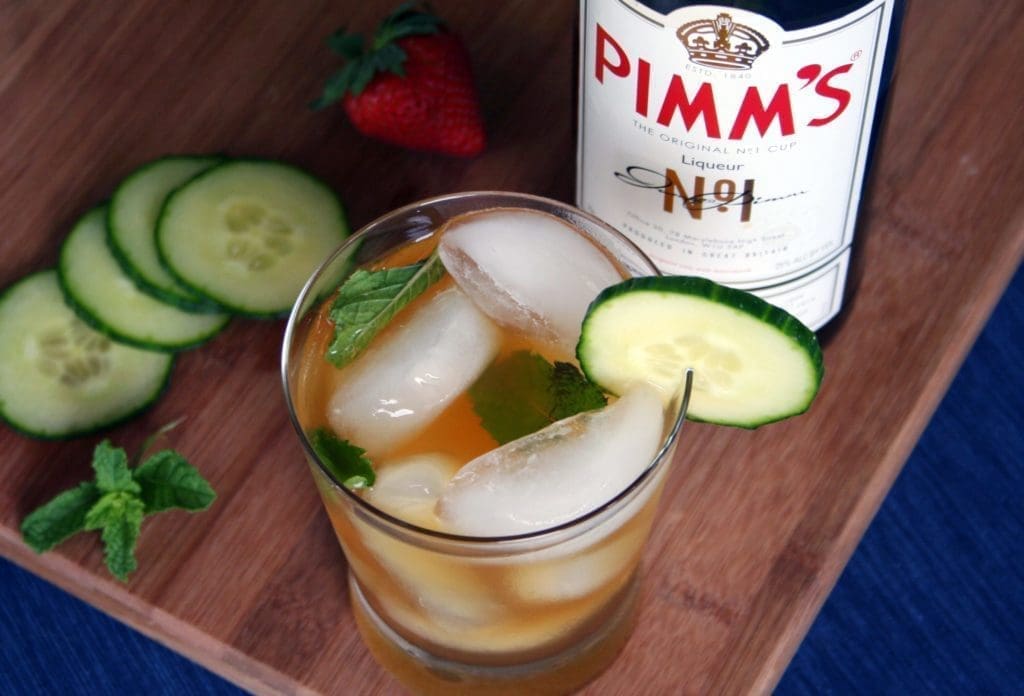
Pimm’s Cup
Pimm’s is one of those drinks that makes a lot more sense once summer arrives in England. The gin-based Pimm’s No. 1 originated in London and is traditionally mixed with British-style lemonade, then loaded with fruit, cucumber and mint.
It’s especially tied to the English summer, from garden parties and pub gardens to events such as Wimbledon. If I’m making a jug at home, I keep it pretty traditional with plenty of ice, lemonade, strawberries, orange, cucumber and fresh mint.
Make it at home with my Pimm’s Cup recipe.
English Wine
English wine is another category worth paying attention to, particularly in southern England. Sussex, Kent, Hampshire and Surrey are home to many vineyards, with sparkling wine being one of the styles the region is best known for.
If you’re traveling through the south, vineyard tours and tastings offer an easy way to add another local food and drink experience to the trip.
Gin
Gin has a long history in England, and today you’ll find distilleries producing their own styles throughout the country. Many use different combinations of botanicals and locally inspired ingredients, so it’s another drink that can change depending on where you’re traveling.
If there’s a distillery near somewhere I’m already visiting, I’d consider a tour or tasting, but I wouldn’t treat gin as something you need to build an entire trip around.
Modern English Food
Traditional English food is only part of what you’ll eat here today. Yes, there are still plenty of Sunday roasts, pies, fish and chips and old-school puddings, but that’s only one side of the food scene.
Spend any time in England and you’ll also find curry houses, kebab shops, Caribbean restaurants, Polish bakeries, Italian cafés, food markets and restaurants serving food from just about everywhere. These aren’t really separate from the story of English food anymore. They’re part of everyday life here.
Curry Is Part of the Food Culture
Nowhere is that more obvious than with South Asian food. Indian, Pakistani and Bangladeshi restaurants and takeaways are everywhere, and the British curry house has developed into a food tradition of its own.
Birmingham is particularly known for Balti, while London, Leicester, Bradford and Manchester all have strong South Asian food scenes.
Chicken tikka masala usually gets brought up when people talk about Britain’s relationship with curry, but it’s really just one example of a much bigger story. What’s more interesting to me is how completely curry has become part of everyday eating here. Going out for a curry can feel every bit as British as heading to the pub for a pie and a pint.
And It Goes Well Beyond Curry
Caribbean, African, Middle Eastern and European communities have also left their mark on what people eat. Depending on where you are, you might find jerk chicken, Turkish grills, Polish bakeries, Italian cafés or Middle Eastern mezze within a few blocks of a centuries-old pub.
That’s especially noticeable in larger cities, but you don’t have to be in London to see it. It’s simply part of eating in England today.
Traditional Food Is Changing Too
At the same time, there’s been a renewed interest in doing traditional English food really well. Pubs and restaurants are putting more emphasis on local meat, seasonal vegetables, British seafood, artisan cheese and ingredients produced close to home.
It’s increasingly common to see the farm, fishery, cheesemaker or local producer listed right on the menu. The dishes may still be familiar, but there’s much more attention being paid to where the ingredients come from.
Try Both
If you’re visiting England, don’t feel like every meal has to involve something that’s been eaten here for 300 years. Definitely have the Sunday roast. Find a good fish and chip shop. Order the steak and ale pie. Try the local cheese.
But go out for a curry too. Wander through a neighborhood food market. Try the little bakery or restaurant that’s packed with locals. You’ll get a much better feel for how England actually eats today.
Protected Regional Foods of England
Some of England’s best-known regional foods have protected names, meaning there are rules governing where they’re made, how they’re produced or both. If you’re familiar with the food designations used in Italy and elsewhere in Europe, the idea is very similar.
Champagne is probably the easiest example. Sparkling wine can be made almost anywhere, but the protected name Champagne is reserved for wine that meets specific requirements and comes from the Champagne region of France. England uses similar geographical protections for certain regional foods.
The official UK register of protected geographical food and drink names includes products registered under designations such as Protected Designation of Origin (PDO) and Protected Geographical Indication (PGI).
| Protected Food | Region | Designation |
|---|---|---|
| Cornish Pasty | Cornwall | PGI |
| West Country Farmhouse Cheddar Cheese | South West England | PDO |
| Single Gloucester | Gloucestershire | PDO |
| Beacon Fell Traditional Lancashire Cheese | Lancashire | PDO |
| Melton Mowbray Pork Pie | Leicestershire and the designated surrounding area | PGI |
| Traditional Cumberland Sausage | Cumbria | PGI |
| Stilton Cheese | Derbyshire, Leicestershire and Nottinghamshire | PDO |
For travelers, these designations are useful because they help identify foods with a genuine connection to the region they’re known for. A Cheddar-style cheese or pork pie made somewhere else can still be excellent, but it can’t necessarily use the protected regional name.
Why It Matters
When I’m traveling, a protected name is one clue that a food is worth trying where it’s made. It doesn’t automatically mean it’s better than every other version, but it does tell me there’s a documented connection between the product, its traditional specifications and the place it comes from.
English Holiday and Seasonal Food Traditions
Some English foods are closely tied to holidays and specific times of year. Christmas brings roast dinners, pigs in blankets, mince pies, Christmas pudding and Christmas cake, while Easter is associated with hot cross buns, roast lamb and simnel cake.
Stay tuned for my separate guides to the foods and recipes that define each celebration.
What to Drink With English Food
English food pairs especially well with beer, cider and wine. When I’m traveling, I like to start with whatever is made locally. A Somerset cider with pork or a local ale with a pub pie can be just as much a part of the regional food experience as the dish itself.
| English Food | What to Drink | Why It Works |
|---|---|---|
| Roast beef and Yorkshire pudding | Cabernet Sauvignon, Bordeaux-style red or Syrah | A structured red stands up to the beef and rich gravy. |
| Roast lamb | Syrah or Rioja | The savory character of these reds works well with lamb, herbs and gravy. See my guide to the best wines with lamb for more pairing options. |
| Roast pork and crackling | Dry English cider or Pinot Noir | Fresh acidity helps cut through the richness of the pork and crackling. |
| Fish and chips | English sparkling wine, Champagne or pale ale | Acidity and carbonation are a great match for crisp fried batter. |
| Steak and ale pie | English bitter, brown ale or porter | The maltier flavors of the beer work naturally with beef and ale gravy. |
| Bangers and mash | English bitter or dry cider | Both work well with pork sausages, mashed potatoes and onion gravy. |
| Ploughman’s lunch | Real ale or dry cider | Both are natural partners for cheese, bread, pickle and pork pie. |
| Mature Cheddar | Dry cider or English ale | Acidity and carbonation help balance a rich, mature cheese. |
| Stilton | Port | The sweetness of the wine balances the salty, powerful blue cheese. |
| Oysters and shellfish | English sparkling wine or Champagne | High acidity and bubbles work especially well with briny shellfish. |
| Sticky toffee pudding | Tawny Port | Caramel, nut and dried-fruit flavors work naturally with the toffee sauce. |
Foodie & Wine Tip
Don’t overlook what’s made nearby. Somerset cider with pork, a local cask ale with a Ploughman’s lunch or English sparkling wine with seafood can make the pairing feel much more connected to where you’re eating.

The Best Way to Experience English Food
I’m still exploring England and adding to this guide as I go. As I find foods worth seeking out, learn more about the people making them and recreate the dishes in my own kitchen, I’ll continue adding those experiences here.
For me, the best way to understand English food is pretty simple: try what’s local, learn why it’s connected to the place you’re visiting and, if you love it, figure out how to make it at home.
Ready to go beyond the recipes? Discover the pubs, markets, neighborhoods, vineyards, bakeries and local producers that bring England’s food traditions to life.
Explore What To Eat In Britain →
Explore What To Eat In England →
About This Guide: This guide combines my firsthand experiences traveling and eating around England with research into regional food traditions and official UK sources. Protected food designations and regional classifications are checked against UK government and producer sources where applicable.