 Skip to content



German Schnitzel
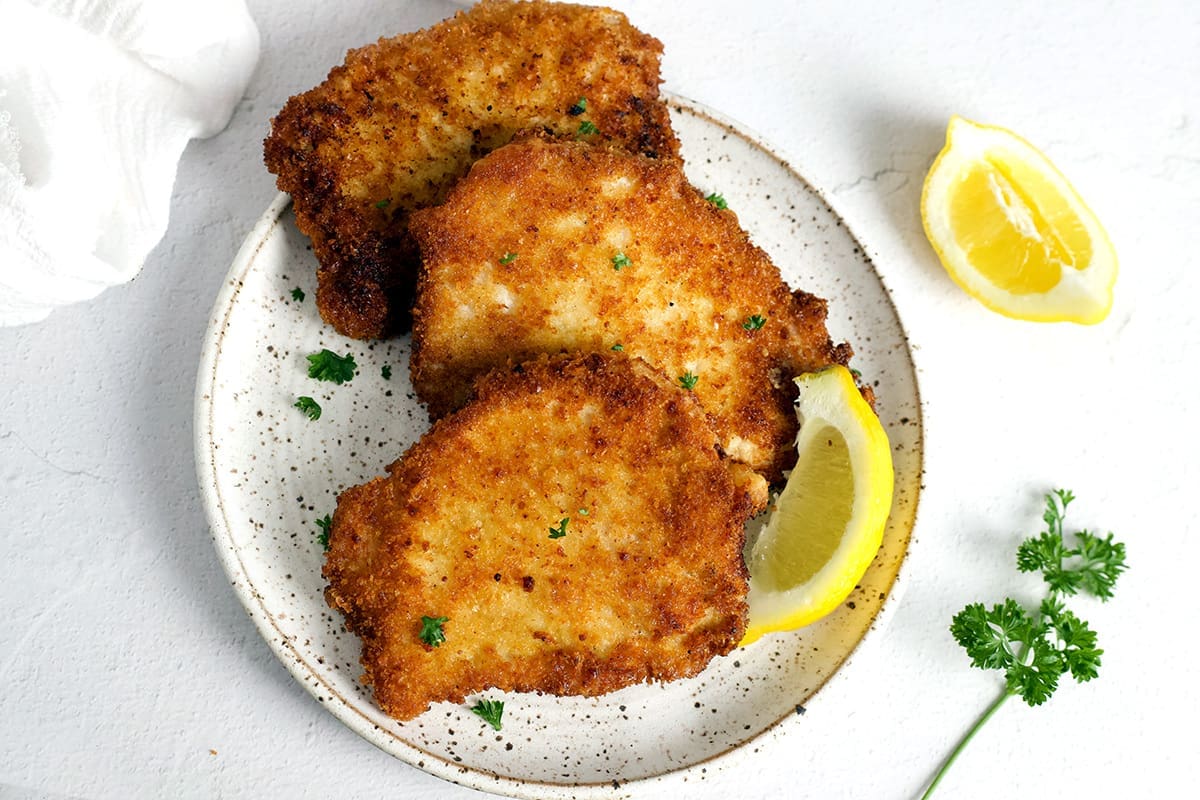
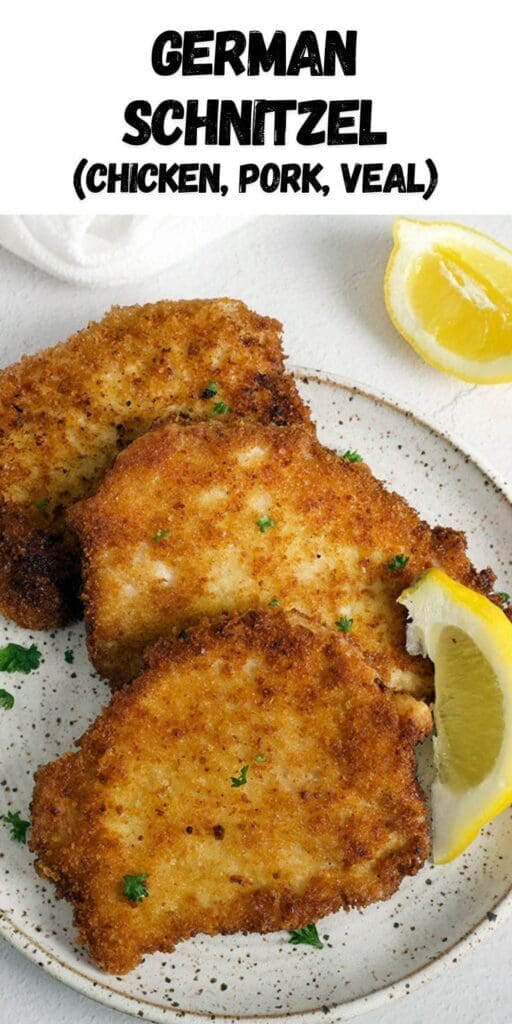
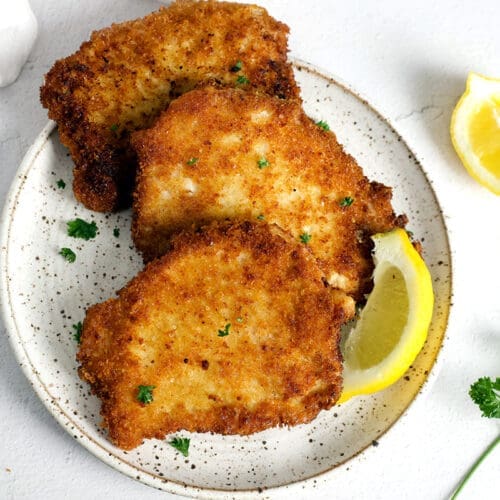
This German Schnitzel recipe gives you an extra-crispy breaded cutlet in just 30 minutes. Serve it with fresh lemon slices for a simple German meal.
If schnitzel is what brought you here, there’s plenty more to try. Browse all of my German recipes, or start with my German Food Guide for regional favorites and ideas for what to serve with them.

What Kind of Meat to Use in Schnitzel
Wiener Schnitzel is the Austrian version made with veal. In Germany, pork schnitzel is very common, while chicken and turkey are other options.
- Pork: The most common choice for German Schweineschnitzel.
- Chicken: A readily available option for Hähnchenschnitzel.
- Turkey: Another option that works well with the same breading and frying method.
If there are any vegetarians in the house, consider making a batch of German Potato Pancakes for them instead.

Would you like to save this?
Variations
Some of the most popular schnitzel variations include Jägerschnitzel, or hunter schnitzel, served with rich Mushroom Gravy or Mushroom Sauce. Paprikaschnitzel is topped with a tangy bell-pepper sauce, while Rahmschnitzel is served with a creamy Rahm sauce.

Schnitzel Recipe Tips
These tips will help you get crisp breading that stays attached to the meat.
- Purchase thin-cut meat to avoid having to slice it in half. One less step!
- Pat the meat dry with paper towels. The drier the surface, the better the coating will stick.
- If your kitchen isn’t stocked with a meat mallet, use a heavy rolling pin or skillet instead.
- If you’d like step-by-step photos of the breading process, check out my Milanesa de Pollo recipe.
- After frying, place the schnitzel on a wire rack to drain. Paper towels can trap steam and soften the crust.
- Serve immediately. The coating will begin to soften as the schnitzel sits.

What to Serve With German Schnitzel
German schnitzel is especially good with simple potato sides. Serve it with my German Potato Salad, mashed potatoes or Spätzle. German cucumber salad is another good option if you want something lighter.
If you’re putting together an Oktoberfest-style spread, add some German Soft Pretzels and my Oktoberfest Chicken.
For a larger German dinner, my Bratwurst and Sauerkraut or Bratwurst in Beer and Onions are easy additions.
As for beer, a German Pilsner is my first choice with the crisp breading, but Märzen also works if you want something maltier. See my German Beer and Food Pairings guide for more options.
Schnitzel is only one of the Bavarian favorites you’ll run into in Munich. My Oktoberfest Food Guide covers everything else I’d make room for at the festival.
German Schnitzel
Ingredients
- 2 lbs thin boneless pork chops, chicken breasts or veal, pounded to 1/8"-1/4" thickness (*Note 1)
- salt, to taste
- black pepper, to taste
BREADING
- 1 cup all-purpose flour
- 1 tbsp garlic salt
- ½ tsp pepper, white or black
- 3 large eggs, beaten
- 1½ cups panko or plain breadcrumbs (*Note 2)
- canola oil or vegetable oil, to pan fry (*Note 3)
- 1 large lemon, sliced into wedges
Instructions
- Place the meat in a single layer on a cutting board and cover with plastic wrap to prevent splatter. Gently pound the meat with a meat mallet until 1/8" to 1/4" thick. Sprinkle both sides of the meat with salt and pepper. Set aside.
- Prepare 3 separate shallow bowls for breading: Add the flour, garlic salt, and pepper to the first bowl and whisk to combine. Add the eggs to bowl two and use a whisk or fork to beat. Add the Panko/breadcrumbs to the third bowl.
- Dredge both sides of each piece of meat in flour, then dip into the egg mixture. Make sure to let the excess egg fall back into the bowl. Lastly, dip the meat into the Panko/breadcrumbs.
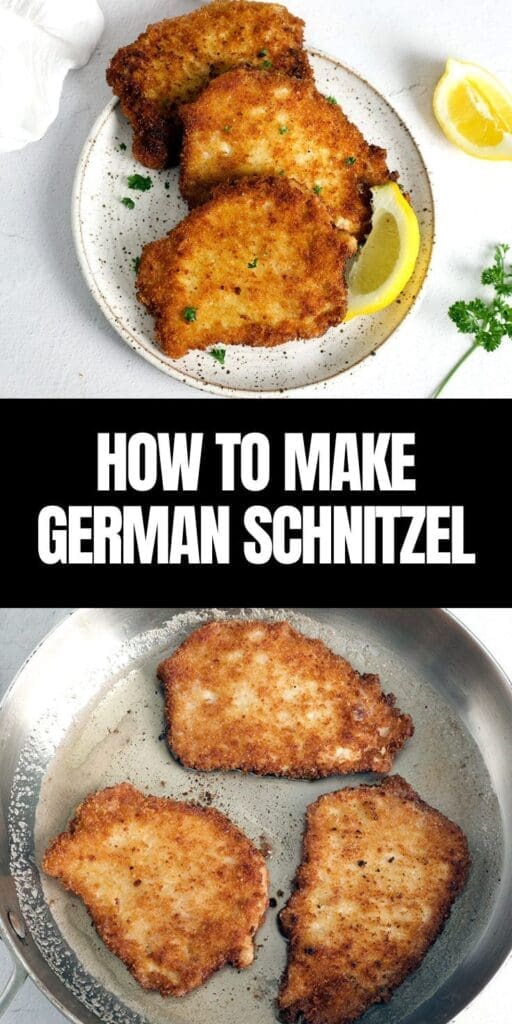
- Heat a large non-stick pan over medium heat and add enough oil to generously cover the bottom of the pan (about 1/2"). Once the oil is hot, add 2-3 pieces of the breaded meat and saute for 2-3 minutes per side or until the internal temperature reaches 145°F. Reduce the heat if the breading gets too brown too quickly.
- After frying, quickly place the meat on a paper towel, to absorb excess oil, then immediately place on a wire rack. This helps keep the schnitzels nice and crisp. Repeat with the remaining breaded meat, adding extra oil if needed (just make sure to let the new oil warm up before proceeding).
- To check doneness, cut into a piece of meat. The juices should run clear when the meat is fully cooked.
- Serve with lemon wedges. Enjoy immediately for best results.