

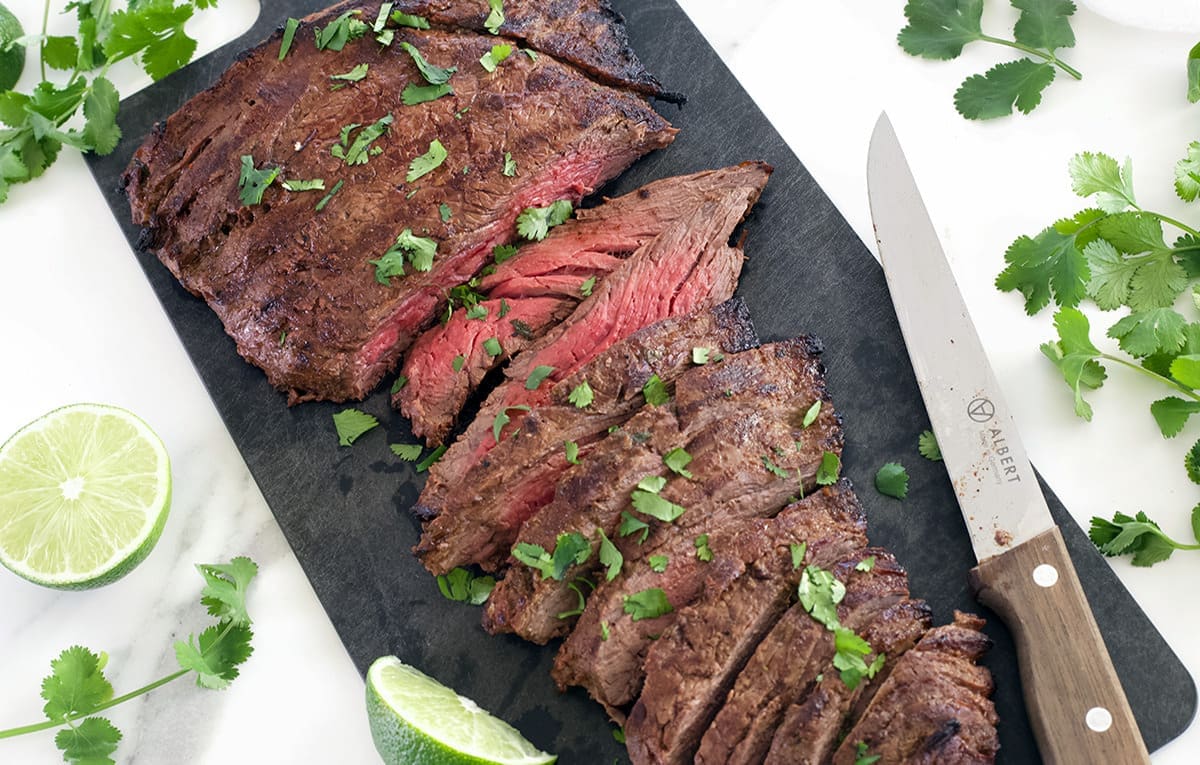
This taqueria carne asada is the foundation for every carne asada recipe on Foodie and Wine. I’ve been making and tweaking it for well over 20 years until it tasted like the carne asada served at the taco shops I grew up with.
The ingredient list is longer than many carne asada recipes you’ll find online, but every citrus, herb and spice earns its spot. Fresh lime and orange juice, red wine vinegar, cilantro, garlic and a heavily seasoned spice blend give the steak its distinct taqueria flavor.
I use this carne asada for carne asada tacos, burritos, fries, tortas and nachos. You can find all of those in my complete collection of carne asada recipes.
Short on marinating time? Use my Carne Asada Seasoning instead. It packs the spices from this marinade into a dry blend you can apply shortly before grilling.

San Diego Native Review
- “I just made this recipe, and it was delicious! Highly recommended! Born and raised in San Diego, been eating carne asada everything my entire life!”
Jeff M.
Why This Carne Asada Recipe Works
This isn’t a three-ingredient marinade, and it isn’t supposed to be. The citrus and vinegar provide the familiar taco-shop tang, while the oil helps the garlic, cilantro and spices coat the entire steak.
Ground cloves are what set this marinade apart from most carne asada recipes online. Use a light touch, though. Too much will take over the entire dish.
Carne Asada Marinade Ingredients
These are the key ingredients used in the marinade. You’ll find the complete list and measurements in the recipe card below.

- Steak: Flank steak is my favorite because its mild beefy flavor allows the marinade to come through. Skirt steak, flap meat and sirloin also work, but each produces a slightly different texture.
- Vegetable oil: Oil distributes the seasonings and helps the steak brown on the grill. Avocado oil or another neutral, high-heat oil can be substituted.
- Red wine vinegar: Provides acidity and the tangy flavor I associate with taco-shop carne asada. I don’t recommend replacing it with balsamic vinegar.
- Lime and orange juice: Fresh citrus juice gives the marinade its San Diego-style flavor. Bottled juice works in an emergency, but fresh is better here.
- Cilantro and garlic: Use fresh cilantro and garlic for the fullest flavor. If you’re one of those people who thinks cilantro tastes like soap, leave it out.
- Seasonings: Garlic salt, white pepper, cumin, chili powder, Mexican oregano and ground cloves make up the spice blend. Mexican oregano has a different flavor than Mediterranean oregano, so use the real thing if you can find it.
- Orange slices: I place fresh orange slices directly against the steak while it marinates. This adds more citrus flavor without pouring additional juice into the mixture.
Carne Asada Beef
I’ve tested this marinade with flank steak, skirt steak, flap meat and sirloin. Flank steak is still my favorite overall because it is widely available, grills evenly and has a mild beefy flavor that doesn’t overpower the marinade.
Skirt steak has a looser texture and richer flavor, while flap meat has more marbling and produces especially juicy chopped carne asada. Both are more commonly found in taco shops than flank steak.
If you’re deciding what to buy, my guide to the best cut of beef for carne asada compares the flavor, tenderness, marbling, availability and ease of grilling of each option.
How to Make Carne Asada
Whisk the oil, vinegar, water, lime juice, orange juice, cilantro, garlic and seasonings together in a mixing bowl. Whisk until there are no dry pockets of seasoning, then pour the marinade over the steak.
Place the meat in a shallow baking dish or large resealable bag, pour the marinade over it and turn the steak until every side is coated. Arrange the orange slices directly against the meat, cover and refrigerate.
If you use a bag, lay it flat and turn it once or twice while the steak marinates.

How Long to Marinate The Beef
Marinate the steak for at least 2 hours or up to 24 hours. I rarely make carne asada without starting it the night before because the longer marinating time gives the garlic, citrus and seasonings more time to flavor the meat.
Thicker flank steak benefits most from 12 to 24 hours. Thin skirt steak picks up flavor more quickly, so it can be ready sooner. Regardless of the cut, I don’t recommend going beyond 24 hours because the acidic marinade can eventually affect the exterior texture.
- Minimum: 2 hours
- Better: 6 hours
- My preference: 12 to 24 hours, especially for flank steak
Would you like to save this?
How to Cook Carne Asada
Remove the steak from the marinade and discard all of the used liquid. Let the excess drip away while you preheat an outdoor grill, griddle or cast-iron skillet over high heat.
Cook the steak for approximately 4 to 8 minutes per side, depending on the cut and thickness. Use an instant-read thermometer rather than relying only on the clock. Thin skirt steak can cook surprisingly fast, while thick flank steak needs more time.
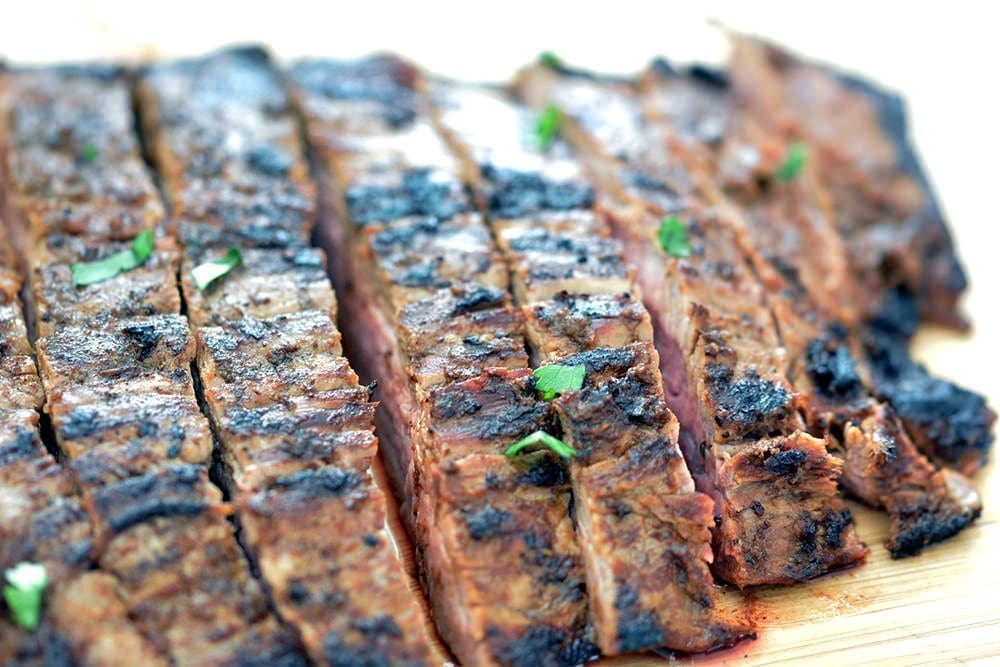
Transfer the steak to a cutting board and let it rest for 10 minutes. Slice it against the grain for a carne asada plate or chop it into small pieces for tacos, burritos and fries.

The San Diego Taco-Shop Finish
At San Diego taco shops, the carne asada usually gets one more round of heat after it comes off the grill. The rested steak is chopped into small pieces, then tossed onto a scorching-hot griddle so each piece develops browned, slightly crispy edges.
This step is optional, but I highly recommend it if you want the full taco-shop experience. Grilling gives the steak its smoky flavor and char, while the griddle browns the freshly cut sides that never touched the grill.
After resting the steak, cut it against the grain and chop it into pieces approximately ⅛ to ¼ inch across. Heat a cast-iron skillet or griddle over high heat, add a small amount of oil and spread the meat into a single layer. Let it brown briefly before tossing, just long enough to crisp the edges without drying out the center.
Work in batches if necessary. Crowding the pan traps steam, and steamed carne asada is not what we’re going for.
Recipe Tips and Notes
- Use Mexican oregano. It has a more citrusy, earthy flavor than Mediterranean oregano and fits this marinade much better.
- Don’t skip the resting time. Give the steak 10 minutes before slicing or chopping so the juices have time to settle.
- Always cut against the grain. Look for the long muscle fibers and cut across them. This makes lean cuts such as flank and skirt steak much easier to chew.
- Discard the used marinade. Don’t reuse marinade that has been in contact with raw beef unless it is thoroughly boiled first.
- Cook by temperature. The thickness of flank, skirt and flap meat varies, so grilling time is only an estimate.
- Marinate extra steak. Leftover carne asada is rarely a problem. Use it for breakfast tacos, quesadillas, nachos or the burrito you’ll inevitably make while putting everything away.

Ways to Use Carne Asada
This marinade makes enough steak to build several different meals. These are the San Diego-style recipes I make most often:
Serving the steak on its own? My guide to what to serve with carne asada includes rice, beans, salads, salsas and more ideas for finishing the meal. For even more sauces, sides and Mexican-inspired meals, visit my Ultimate Mexican Food Guide.
Once you’ve mastered the marinade, head to my complete collection of carne asada recipes for even more ways to put the grilled steak to work. Around here, the marinade is only the beginning.

Carne Asada (Taqueria Style)
Ingredients
- 2½ lb flank steak, skirt steak, flap meat or sirloin steak
- ¼ cup red wine vinegar
- ¼ cup water
- 2 tbsp vegetable oil
- 2 tbsp lime juice
- 2 tbsp orange juice
- 2 tbsp chopped cilantro
- 1 tbsp minced garlic
- ¾ tbsp garlic salt
- ½ tbsp white pepper
- ½ tbsp cumin
- ½ tbsp chili powder
- ½ tbsp Mexican oregano
- ⅛ tsp ground cloves
- 1 orange, sliced
Instructions
- Add all the ingredients (except the meat and orange slices) to a medium size bowl and stir until blended. Transfer to a large Ziploc Bag.
- Add the steak and shake to coat the entire piece of meat evenly.
- Lay the bag flat and add the orange slice directly to the meat – half on top and half on bottom.
- Refrigerate overnight or at least 2 hours. (*Note 1)
- Before grilling, remove from the refrigerator up to an hour in advance. (*Note 2)
- Pre-heat grill to medium high.
- Place meat directly on greased grate for 6-8 minutes. (*Note 3)
- Flip and grill for an additional 6-8 minutes, until your desired doneness is reached.
- Let rest for 10 minutes before slicing against the grain and serving.