

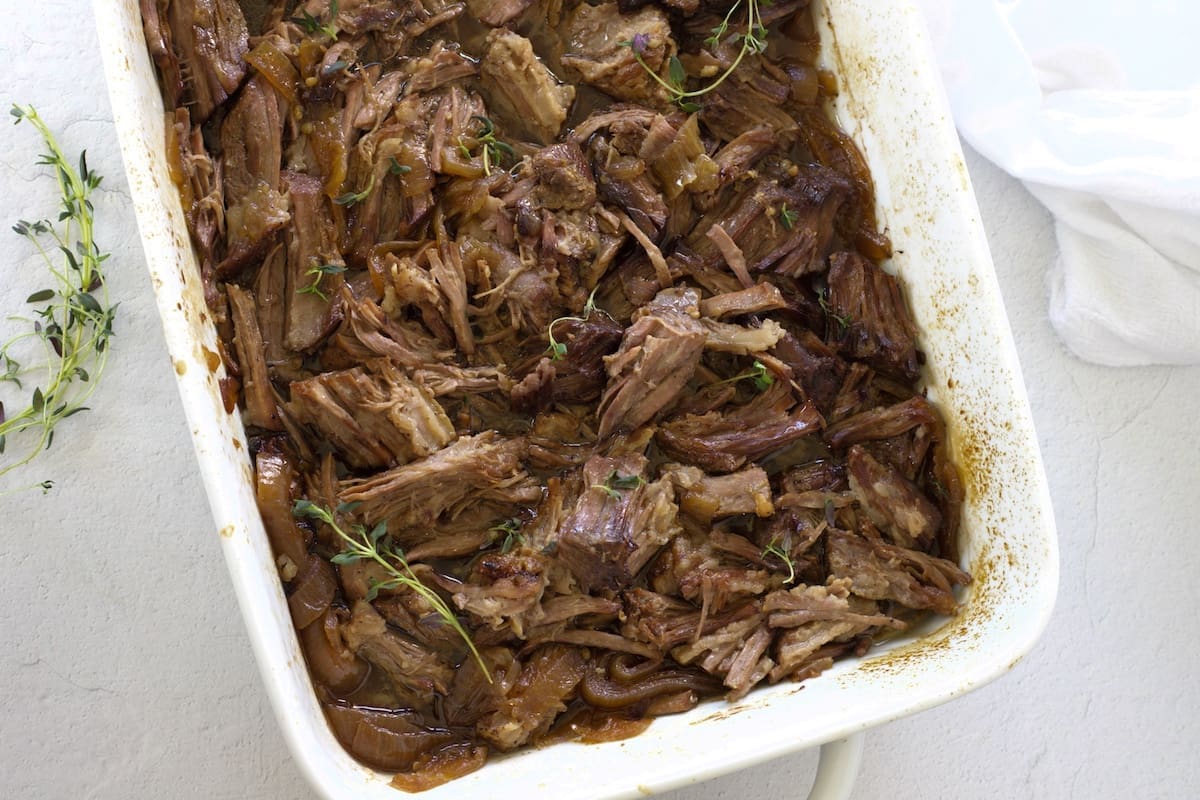

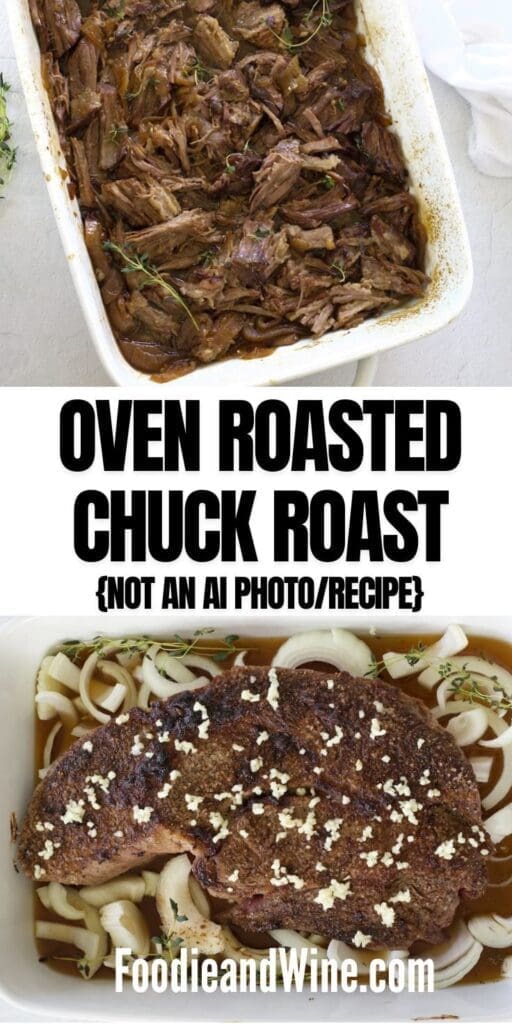
This chuck roast in the oven recipe is a simple way to turn a budget-friendly cut of beef into a tender, flavorful meal. Cooked low and slow in a covered pan with broth, onions, and herbs, oven-baked chuck roast becomes juicy, fork tender, and perfect for serving with your favorite mashed potato recipe, roasted vegetables, or noodles.
Chuck roast is one of the easiest ways to turn an inexpensive cut into a meal that tastes like it came from a restaurant. It’s also one of the most forgiving cuts, which makes it ideal for beginners and perfect for slow cooking in the oven.
The key to a tender chuck roast is cooking it covered at a low temperature long enough for the connective tissue to break down. When done correctly, this tougher cut transforms into a rich, fall-apart roast with deep flavor. If you want to learn more about where chuck comes from, see our Ultimate Guide to Beef Cuts and my Chuck Roast guide.
Below, you’ll find the best oven temperature, cook time, internal temperature, and simple tips to help your chuck roast come out consistently great every time. If you enjoy low and slow beef recipes, you may also want to try Mexican Shredded Beef, Smoked Chuck Roast or Sous Vide Chuck Roast.
Quick Answer: Chuck Roast In The Oven
Here’s a quick overview of how to cook chuck roast in the oven for tender, reliable results:
- Oven temperature: 300°F for best results
- How long to cook chuck roast in the oven: Cook a chuck roast at 300°F for about 3.5 to 4 hours.
- Method: Cook covered with broth using a braising method
- Doneness: Fork tender at 190°F to 205°F internal temperature
Make sure you reference my Beef Temperature Guide for more tips and a free printable.
Best Way To Cook Chuck Roast In The Oven
The best way to cook chuck roast in the oven is to bake it covered at a low temperature using a braising method. This means cooking the roast in a small amount of liquid, such as beef broth, while keeping it tightly covered to trap moisture.
As the roast cooks, the gentle heat and steam slowly break down the connective tissue, which is what makes chuck roast tender. Without enough time or moisture, the meat will stay tough. This is one reason chuck roast is often considered one of the best cuts of beef for slow cooking.
You can use either a Dutch oven or a foil-covered baking dish, as long as it is sealed well to prevent moisture from escaping. If you are new to cooking beef, chuck is also one of the best cuts of beef for beginners because it is forgiving when cooked properly.

Oven Temperature For Chuck Roast
The best oven temperature for chuck roast is 300°F. This low temperature allows the meat to cook slowly so it becomes tender and juicy.
- 300°F: Best overall temperature for tender, juicy results
- 275°F: Slightly slower cook with an even more tender texture
- 325°F: Faster cooking, but slightly less tender
For most recipes, 300°F gives the best balance between cook time and tenderness. If tenderness is your top priority, you may also enjoy reading about the most tender cuts of beef.
How Long To Cook Chuck Roast In The Oven
Chuck roast should be cooked in the oven for about 3.5 to 4 hours at 300°F, depending on the size. This allows enough time for the connective tissue to break down so the meat becomes fork tender.
- 3 pound roast: 3 1/2 to 4 hours
- 4 pound roast: 3 1/2 to 4 1/2 hours
The roast is done when it easily pulls apart with a fork. If it still feels tough, it needs more time in the oven. For extra help with texture, you can also read our guide on how to tenderize beef.
| Roast Size | Oven Temperature | Estimated Cook Time | Notes |
|---|---|---|---|
| 2.5 lbs | 300°F | 3 to 4 hours | May take longer if roast is thick |
| 3 lbs | 300°F | 3.5 to 4 hours | Typical range for fork tender |
| 4 lbs | 300°F | 3.5 to 4.5 hours | Larger roasts need more time to break down |
| 2.5–4 lbs | 325°F | 3 to 4.5 hours | Faster heat, but not always faster tenderization |
| 2.5–4 lbs | 275°F | 4 to 5 hours | Best for ultra tender texture |

Internal Temperature
The ideal internal temperature for chuck roast is between 190°F and 205°F for a tender, pull-apart texture.
Unlike steak, chuck roast needs to cook to a higher internal temperature to become tender. Safe temperature is only part of the equation. For the best texture, chuck roast needs enough time for the collagen to fully break down.
- 145°F: Safe, but still too tough
- 165°F to 180°F: Starting to soften
- 190°F to 205°F: Ideal for fork-tender, pull-apart texture
Use a meat thermometer as a guide, but rely on tenderness as the final sign that the roast is done.
If you prefer slicing instead of shredding, you can also use a similar method to make a tender roast beef that is perfect for sandwiches or meal prep.
Cooking chuck roast at a low temperature is the most reliable way to ensure tender results every time.
For more temperature guidance across different beef cuts, use this beef temperature chart as a quick reference.
Why Is My Chuck Roast Tough?
If your chuck roast is tough, it usually has not cooked long enough. Chuck roast is a tougher cut that becomes more tender the longer it cooks in a moist environment.
- Not cooked long enough: It needs more time for the connective tissue to break down
- Temperature too high: The meat can dry out before it has time to tenderize
- Not enough liquid: Moisture is needed for proper braising
- Not covered: Steam escapes and the roast stays dry and firm
If your roast is still tough, return it to the oven, cover it tightly, and continue cooking until it becomes fork tender. Since chuck is also one of the cheapest cuts of beef, learning how to cook it well is one of the easiest ways to make an affordable beef dinner taste impressive.

Would you like to save this?
Should Chuck Roast Be Covered in the Oven? (Foil vs Dutch Oven)
Yes, chuck roast should be cooked covered in the oven. Covering the roast traps moisture and creates the braising environment needed to break down tough connective tissue and make the meat tender.
If the roast is cooked uncovered, it is more likely to dry out and remain tough instead of becoming fork tender.
You can cook chuck roast using either a Dutch oven or a foil-covered baking dish. Both methods work well as long as the roast is sealed tightly to prevent moisture from escaping.
- Dutch oven: Provides better heat retention and a tightly sealed environment, which can enhance flavor and tenderness
- Foil-covered baking dish: A simple and accessible option that still produces excellent results when sealed properly
If you are working with a leaner cut and want a sliceable result instead of a fall-apart texture, you can use a similar approach with less liquid. For more guidance, see our how to cook roast beef guide.
Tips For A Tender Chuck Roast In The Oven
- Sear the roast first: Browning adds deeper flavor
- Cook it covered: This keeps moisture trapped inside the pan
- Use enough liquid: Broth helps create the braising environment
- Cook low and slow: Time is essential for tenderness
- Let it rest: Resting helps the juices redistribute
- Slice against the grain: This makes each bite easier to chew
- Keep the drippings: Keep the dripping to make this delicious brown gravy recipe.
When cooking chuck roast, patience is what delivers the best texture. A roast that seems tough usually just needs more time. If you cook beef often, our guide to the best cuts of beef for slow cooking can help you choose similar cuts for future recipes.

What To Serve With Chuck Roast
Chuck roast pairs well with classic comfort food sides and simple vegetables. Here are some of the best side dishes to serve with it.
- Mashed potatoes with garlic
- Roasted carrots
- Roasted Brussels sprouts
- Green beans
- Rice or buttered noodles
- Dinner rolls
Chuck Roast Leftover Ideas
Leftover chuck roast is versatile and can easily be turned into another meal the next day. My favorite way to use up leftovers is to make Mexican shredded beef tacos or shredded beef burritos.
Best Wine To Pair With Chuck Roast
Chuck roast pairs best with medium to full-bodied red wines that can stand up to its rich, beefy flavor.
- Cabernet Sauvignon: Bold and structured enough for a hearty roast
- Merlot: Softer and fruit-forward, with enough body to complement the meat
- Syrah: Rich and peppery, making it a great match for savory beef dishes

Frequently Asked Questions
What temperature should chuck roast be cooked at?
Chuck roast should be cooked at 300°F in the oven for the best balance of tenderness and cook time.
Why does chuck roast need to cook so long?
Chuck roast comes from a heavily used muscle with a lot of connective tissue. It needs time at a low temperature for that collagen to break down, which is what makes the meat tender.
How do you make chuck roast more tender?
Cook it low and slow with moisture. Chuck roast becomes tender when the connective tissue has enough time to break down during braising.
Can you overcook chuck roast?
Chuck roast is more forgiving than lean cuts, but it can dry out if it is cooked uncovered or without enough liquid. Keeping it covered helps maintain moisture and tenderness.
Does chuck roast get more tender the longer you cook it?
Yes, chuck roast gets more tender as it cooks, as long as it is cooked with moisture at a low temperature.
How long does it take to cook a chuck roast at 300 degrees?
A chuck roast takes about 3 to 4 hours to cook in the oven at 300°F, depending on its size. It is done when it becomes fork tender.


Chuck Roast In The Oven
Ingredients
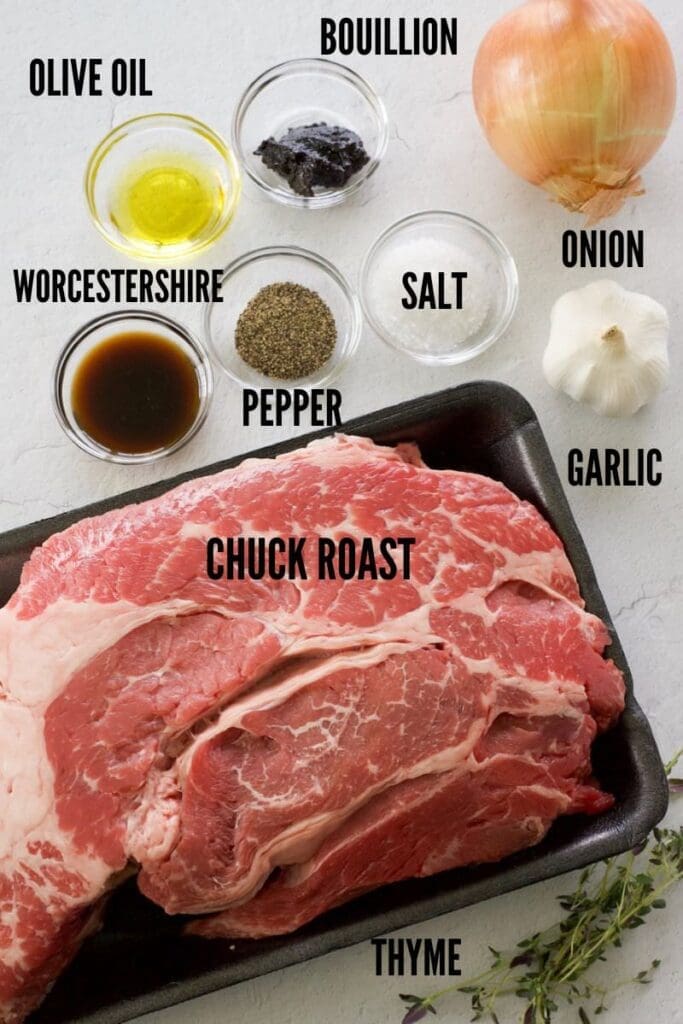
- 3-4 lb chuck roast
- 1 tbsp beef bouillon paste (*Note 1)
- 2 tsp kosher salt
- 1 tsp black pepper
- 1 large yellow onion
- 4 springs fresh thyme (*Note 2)
- 1 cup beef broth
- 1 tbsp Worcestershire Sauce
- 8 cloves garlic, minced
Instructions
- Move the oven rack to the top position and turn the oven broiler to high. (*Note 3)
- Pat dry the chuck roast with paper towels and coat with the beef bouillon paste. Evenly sprinkle the roast with kosher salt, black pepper and transfer to a roasting pan.
- Place the pan under the broiler and let roast sear for 5-8 minutes, until the outside is dark brown and crusty. Keep your eyes on it, as it can quickly burn.
- Remove the roast from the oven and reduce the oven temperature to 300°F. Add the sliced onions and thyme sprigs around the roast. In a small bowl, add the beef broth and Worcestershire sauce and stir to combine. Pour the mix over the onions then spread the minced garlic on the top of the roast.
- Tightly cover the roasting pan with aluminum foil and transfer the pan to the oven. Bake for 3½-4 hours, or until fork tender. Check at the 3½ hour mark, to see if it shreds easily with two forks. If not, bake for another 30 minutes, or until it does easily shred.
- Remove the roasting pan from the oven and let rest, still covered, for 10-15 minutes. When ready to serve, remove the foil and use two forks to shred the roast right into the juices.