 Skip to content


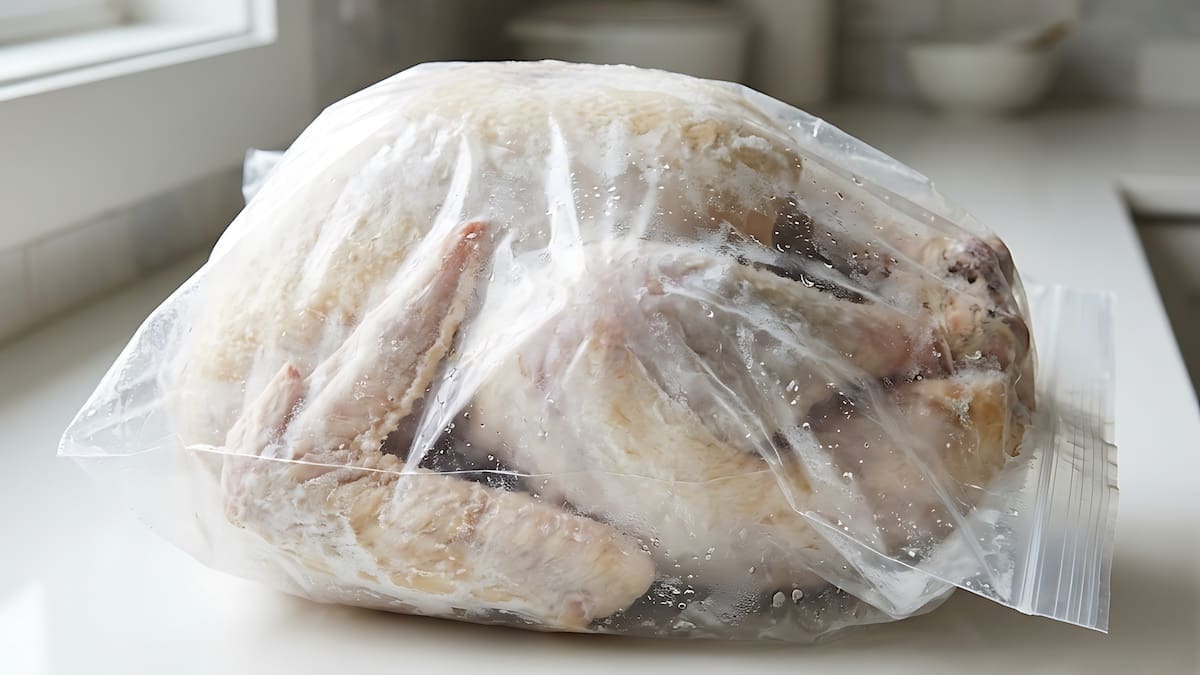
Thawing a frozen turkey can take anywhere from several hours to six days, depending on its weight and the method you use. The safest and easiest option is to thaw it in the refrigerator, allowing approximately 24 hours for every 4 to 5 pounds.
If you’re short on time, you can thaw the turkey in cold water at a rate of approximately 30 minutes per pound. Use the turkey thawing chart below to determine when you need to start.
Cooking a turkey breast, here’s How to Thaw a Turkey Breast.
How Long to Thaw A Turkey
Use this chart as a guideline for planning the thawing process based on the weight of your bird.
Treat these times as planning estimates. Actual thawing time can vary slightly depending on the turkey’s exact weight, packaging and the temperature of your refrigerator or water.
| Turkey Weight | Refrigerator Thawing | Cold-water Thawing |
| 4 to 12 pounds | 1 to 3 days | 2 to 6 hours |
| 12 to 16 pounds | 3 to 4 days | 6 to 8 hours |
| 16 to 20 pounds | 4 to 5 days | 8 to 10 hours |
| 20 to 24 pounds | 5 to 6 days | 10 to 12 hours |

Your browser cannot display this PDF. Open the PDF.
How to Thaw A Turkey In The Refrigerator
The refrigerator method is the safest and most hands-off way to thaw a whole turkey. Keep the refrigerator at 40°F or below throughout the thawing process.
To use the refrigerator method, place the wrapped turkey on a tray or in a shallow pan to catch any juices that may leak. Then, place it in the refrigerator and allow it to thaw for 24 hours for every 4-5 pounds of meat.
Keep the turkey in its original wrapper and place it on a tray or in a shallow pan to catch any leaking juices.
Once thawed, the turkey can be kept in the refrigerator for an additional 1-2 days before cooking.
How to Thaw A Turkey In Cold Water
The cold water method is a safe and efficient alternative if you need to thaw your turkey more quickly.
Keep the turkey in its original airtight packaging or place it in a leakproof bag. Completely submerge the wrapped turkey in cold tap water, never warm or hot water. Change the water every 30 minutes so it remains cold throughout the thawing process.
Allow approximately 30 minutes per pound. A 16-pound turkey, for example, will take about 8 hours. Cook the turkey immediately after thawing.
Would you like to save this?
Cook the turkey immediately after it has thawed. Unlike a turkey thawed in the refrigerator, it should not be refrigerated for another day or two before cooking.

How to Thaw a Turkey in the Microwave
The USDA recognzies thawing the turkey in a microwave, but it’s the last resort if you’re desperate.
If the turkey fits in your microwave, follow the manufacturer’s instructions for the defrost setting, power level and minutes per pound. Remove all outer packaging before thawing.
Cook the turkey immediately afterward because portions of the meat may begin to warm or cook during the defrosting process.
What Is the Best Thawing Method
The best way to thaw is in the refrigerator, as it allows for a slow, safe thaw without compromising the meat’s quality. If you’re short on time, the cold water method can help speed up the process while maintaining food safety.
Can You Thaw a Turkey at Room Temperature
Never thaw a turkey on the counter or in hot water. Even if the center remains frozen, the outside of the turkey can enter the temperature range in which bacteria multiply rapidly.
If a raw turkey has been left at room temperature for over 2 hours, discard it.

Delicious Recipes
Here are a few of my popular turkey recipes to prepare a memorable Thanksgiving dinner!
Here is another free printable to check out to help make your holiday’s smoother – Turkey Temperature Chart.