 Skip to content


The Best Poultry Seasoning Substitutes
First things first: poultry seasoning is a blend, not a single spice. Every brand puts its own spin on it. For example, McCormick packs theirs with thyme, sage, marjoram, rosemary, black pepper, and nutmeg. Because these store-bought mixes vary so much, no single backup will taste exactly the same.
If you want the perfect match, mixing up your own batch at home is your best bet. But if you’re in a pinch, using a simpler combination or even a single herb will still get the job done beautifully.
Here are 13 simple poultry seasoning swaps to save your recipe, along with the right amounts to start with. Just pick one option from the list instead of mixing and matching them.
Quick Tips To Keep In Mind
Before you grab your measuring spoons, keep these quick tips in mind to get the best flavor:
- Stick to dried herbs: These measurements are strictly for dried herbs. Don’t swap in fresh herbs at these same amounts, or your flavors will be way off.
- Measure by “parts”: Use the same spoon for the whole process. Mix your herbs together first, and then measure out whatever amount your recipe calls for from that finished blend.
- Treat these as starting points: Think of these amounts as flavor baselines, not rules set in stone. The age of your herbs, how finely they’re ground, and your other ingredients will all change the final taste. When in doubt, start with less; you can always add more later.
Poultry Seasoning Substitutes
| Substitution | Best For | Starting Amount (per 1 tsp Poultry Seasoning) | Profile Match |
|---|---|---|---|
| 1. Homemade Blend | Replicating the exact commercial flavor | 1 tsp | Closest Match |
| 2. Sage, Thyme & Rosemary | Balancing the three core herbs | 1 tsp | Very Close |
| 3. Sage & Thyme | A solid savory base without rosemary’s pine notes | 1 tsp | Good Match |
| 4. Sage & Rosemary | An assertive, robust herbal flavor | ¾ tsp | Stronger Flavor |
| 5. Thyme & Rosemary | An herb-forward swap when out of sage | 1 tsp | Altered Profile |
| 6. Italian Seasoning | A quick shortcut (watch for basil and oregano) | 1 tsp | Altered Profile |
| 7. Herbes de Provence | A complex swap (watch for floral/anise notes) | Up to 1 tsp | Altered Profile |
| 8. Dried Sage | A single-note, simple fallback | ¾ tsp | Single Note |
| 9. Dried Thyme | A clean, straightforward herbal note | Up to 1 tsp | Single Note |
| 10. Dried Marjoram | A gentler, sweeter single-herb direction | 1 tsp | Single Note |
| 11. Dried Rosemary | A potent swap (crush finely to avoid needles) | ½ tsp | Strong Single Note |
| 12. Oregano & Thyme | Changing the dish’s culinary direction | 1 tsp | Different Flavor |
| 13. Celery Salt & Pepper | A last-resort seasoning change (contains sodium) | Max ½ tsp celery salt | Last Resort |

Homemade Poultry Seasoning
If you want to capture the closest thing to the real thing, mixing up a batch of my homemade poultry seasoning is your best option. While store brands all vary slightly, a homemade blend is the closest you’ll get to the actual flavor profile of a commercial mix.
Starting amount: Start with 1 teaspoon of the prepared blend for every 1 teaspoon of poultry seasoning.
I tested this poultry seasoning substitute in turkey gravy and it was a good match. I also used it as a turkey rub with success.
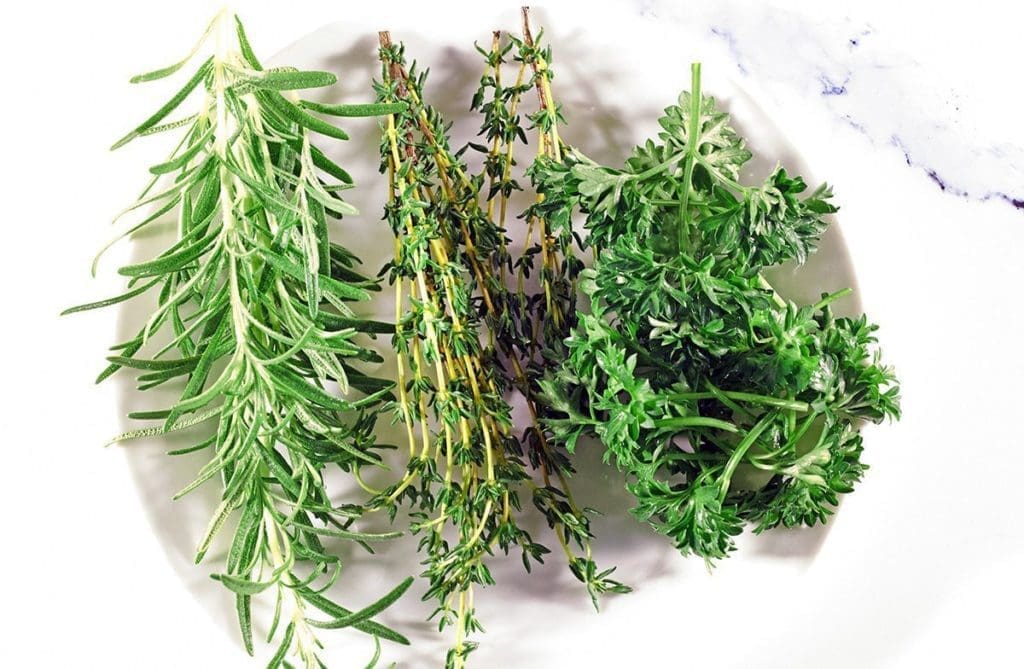
Sage, Thyme, and Rosemary
This combo uses three core herbs found in poultry seasoning. Because it skips the marjoram, pepper, and nutmeg, expect a simpler herb flavor rather than an identical match.
- The Blend: Mix 2 parts dried sage, 1½ parts dried thyme, and 1 part dried rosemary.
- Starting Amount: Use 1 teaspoon of the mixture for every 1 teaspoon of poultry seasoning.
Sage and Thyme
This two-herb mix is a great fallback if your spice cabinet is running low. Sage and thyme provide a solid savory base without the pine-like note of rosemary.
- The Blend: Mix 4 parts dried sage with 3 parts dried thyme.
- Starting Amount: Use 1 teaspoon of the mixture for every 1 teaspoon of poultry seasoning.
Sage and Rosemary
This pairing has a much sharper, more assertive herbal flavor. Crush the rosemary finely so you don’t get woody pieces in your food.
- The Blend: Mix 2 parts dried sage with 1 part dried rosemary.
- Starting Amount: Use ¾ teaspoon of the mixture for every 1 teaspoon of poultry seasoning to keep it from overpowering the dish.
Thyme and Rosemary
Use this pairing if you are completely out of sage. It gives you a strong herb flavor, but it won’t taste like a traditional sage-forward poultry blend.
- The Blend: Mix 1½ parts dried thyme with 1 part dried rosemary.
- Starting Amount: Use 1 teaspoon of the mixture for every 1 teaspoon of poultry seasoning.
Italian Seasoning
Check the label before using this shortcut. While it often includes overlapping herbs like thyme, rosemary, and marjoram, it also contains basil and oregano, which will change the final flavor profile of the dish.
- Starting Amount: If the blend is salt-free, use 1 teaspoon for every 1 teaspoon of poultry seasoning. If it contains salt, cut back on the rest of the salt in your recipe.
Herbes de Provence
Always check the ingredients on this blend first. Many versions contain thyme, marjoram, and rosemary, but brands like McCormick add lavender or anise seed, which introduce a strong floral or licorice aroma.
- Starting Amount: Use up to 1 teaspoon for every 1 teaspoon of poultry seasoning. Start with less if the blend smells heavily floral or like anise.
Dried Sage
Sage alone is a straightforward fallback, but it only gives you a single note rather than the full complexity of a blend. Keep in mind that rubbed and ground sage have different intensities.
- Starting Amount: Use ¾ teaspoon for every 1 teaspoon of poultry seasoning. Start with less if your sage is finely ground or especially strong.
Dried Thyme
Thyme provides a clean, simple herbal note if it’s the only option you have on hand. The final dish will taste distinctly of thyme rather than replicating the missing blend.
- Starting Amount: Use up to 1 teaspoon for every 1 teaspoon of poultry seasoning. Start with less if the thyme is finely ground or the dish is delicately flavored.

Dried Marjoram
Marjoram offers a much gentler, sweeter herbal profile. It works well if the flavor suits your dish, but a single herb won’t match the depth of a multi-spice mix.
- Starting Amount: Use 1 teaspoon for every 1 teaspoon of poultry seasoning.
Dried Rosemary
Rosemary has a powerful aroma that can easily dominate a recipe. Be sure to crush the dried leaves finely before measuring so you don’t end up with sharp, needle-like pieces in the food. Many of the herbs listed here are also on the list of substitutes for rosemary.
- Starting Amount: Use ½ teaspoon of finely crushed dried rosemary for every 1 teaspoon of poultry seasoning.
Oregano and Thyme
This combination takes your dish in an entirely different culinary direction. Only choose this swap if oregano actively complements the other ingredients in your recipe.
- The Blend: Mix equal parts dried oregano and dried thyme.
- Starting Amount: Use 1 teaspoon of the mixture for every 1 teaspoon of poultry seasoning.
Celery Salt and Pepper
Treat this as a last resort, not an herb substitute. Celery salt adds heavy sodium alongside celery flavor, and black pepper adds heat. Skip this option entirely if your dish is already salty enough.
- Starting Amount: Use no more than ½ teaspoon of celery salt for every 1 teaspoon of poultry seasoning, add black pepper to taste, and reduce the other salt in the recipe.

Recipes That Use Poultry Seasoning
Here are a few recipes that commonly use poultry seasoning: