 Skip to content


Bone-in or boneless turkey breast is coated with a buttery herb seasoning mixture and cooked slowly in a sous vide water bath. The controlled temperature produces evenly cooked, tender and juicy turkey without tying up the oven.
This is an especially practical option for a smaller holiday meal. Use my complete Thanksgiving food guide to plan the sides, appetizers, desserts and everything else served with it.
The buttery herb mixture uses my Poultry Seasoning but any Turkey Rub will work. If you want to use a smaller cut, try my Sous Vide Turkey Tenderloin.

Sous Vide Turkey Breast Recipe
Turkey breast is naturally lean and can become dry when it cooks even a few degrees beyond the intended temperature. Sous vide cooking keeps the water bath at a consistent temperature, giving you greater control over the turkey’s finished texture.
The method works with either a boneless turkey breast roast or a bone-in turkey breast that fits inside your sous vide bag and cooking container.
Turkey Breast Seasoning
The buttery seasoning mixture complements the turkey without overpowering it. All you need is butter, poultry seasoning, kosher salt and black pepper.
The butter carries the herbs across the turkey’s surface and combines with the natural juices released during cooking. Those juices can be reserved for gravy or spooned over the sliced turkey.
If you’re out of poultry seasoning, here are some poultry seasoning substitutes.
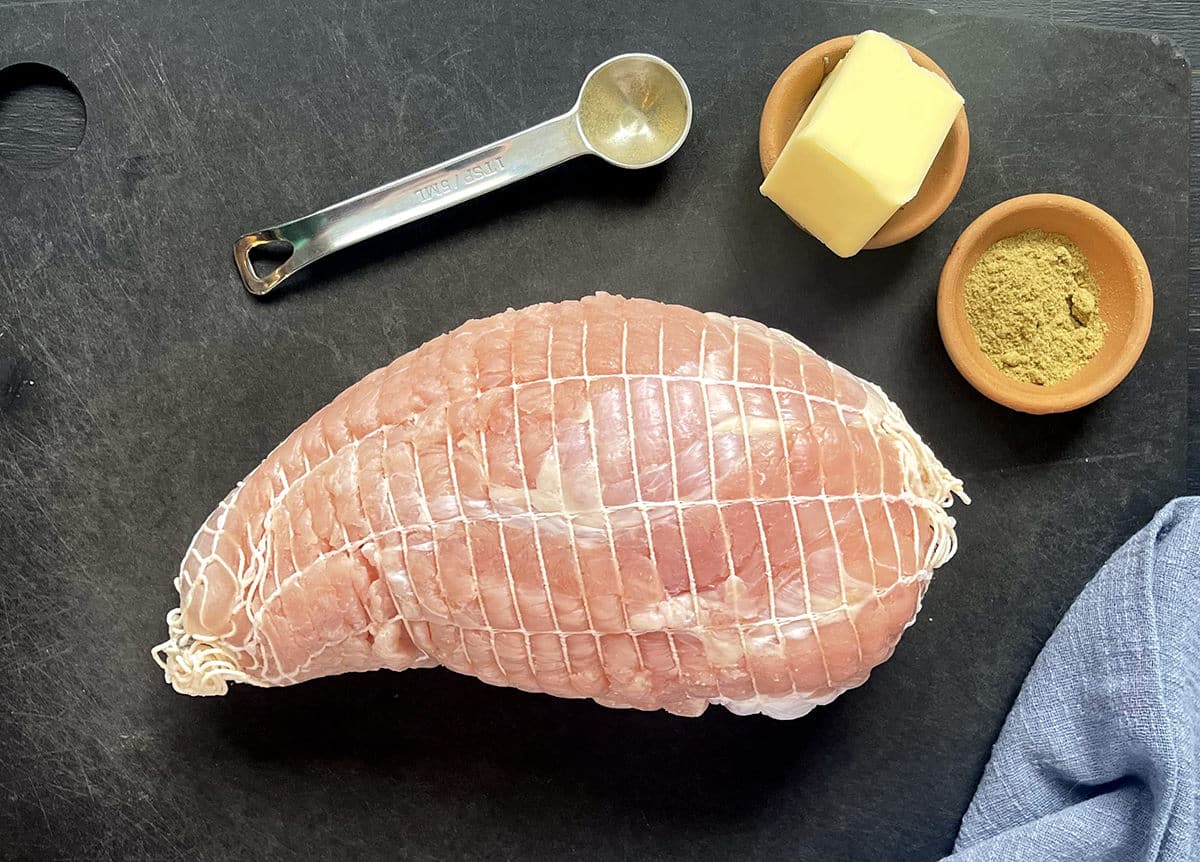
How To Sous Vide A Turkey Breast
Here’s how to cook turkey breast sous vide:
Preheat the water bath: Set the immersion circulator to your preferred cooking temperature using the temperature information below.
Make the butter mixture: Add the butter and poultry seasoning to a small saucepan. Heat just until the butter melts, then let the mixture cool for 10 minutes.

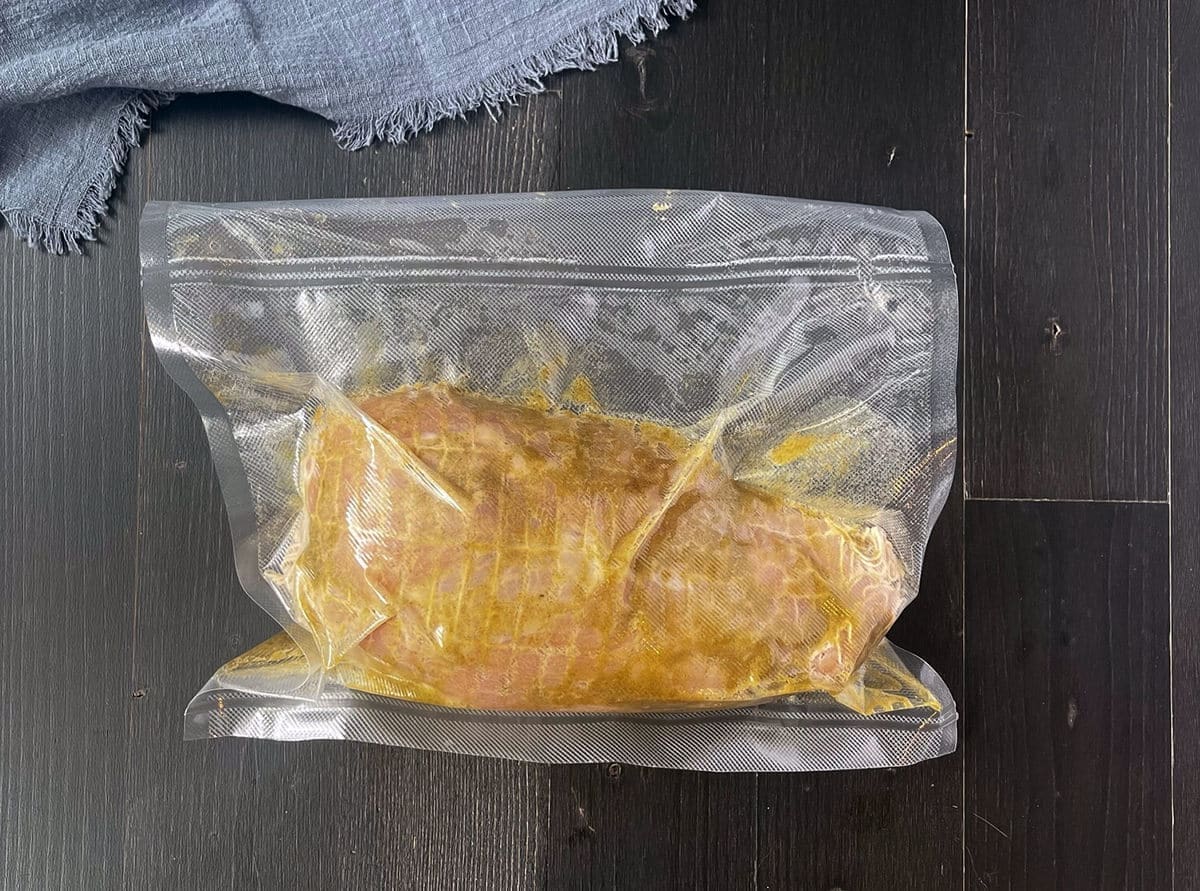
Season and seal: Season the turkey with kosher salt and black pepper. Place it in a sous vide bag, pour the cooled butter mixture over it and vacuum seal the bag. You can also use a zip-top freezer bag and the water-displacement method.
Cook: Completely submerge the sealed bag in the preheated water bath and cook for 3–6 hours, depending on the thickness of the breast and the selected temperature.
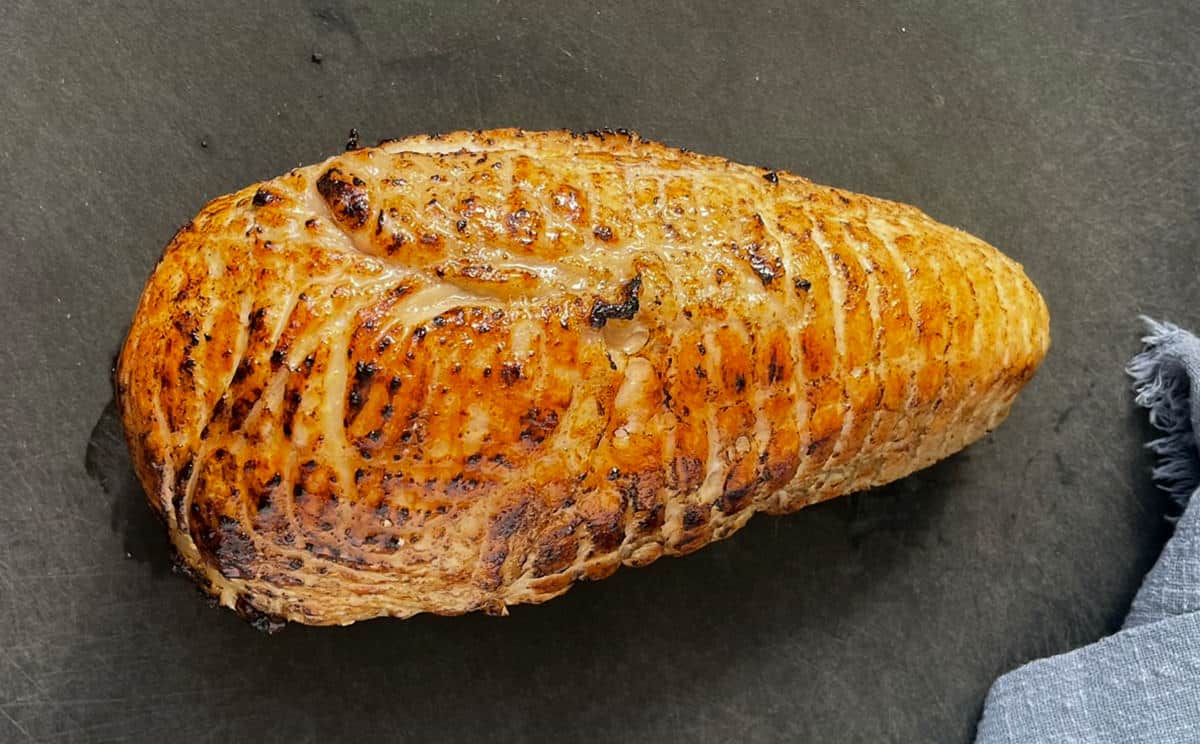
Reverse sear: Remove the cooked turkey from the bag and reserve the liquid. Pat the breast completely dry, then sear it in a very hot skillet for approximately one minute per side.
If the turkey breast has skin, sear the skin side until browned and crisp. The surface needs to be thoroughly dry before it goes into the skillet.
Sous Vide Turkey Breast Temperature
The water-bath temperature determines the turkey’s finished texture. My preferred range is 144–145°F, which produces very tender, juicy turkey with a slightly pink appearance.
- 144–145°F: Very soft, tender and juicy
- 150°F: Tender and juicy with a firmer texture
- 160°F: Firm and closer to traditionally roasted turkey
Lower-temperature sous vide poultry must remain at its target internal temperature long enough to pasteurize it. Setting the water bath to 145°F does not mean the center of the turkey immediately reaches that temperature, so cooking time must account for both heating and the required hold time.
The USDA’s straightforward consumer recommendation is an internal temperature of 165°F for poultry. If cooking below 165°F, follow a validated sous vide pasteurization schedule based on the water temperature and the thickness of the turkey breast.

Finished Texture
The finished texture becomes progressively firmer as the cooking temperature increases:
- 144–145°F: Soft, tender and very juicy
- 150°F: Firmer while still retaining plenty of moisture
- 160°F: Firm with less retained moisture
A properly cooked turkey breast can remain slightly pink. Color alone is not a dependable indicator of safety or doneness, so always verify the internal temperature with an accurate thermometer.
Sous Vide Turkey Breast Cooking Time
Cook a 2–3 pound turkey breast for 3–6 hours. The exact time depends more on the breast’s thickness than its total weight.
A thicker bone-in breast will take longer for its center to reach the target temperature than a smaller boneless roast. Avoid stacking or folding the meat inside the bag because that increases its effective thickness.
Cooking for substantially longer than needed can eventually soften the texture, even though the water bath prevents the turkey from exceeding the selected temperature.

Would you like to save this?
Should You Brine Turkey Breast?
Brining is optional with this recipe because sous vide cooking already helps the turkey retain moisture. If you want to add another layer of seasoning, use my Turkey Breast Brine.
Check the packaging before brining. A turkey labeled enhanced, self-basting or pre-brined may already contain added salt. Brining one again could make the finished turkey overly salty.
Using The Turkey Juices
Reserve the liquid collected in the sous vide bag. It can be added to homemade Turkey Gravy or spooned over the sliced turkey after searing.
Taste the liquid before adding it to another dish. A pre-brined or generously seasoned turkey can produce salty juices, so you may need to reduce the amount of additional salt.

The reserved juices can also be mixed into mashed potatoes for an extra layer of turkey flavor.
Variations
Cajun Turkey Breast: Replace the poultry seasoning with Cajun or Creole Seasoning. Use salt sparingly if the seasoning blend already contains it.
Dry-Rubbed Turkey Breast: Coat the turkey with poultry seasoning, kosher salt and black pepper. Refrigerate it uncovered or loosely covered for up to 24 hours before sealing it with the melted butter.
Aromatic Ideas
Fresh rosemary, sage, thyme, oregano, garlic or shallots can be added to the bag. Sous vide cooking concentrates aromatic flavors, so use a lighter hand than you would when roasting the same turkey in the oven.
Equipment
- Sous vide immersion circulator: Any dependable circulator that accurately maintains the selected water temperature will work.
- Cooking container: Use a sous vide container or a stockpot large enough to hold the turkey without crowding it.
- Vacuum-seal bag: Use a heat-safe sous vide bag or a sturdy zip-top freezer bag with the water-displacement method.
- Heavy skillet: A cast-iron or stainless-steel skillet works well for reverse searing.

How Much Turkey Breast Per Person
Plan on approximately ½–¾ pound of boneless turkey breast per person. Use the higher amount if you want substantial leftovers or are serving only a few side dishes.
Bone-in turkey breast requires a larger allowance because part of its total weight is bone. Leftover sliced turkey works especially well in Turkey Sliders.
Recipe Notes and Tips
- If starting with a frozen turkey breast, add approximately 60 minutes to the cooking time. For more predictable timing, follow this guide explaining how to thaw a turkey breast.
- Arrange the turkey as evenly as possible inside the bag. Folding or stacking it increases the thickness and required heating time.
- Keep the turkey completely submerged throughout the cooking period.
- If the bag floats, reseal it or use a sous vide weight to hold it beneath the water.
- Pat the cooked turkey completely dry before searing it. Moisture on the surface prevents browning.
- Reverse searing produces a considerable amount of smoke. Turn on the exhaust fan and open a nearby window before heating the skillet.
- Refrigerate leftovers in an airtight container within two hours and use them within 3–4 days.
- Reheat sliced turkey gently or warm the sealed portion in a water bath set slightly below the original cooking temperature.

Turkey Side Dish Ideas
Serve sous vide turkey breast with Jiffy Corn Casserole, Green Bean Casserole With Bacon or Sous Vide Mashed Potatoes.
For more options, browse all of my Thanksgiving side dishes, including complete collections of Thanksgiving potato recipes and Thanksgiving vegetable recipes.
More Turkey Recipes
For a different preparation, try my Roasted Boneless Turkey Breast or Smoked Turkey Breast.
Browse my complete collection of Thanksgiving recipes for more turkey, gravy and side-dish ideas. If you’re serving wine, use my Best Wine With Turkey guide to choose a bottle.

Sous Vide Turkey Breast


Ingredients
- 2-3 lb Turkey Breast (*Note 1)
- 3 Tbsp Butter
- 2 tsp Poultry Seasoning (*Note 2)
- Kosher Salt, To Taste
- Black Pepper, To Taste
OPTIONAL:
- 2 Tbsp Olive or Canola Oil (For Reverse Sear)
Instructions
- Pre-heat the water bath to 145°F, or your preferred doneness, using a sous vide immersion circulator. (*Note 3)
- Season the turkey breast with kosher salt and ground black pepper, to taste.
- Pre-heat a small sauce pan over medium heat. Add the butter and herbs and whisk until the butter is melted. Set aside for 10 minutes to cool.
- Transfer the turkey breast to a sous vide bag and pour the butter herb mixture over the turkey breast. Vacuum seal the bag or use a Ziploc bag and the water displacement method to remove the air from the bag.
- Transfer the bag to your sous vide water bath and cook for a minimum of 3 hours up to 6 hours.
- Carefully remove the bag from the water bath with tongs. Remove the roast from the bag and pat dry. Let cool for 10 minutes before searing.
REVERSE SEAR:
- Pre-heat a skillet over high heat. Add oil to coat the bottom. Place the breast in the skillet, skin side down for 1 minute. Flip and sear for another minute. (*Note 4)
- Transfer the turkey breast to a cutting board and slice against the grain.
Notes
- Medium: 144°-145°F
- Medium Well: 150°F
- Well Done: 160°F +