


The USDA safe minimum internal temperature for every cut of chicken is 165°F, including breasts, thighs, wings and ground chicken.
Whether you’re making pollo asado, baked bbq chicken thighs, or queso chicken, this temp chart can be referenced.
Free Printable Chicken Temperature Chart
Download my free chicken temperature chart and keep it near your grill, oven or air fryer. It includes temperatures in Fahrenheit and Celsius, so you can quickly check the right number without searching for it while dinner is cooking.
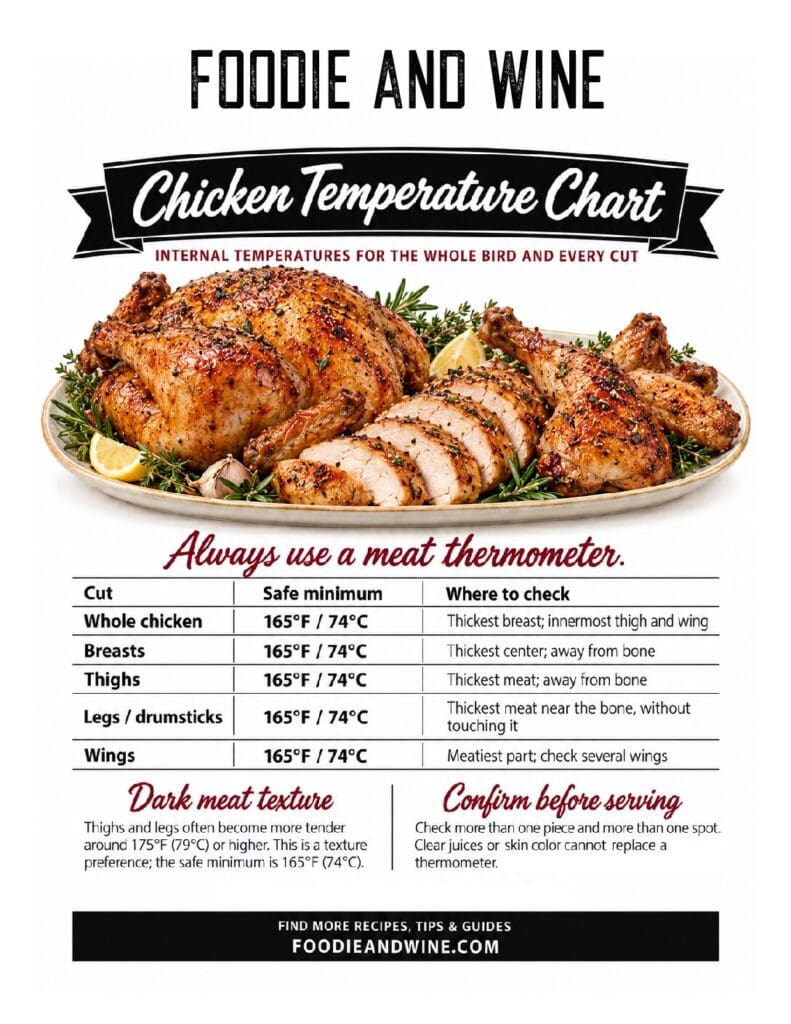
Your browser cannot display this PDF. Open the PDF.
Chicken Temperature Chart by Cut
| Chicken Cut | USDA Safe Minimum | My Preferred Temperature for Texture |
|---|---|---|
| Whole Chicken | 165°F / 74°C in all checked areas | Breast: 165°F / 74°C; thighs: 175–185°F / 79–85°C |
| Chicken Breasts | 165°F / 74°C | 165°F / 74°C |
| Chicken Tenderloins and Cutlets | 165°F / 74°C | 165°F / 74°C |
| Chicken Thighs | 165°F / 74°C | 175–185°F / 79–85°C |
| Chicken Legs and Drumsticks | 165°F / 74°C | 175–185°F / 79–85°C |
| Chicken Wings | 165°F / 74°C | 175–185°F / 79–85°C |
| Ground Chicken | 165°F / 74°C | 165°F / 74°C |
The USDA safe minimum temperature is 165°F for every cut, including ground chicken. The higher numbers in the final column are my preferred targets for texture, not separate food-safety requirements.
Why I cook dark meat longer: Chicken thighs and drumsticks are safe at 165°F, but they can still taste firm or slightly chewy at that point. Taking them to 175°F to 185°F gives the connective tissue more time to soften, producing the tender texture most people actually want from dark meat.
Put the chart to work with my Pesto Chicken or Shake and Bake Chicken.
How to Take the Internal Temperature of Chicken
Here are a few tips when taking the temperature of the chicken:
Would you like to save this?
- Whole chicken: Check the thickest part of the breast and the innermost portions of the thigh and wing, avoiding the bones.
- Chicken breasts, thighs and drumsticks: Insert the thermometer into the thickest part of the meat without touching the bone.
- Thin cutlets and chicken patties: Insert the probe from the side so the thermometer’s sensing area reaches the center.
- For an accurate reading, the thermometer shouldn’t touch the bone or gristle.
When cooking several pieces at once, check more than one, especially the largest and thickest pieces. If any reading is below 165°F, keep cooking and check it again before serving.

Chicken Cooking Times
Chicken recipe cooking times are estimates, not finish lines. Two chicken breasts from the same package can cook at different speeds simply because one is thicker.
Start checking a few minutes before the stated cooking time ends. If the chicken hasn’t reached 165°F, keep cooking and check again in the thickest area.
Tips for Juicy Chicken
- Even out thick chicken breasts. Pound the thicker end to create a more uniform piece, or cut particularly large breasts into smaller portions. Otherwise, the thin end may dry out before the center finishes cooking.
- Start checking early. A few extra minutes can be the difference between juicy chicken and chicken that needs an unreasonable amount of sauce to save it.
- Trust the thermometer, not the color. Safely cooked chicken can still look slightly pink, and chicken may remain pink near the bone even after it is done. Color and clear juices are not reliable ways to determine doneness.
- Let the chicken rest before cutting. Give chicken breasts and smaller pieces about five minutes to rest so the juices have a chance to settle before you slice into them.

More Food Temperature Charts
Here are more food temperature charts to download and print.